
Displaying items by tag: Comedian
From Subway Cars to Chicago Stages: Marcus Monroe at The Comedy Bar
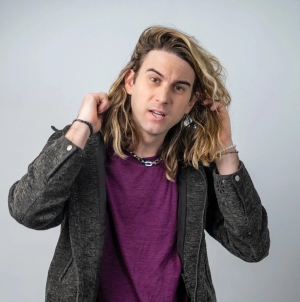
Sometimes the best way to find a comedian who’s new to you is by stumbling onto a clip that stops your scroll cold. That’s exactly how I first encountered Marcus Monroe: a burst of chaotic silliness on Instagram that made me immediately wonder what his full stand-up looked like beyond the quick-hit reels. As I have with both up-and-coming comedians, and even more established ones I haven’t really explored, I first discovered Monroe online by chance. Outside of a good handful of snippets - mostly from his Stand Up on the Subway series that I’ll get to shortly - I had very little to go on in terms of what his actual live stand-up would be like. In his case, I couldn’t stop watching the run of hilarious reels: quick, character-driven, highly silly bursts of comedy that immediately stood out for their timing and playful absurdity. Those clips ended up being a solid introduction to Monroe’s live show, which delivers a smart, engaging blend of his signature comedy. And yes - he’s genuinely funny.
I finally saw him live at The Comedy Bar in downtown Chicago, and it was the perfect venue to experience his style up close. The night was packed with laughs. Opener Brett Druck was outstanding, delivering sharp, tightly crafted jokes with a calm confidence that immediately locked the room in. His humor leans clever and observational, the kind of writing that sneaks up on you and lands with a clean, satisfying snap, perfectly setting the stage for headliner Marcus Monroe.
Monroe’s current tour highlights the style he’s become known for: sharp, in-your-face comedic banter paired with fast-paced variety performance. Born and raised in Milwaukee, Wisconsin, and now residing in New York City, Monroe brings a Midwest-friendly looseness to his delivery, even as he leans into the nonconformist energy that has defined his career. He’s a past recipient of the Andy Kaufman Award, given annually to a performer whose originality and creative spirit echo Kaufman’s own. His résumé spans television appearances, cruise line entertainment, and major comedy festivals, and he’s been seen by millions, including performances on The Late Show with David Letterman and America’s Got Talent.
Onstage, he delivers a tight, energetic set that mixes storytelling, improvisation, and physical comedy in a way that feels both polished and spontaneous. His crowd work delivers some of his best moments - he’s genuinely comfortable interacting with the audience, slipping into quick riffs and playful exchanges that feel effortless and keep the room locked in. His material ranges widely, from the chaos of travel and performing on the road, to the odd realities of being somewhat of a “variety act” in a stand-up world, to the strange encounters that come with doing comedy in unconventional spaces. He also dives into his relationship with his wife, who’s fifteen years older and has been with him for over a decade. They never signed a prenup, but he’s unfazed - as he jokes, everything’s hers anyway. In fact, most of her belongings came from a divorce settlement with her ex-husband, so should they ever split, Monroe figures he’d walk away with half of Steve’s stuff. And toward the end of the show, he folds in his juggling - often with sharp knives - not as a gimmick, but as a comedic tool he uses for timing, misdirection, and playful escalation, giving his set a physical dimension most stand-ups don’t attempt. And this is the same guy who has juggled flaming torches while riding a sky-high unicycle, so the physicality isn’t just a flourish - it’s part of his comedic DNA.
A major part of Monroe’s growing national profile comes from his Stand Up on the Subway series, the viral project that helped expand his audience far beyond traditional comedy venues. For more than two years, he’s been performing fully costumed bits on New York City trains, transforming everyday commutes into pop-up comedy sets. The punchlines in these subway bits, while some downright goofy, are often purposefully so bad in a brilliant way - beyond dad-joke territory and deep into gleeful absurdity - that they loop back around into being hilarious. It’s part of what makes the series addictive, and I’ve become hooked on watching each new character drop into a train car with that “what’s he going to do next?” unpredictability. His Stand Up on the Subway series has now surpassed 100 million views and even features cameos from Bowling for Soup, Train, Bobby Moynihan, BBMak, Ryan Cabrera, and more, adding an extra layer of delightful unpredictability to the chaos. His roster of subway personas is part of the fun: Michael Jackson, Marty McFly, Ozzy Osbourne, the Grinch, Ronald McDonald, Freddie Mercury, a watermelon, a foot, Uncle Sam, an emo kid, and an endless supply of other characters pulled from whatever corner of his imagination he’s exploring that day. He’s even created a Chicago version on the EL train, suiting up as a Bears player for a local twist. The reactions - amused, confused, delighted, or occasionally baffled - become part of the show, and the series has become a defining piece of his creative identity.
Taken together, the tour, the reels, and the Stand Up on the Subway series reveal a performer who thrives on unpredictability, connection, and inventive silliness. Monroe isn’t trying to reinvent comedy so much as he’s carving out his own lane within it, one built on enthusiasm, oddball charm, and a willingness to commit fully to the bit. It’s a combination that works, and his stand-up is highly recommended. For upcoming tour dates, videos, and more of his character work, visit www.marcusmonroe.com.
A Legendary Transformation: John Mulaney’s Historic Night at Wrigley Field
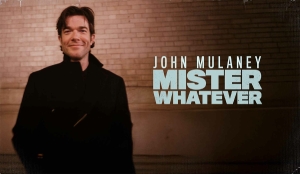
John Mulaney didn’t just perform at Wrigley Field. He made history there. In a venue synonymous with baseball legends, rock icons, and century-old Chicago lore, Mulaney became the first comedian ever to headline a full stand-up show at Wrigley Field, and, depending on which version of the truth you prefer, possibly the largest live audience for a comedian in history. Whether or not the record is airtight, the scale of the night was undeniable. Chicago turned out in force for one of its own.
A New Chapter: The Mister Whatever Tour
Mulaney’s Mister Whatever tour marks a tonal shift from the raw confessionals of Baby J. Where that show dissected his intervention, addiction, and the wreckage of his personal life, Mister Whatever leans into the absurdity of middle age, fatherhood, and domestic unpredictability. The storytelling remains fast, sharp, and unmistakably Mulaney, but now filtered through the lens of a man navigating toddlers, in-laws, and the strange mundanity of being a grown-up with a past.
Family Life and Fatherhood: Comedy in the Trenches
Mulaney’s material about family life is some of his richest yet, especially when he dives into the sprawling constellation of his new in-laws. Marrying into Olivia Munn’s Vietnamese-Chinese family gives him endless fodder, and he mines it with precision: overbearing relatives, cultural misunderstandings, and the kind of familial chaos that feels both universal and deeply specific. He even slips into a Vietnamese accent, a move he preemptively defends by insisting he has “earned the right” because they are his actual family now. It’s classic Mulaney: self-aware, slightly provocative, and delivered with a wink.
His bits about raising two toddlers are equally sharp. He compares dealing with a three-year-old to working in a toxic workplace, complete with unreasonable demands, emotional volatility, and a boss who has no concept of time. The late-night meltdowns, the negotiations over snacks, the existential exhaustion of parenting: he turns it all into a comedic autopsy of modern fatherhood.
And then there is the “wallet allowance,” a running gag about his post-rehab financial oversight. According to Mulaney, his wife and even bank cashiers treat him like a teenager with limited privileges. It’s a sly, self-deprecating way of acknowledging his past without dwelling in it.
Absurd Observations and Pop Culture: Mulaney’s Sweet Spot
Where Mulaney truly thrives is in the absurdity of everyday grievances, and his extended rant about modern $1,000 drying machines is a highlight of the night. He builds an entire comedic architecture around the decline of appliance quality: how dryers now seem designed to not dry clothes, how they beep like needy robots, how they offer dozens of settings but none that actually work. It’s the kind of bit only Mulaney can stretch into a full routine, turning a mundane annoyance into operatic frustration.
His pop culture and political impressions land just as hard. His RFK Jr. impression is a showstopper: wild, unhinged, and delivered with a kind of manic sincerity that had the stadium roaring. He skewers billionaires, public figures, and the bizarre circus of current events with the same blend of sharpness and silliness that has always defined his best work.
And then comes one of the night’s funniest detours. His bit about being possessed by Satan, specifically how Satan always does it the exact same way, with someone jolting upright in bed and unleashing a string of profanity, becomes one of the night’s sharpest and most ridiculous highlights. It’s pure Mulaney: theatrical, absurd, and delivered with the timing of a performer who knows exactly how long to let a joke breathe before landing it.
A Chicago Homecoming with Legendary Guests
What made the night feel truly monumental were the surprise guests, each adding their own flavor to the celebration.
Buddy Guy, Chicago blues royalty, took the stage and tore into a couple of songs, including a blistering rendition of “Sweet Home Chicago.” Seeing Buddy Guy at Wrigley Field would be a thrill on its own. Seeing him as part of a John Mulaney comedy show felt like a surreal Chicago fever dream.
Fred Armisen followed with a brilliantly odd set that blended music and comedy. Switching between guitar and drums, he delivered the kind of deadpan, musically infused humor that only Armisen can pull off. It was weird, delightful, and perfectly calibrated for a stadium crowd.
Richard Kind served as a sort of comedic emcee, popping in with jokes, introductions, and the warm, slightly bewildered charm that makes him such a beloved character actor. His presence added a theatrical looseness to the night.
And then, in a moment that felt like a benediction, David Letterman stepped out to introduce Mulaney. Letterman may be from Indiana, but in Chicago terms, that is close enough. His dry, understated introduction gave the night a sense of occasion, like a passing of the comedic torch from one generation to the next.
A Night That Felt Bigger Than Comedy
What made Mulaney’s Wrigley Field show remarkable wasn’t just the scale, or the guests, or the historic firsts. It was the sense of homecoming. Mulaney performed with the confidence of someone who knows the city in his bones: its rhythms, its humor, its contradictions. The stadium setting didn’t dilute his intimacy. It amplified it. His storytelling reached throughout the Friendly Confines without losing its specificity.
In a venue built for legends, Mulaney delivered a night worthy of the space.
The Beautiful Overthinking of Gary Gulman’s 7th Hour
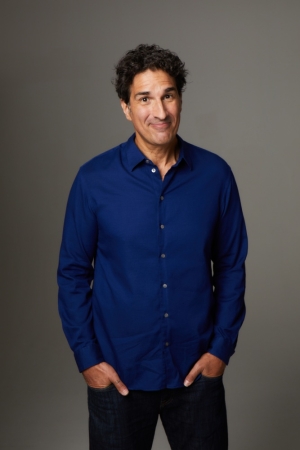
Gary Gulman brings his new tour, 7th Hour: An All New Standup Show, to The Den Theatre, offering Chicago audiences a chance to see a comic who has spent decades refining the long-form, slow-burn style that has become unmistakably his. His five sold-out shows over the weekend are being recorded for an upcoming comedy special, giving each performance an added spark as he works through material with both confidence and care. Gulman’s comedy has always lived in the space between sharp observation and gentle self-reflection, and this latest set continues that progression with a mix of wry honesty and carefully shaped storytelling. His stop at The Den feels less like a routine tour date and more like a chance to watch a veteran performer stretch into new territory while still delivering the precision that has made him one of stand-up’s most quietly dependable voices.
The evening opened with Evanston’s own Sam Froum, whose set proved to be a sharp and genuinely funny warm-up for the night. He brought an easy confidence and a quick, clever rhythm to the stage, landing jokes with the kind of timing that immediately pulls a room in. It was a strong showing, and a fitting lead-in to Gulman’s tightly built headlining act.
Across 7th Hour, Gulman moves through a wide constellation of personal history, weaving together stories that span his depression, his admiration for his father’s unwavering integrity despite the loss of friends it may have cost him, and the realities of growing up with a single mother while navigating the rough edges of two bullying older brothers. His Jewish upbringing becomes a recurring thread, most notably in an extended, delightfully overthought retelling of the story of Moses - a bit that shifts from biblical epic to neurotic character study in a way only he can pull off. From there, he wonders aloud why Jewish people didn’t simply “like” Jesus so that Christianity might have evolved into an upbeat, colorful, pastel-tinted sect of Judaism, only to immediately challenge his own premise with the kind of self-correcting logic that fuels his best material. That exploration leads him into Jesus’ Sermon on the Mount, where he zeroes in on “do unto others as you would have them do unto you,” a phrase he deeply takes to heart, breaking it down with methodical curiosity as he imagines Jesus trying it out in front of smaller crowds at "open mounts" before delivering it on the big stage. Along the way, he has fun with the apostles - especially John and “Doubting” Thomas - treating them less as distant religious figures and more as characters he can analyze, tease, and reinterpret through his own gently overthinking lens. He even slips in a detour to Christian Bale’s Batman, acting out a hilarious gravel‑voiced exchange with Gary Oldman’s Commissioner Gordon that fits seamlessly into his stream of overthought observations.
He also devotes time to the values and education he drew from PBS, especially the steady presence of Mr. Rogers, whom he references with undeniable affection. Gulman lights up when recalling – and briefly singing – the closing song, “It’s Such a Good Feeling,” along with the simple but radical reassurance Mr. Rogers offered at the end of each episode: “I like you just the way you are.” He treats that sentiment with an earnest respect that shows how deeply it shaped him, even as he wonders aloud how anyone can truly live as their full, unfiltered self outside of a very small circle of people. He folds in humorous family stories tied to pledge drives, broadening the emotional palette of 7th Hour and grounding the comedy in the cultural touchstones that helped him make sense of the world long before he ever stepped onstage.
Gulman’s humor is a distinct blend of long-form storytelling, analytical overthinking, gentle self-examination, and slow-burn observational detail. He builds jokes the way essayists build arguments - layering premises, revisiting ideas, correcting himself mid thought, and letting the comedy emerge from the precision of his logic as much as from the punchline. His style is warm, meticulous, literary, and deeply human, often turning small moments from childhood, religion, or pop culture into sprawling, carefully engineered comedic set pieces.
And in 7th Hour, he brings that entire toolkit with him - sharper, fuller, and more emotionally grounded than ever. The show feels like Gulman operating at the height of his powers, shaping personal history into comedy with a confidence that suggests he knows he’s building material worthy of an upcoming special. What stands out most is how fully he leans into that mastery; 7th Hour plays like a comic working with total clarity of purpose and delivering exactly the kind of work only he can create.
Gulman’s career has been shaped by a steady run of smart, carefully built specials that highlight his gift for long-form comedy. From Boyish Man and In This Economy? to the critically praised It’s About Time and The Great Depresh, he has assembled a body of work defined by warmth, clarity, and an almost literary sense of structure. His stand-up has also been a reliable presence on late-night television, with memorable sets on Conan, The Late Show with Stephen Colbert, Jimmy Kimmel Live, and The Tonight Show, each showcasing his ability to turn everyday frustrations and cultural quirks into slow-building, sharply observed stories. Together, these appearances have cemented him as one of the most consistent and quietly influential voices in contemporary stand-up.
If you get the chance to see Gulman live, take it. 7th Hour shows a comedian in full command of his craft, delivering work that is thoughtful, funny, and unmistakably his. It’s the kind of performance that reminds you why stand-up, at its best, feels both intimate and expansive at the same time.
Bargatze’s Big Dumb Eyes Tour Lands in Rosemont With Subtle Force

Nate Bargatze’s Big Dumb Eyes tour made its stop at the Allstate Arena in Rosemont with the steady, understated presence that has become central to his appeal. Bargatze continues to draw humor from the small missteps and everyday confusions that shape his storytelling, easing the audience into his rhythm rather than pushing for big moments. His unhurried delivery works surprisingly well in a venue of this size, creating a sense of shared focus that settles over the room as he builds each joke with quiet precision.
This powerhouse comedy tour is anchored by host Julian McCullough, whose easygoing charm and quick-hit crowd work set the tone for the night before the headliner ever steps onstage. He’s joined by a sharp trio of comics - Greg Warren, Gary Vider, and Jonnie W - each bringing a distinct comedic style that keeps the momentum building from set to set. Warren’s dry, story-driven humor, Vider’s understated oddball delivery, and Jonnie W’s musical-comedy flair create a well-balanced undercard that feels like a full evening of stand-up on its own. Together, they form a tightly assembled lineup that primes the audience perfectly for the main event.
Julian McCullough, Greg Warren, Gary Vider, and Jonnie W will all be making upcoming appearances at Zanies Rosemont, giving Chicago-area comedy fans several chances to catch them live. McCullough returns to the club on June 5–7, while Greg Warren is scheduled for a special event weekend on May 22–23. Jonnie W will headline Zanies Rosemont on July 26, and Gary Vider’s next Chicago-area dates are at Zanies Chicago on March 27–28, offering multiple showtimes across both nights.
Bargatze has been performing in arenas for some time now, and the format suits him more naturally than one might expect. The in-the-round staging keeps him accessible from every direction, while the large video screens ensure that even the most subtle expressions read clearly throughout the space. It is an effective setup for a comedian whose style relies on nuance rather than volume. In a venue as large as Allstate, laughter does not always erupt all at once - it spreads gradually, section by section, until the entire arena is moving with the same steady momentum.
A significant portion of Bargatze’s material continues to revolve around his family, with stories about parenting, marriage, and the everyday negotiations that come with trying to make sense of the world alongside the people closest to you. But he also branches into the absurdities of modern life, touching on everything from AI to self-driving cars to couples therapy - and even the baffling challenge of buying a horse, because, as he points out, who actually knows the price of a horse? These moments are not exaggerated or heightened for effect. Instead, he treats them with the same calm, observational tone that defines his work. The humor comes from the honesty of the situations and the quiet recognition they spark, especially for audiences who see their own households and daily frustrations reflected in his.
His Rosemont appearance is one stop in a long stretch of dates as the Big Dumb Eyes tour continues across major arenas nationwide. The upcoming schedule includes cities throughout the Midwest, East Coast, and South, each offering a chance for audiences to experience how his understated approach translates to rooms of this scale. At this point, Bargatze stands among the strongest stand-ups touring at the arena level, not because he relies on spectacle, but because his material remains consistent, grounded, and effective no matter the size of the venue.
In the end, the Allstate Arena stop underscored why Bargatze’s rise has felt so steady and assured. His comedy does not demand attention - it earns it through clarity, timing, and a genuine connection to the everyday experiences he describes. For a comedian whose style is built on understatement, filling an arena might seem counterintuitive, yet he makes the space feel surprisingly intimate. It is a testament to his craft and a clear sign that his place on the arena circuit is well deserved.
Riveting, heartfelt and sure to shake things up: 'I'm Not A Comedian...I'm Lenny Bruce'

*Now extended through February 16th due to popular demand
“Lenny Bruce was the defender of all people. Notorious from his belief that people give words power. It’s not the words itself, but the intention,” says playwright and performer Ronnie Marmo in the show’s playbill - A Note from the Playwright titled “Why Lenny Bruce? Why Now?”
‘I’m not a Comedian…I’m Lenny Bruce’ should be one of the hottest shows in Chicago this Fall. Coming hot off a sold-out Los Angeles run, the story of one of the most controversial, yet influential comedians, Lenny Bruce, comes to the Royal George Cabaret Theatre. Directed by legendary actor Joe Mantegna and produced by Lenny Bruce’s daughter, Kitty Bruce, we get a production that is hard-hitting, hilarious and flat out ballsy.
Ronnie Marmo as Lenny Bruce is a powerful force to be reckoned with and his deliciously vivid script couldn’t be performed any better. I’d be hard-pressed to say which is more impressive, Marmo’s dark, daring and funny script or his acting prowess as the controversial 1960’s comic. Let’s just say the two fit perfectly together to give audience members a thrill ride that doesn’t let you go.
‘I’m not a Comedian…I’m Lenny Bruce’ puts Bruce onstage in a stand-up atmosphere where he delivers intimate stories that shaped his life and beliefs – some tragic, some humorous and some heartwarming. He was close to his mother, revered his life love Honey and loved his daughter to no end. He was often arrested for his words. He fought drug addiction – and lost. Marmo as Bruce also becomes the vessel for the fearless and outspoken comedian who tells it like he sees it, often using obscenities and rants about the same topics that are touchy in today’s world – fifty years later – such as racism, government aid, religion, the criminal justice system, gender inequality, etc., etc., but probably most of all censorship. An unwavering advocate for the First Amendment, Bruce vehemently preaches the dangers of losing the right to free speech, often musing the crowd with stories of arrests and harassment by authorities for simply saying words not everyone wanted to hear.
“I disapprove of what you say, but will defend to the death your right to say it.” Evelyn Beatrice Hall (a.k.a. S. G. Tallentyre) wrote in 1906’s The Friends of Voltaire. This quote epitomized Bruce’s beliefs.
Since Bruce, many comedians have followed in his footsteps, often citing him as their greatest influence, such as Richard Pryor, George Carlin and more recently Sarah Silverman and Bill Maher, the latter very outspoken about the censorship put in place by tech communication giants Twitter and YouTube. It is without doubt, Lenny Bruce would cringe at what has been happening over the past few years where some comedians are not allowed to perform on certain college campuses or where “disagreeing” is often quickly labeled a hate incitement and therefore censored no matter your political stance, religious views or assessments on life. Silence opinions - delete instead of discuss.
The perception of recent fragility wafting in the air where people get overly offended at very little or seemingly nothing these days (words over intention) has been a huge talking point for comedians like Jerry Seinfeld, Chris Rock and David Chapelle (to name a very small few) to the point some might wonder if someone like Bruce could have survived today’s social climate. But, as a betting man, I’m sure Lenny Bruce would still be knocking down walls and fighting to his last breath to exercise the right of free speech.
Ronnie Marmo’s play has come at just the right time at its relevancy in today’s world couldn’t be timelier. Marmo makes his point on the importance of free speech to perfection in this powerful production while also delivering an engaging, inside look at someone who changed the landscape for comedy as we knew it.
Comedy great Richard Lewis says of Marmo’s performance, “Lenny’s life pours out of him,” while Kitty Bruce goes a step further by calling it, “The best portrayal of my father I have ever seen. Brilliant.”
Compelling, inspiring and thought-provoking, ‘I’m not a Comedian…I’m Lenny Bruce’ is highly recommended.
‘I’m not a Comedian…I’m Lenny Bruce’ is being performed at the Royal George Cabaret Theatre through December 1st. For more information visit LennyBruceOnStage.com.
*Extended through February 16th 2020


Latest Articles
-
 From Subway Cars to Chicago Stages: Marcus Monroe at The Comedy Bar
Written by Ken PayneSometimes the best way to find a comedian who’s new to you is by stumbling onto a clip that stops your scroll cold. That’s exactly how I first encountered Marcus Monroe: a burst of chaotic silliness on Instagram that made…
From Subway Cars to Chicago Stages: Marcus Monroe at The Comedy Bar
Written by Ken PayneSometimes the best way to find a comedian who’s new to you is by stumbling onto a clip that stops your scroll cold. That’s exactly how I first encountered Marcus Monroe: a burst of chaotic silliness on Instagram that made… -
 Otherworld Theatre's Starship Edsel - Second City’s De Maat Theatre - Through September 13
Written by Buzz Center StageThis summer, the Starship Edsel boldly goes where they maybe shouldn’t go as Otherworld Theatre, Chicago’s premier destination for Science Fiction and Fantasy performance, presents the premiere of Starship Edsel: Season 4. Running from August 9 through September 13 at…
Otherworld Theatre's Starship Edsel - Second City’s De Maat Theatre - Through September 13
Written by Buzz Center StageThis summer, the Starship Edsel boldly goes where they maybe shouldn’t go as Otherworld Theatre, Chicago’s premier destination for Science Fiction and Fantasy performance, presents the premiere of Starship Edsel: Season 4. Running from August 9 through September 13 at… -
CHICAGO HUMANITIES announces full Fall Festival 2026 programming
Written by Buzz Center StageChicago Humanities proudly announces the full lineup for its Fall Festival 2026, with conversations ranging from social justice, music, politics, literature, food, poetry, photography, architecture and much more. This year’s Fall Festival spans Sept. through Nov. and offers day-long festival dates throughout three Chicago…
-
Tin Drum Theatre Company announces Chicago premiere of A Dark Wood by Eric Coble, Oct. 15–Nov. 1 at Greenhouse Theater Center
Written by Buzz Center StageTin Drum Theatre Company is proud to announce the cast and creative team for Chicago premiere for A Dark Wood, October 15 - November 1, written by Eric Coble and directed by Steve Needham, at Studio 44 in the Greenhouse Theater Center, 2257 N. Lincoln Ave.…
Does your theatre company want to connect with Buzz Center Stage or would you like to reach out and say "hello"? Message us through facebook or shoot us an email at This email address is being protected from spambots. You need JavaScript enabled to view it..
*This disclaimer informs readers that the views, thoughts, and opinions expressed in the text belong solely to the author, and not necessarily to Buzz Center Stage. Buzz Center Stage is a non-profit, volunteer-based platform that enables, and encourages, staff members to post their own honest thoughts on a particular production.