
Displaying items by tag: live comedy
From Subway Cars to Chicago Stages: Marcus Monroe at The Comedy Bar

Sometimes the best way to find a comedian who’s new to you is by stumbling onto a clip that stops your scroll cold. That’s exactly how I first encountered Marcus Monroe: a burst of chaotic silliness on Instagram that made me immediately wonder what his full stand-up looked like beyond the quick-hit reels. As I have with both up-and-coming comedians, and even more established ones I haven’t really explored, I first discovered Monroe online by chance. Outside of a good handful of snippets - mostly from his Stand Up on the Subway series that I’ll get to shortly - I had very little to go on in terms of what his actual live stand-up would be like. In his case, I couldn’t stop watching the run of hilarious reels: quick, character-driven, highly silly bursts of comedy that immediately stood out for their timing and playful absurdity. Those clips ended up being a solid introduction to Monroe’s live show, which delivers a smart, engaging blend of his signature comedy. And yes - he’s genuinely funny.
I finally saw him live at The Comedy Bar in downtown Chicago, and it was the perfect venue to experience his style up close. The night was packed with laughs. Opener Brett Druck was outstanding, delivering sharp, tightly crafted jokes with a calm confidence that immediately locked the room in. His humor leans clever and observational, the kind of writing that sneaks up on you and lands with a clean, satisfying snap, perfectly setting the stage for headliner Marcus Monroe.
Monroe’s current tour highlights the style he’s become known for: sharp, in-your-face comedic banter paired with fast-paced variety performance. Born and raised in Milwaukee, Wisconsin, and now residing in New York City, Monroe brings a Midwest-friendly looseness to his delivery, even as he leans into the nonconformist energy that has defined his career. He’s a past recipient of the Andy Kaufman Award, given annually to a performer whose originality and creative spirit echo Kaufman’s own. His résumé spans television appearances, cruise line entertainment, and major comedy festivals, and he’s been seen by millions, including performances on The Late Show with David Letterman and America’s Got Talent.
Onstage, he delivers a tight, energetic set that mixes storytelling, improvisation, and physical comedy in a way that feels both polished and spontaneous. His crowd work delivers some of his best moments - he’s genuinely comfortable interacting with the audience, slipping into quick riffs and playful exchanges that feel effortless and keep the room locked in. His material ranges widely, from the chaos of travel and performing on the road, to the odd realities of being somewhat of a “variety act” in a stand-up world, to the strange encounters that come with doing comedy in unconventional spaces. He also dives into his relationship with his wife, who’s fifteen years older and has been with him for over a decade. They never signed a prenup, but he’s unfazed - as he jokes, everything’s hers anyway. In fact, most of her belongings came from a divorce settlement with her ex-husband, so should they ever split, Monroe figures he’d walk away with half of Steve’s stuff. And toward the end of the show, he folds in his juggling - often with sharp knives - not as a gimmick, but as a comedic tool he uses for timing, misdirection, and playful escalation, giving his set a physical dimension most stand-ups don’t attempt. And this is the same guy who has juggled flaming torches while riding a sky-high unicycle, so the physicality isn’t just a flourish - it’s part of his comedic DNA.
A major part of Monroe’s growing national profile comes from his Stand Up on the Subway series, the viral project that helped expand his audience far beyond traditional comedy venues. For more than two years, he’s been performing fully costumed bits on New York City trains, transforming everyday commutes into pop-up comedy sets. The punchlines in these subway bits, while some downright goofy, are often purposefully so bad in a brilliant way - beyond dad-joke territory and deep into gleeful absurdity - that they loop back around into being hilarious. It’s part of what makes the series addictive, and I’ve become hooked on watching each new character drop into a train car with that “what’s he going to do next?” unpredictability. His Stand Up on the Subway series has now surpassed 100 million views and even features cameos from Bowling for Soup, Train, Bobby Moynihan, BBMak, Ryan Cabrera, and more, adding an extra layer of delightful unpredictability to the chaos. His roster of subway personas is part of the fun: Michael Jackson, Marty McFly, Ozzy Osbourne, the Grinch, Ronald McDonald, Freddie Mercury, a watermelon, a foot, Uncle Sam, an emo kid, and an endless supply of other characters pulled from whatever corner of his imagination he’s exploring that day. He’s even created a Chicago version on the EL train, suiting up as a Bears player for a local twist. The reactions - amused, confused, delighted, or occasionally baffled - become part of the show, and the series has become a defining piece of his creative identity.
Taken together, the tour, the reels, and the Stand Up on the Subway series reveal a performer who thrives on unpredictability, connection, and inventive silliness. Monroe isn’t trying to reinvent comedy so much as he’s carving out his own lane within it, one built on enthusiasm, oddball charm, and a willingness to commit fully to the bit. It’s a combination that works, and his stand-up is highly recommended. For upcoming tour dates, videos, and more of his character work, visit www.marcusmonroe.com.
A Legendary Transformation: John Mulaney’s Historic Night at Wrigley Field
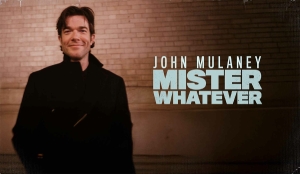
John Mulaney didn’t just perform at Wrigley Field. He made history there. In a venue synonymous with baseball legends, rock icons, and century-old Chicago lore, Mulaney became the first comedian ever to headline a full stand-up show at Wrigley Field, and, depending on which version of the truth you prefer, possibly the largest live audience for a comedian in history. Whether or not the record is airtight, the scale of the night was undeniable. Chicago turned out in force for one of its own.
A New Chapter: The Mister Whatever Tour
Mulaney’s Mister Whatever tour marks a tonal shift from the raw confessionals of Baby J. Where that show dissected his intervention, addiction, and the wreckage of his personal life, Mister Whatever leans into the absurdity of middle age, fatherhood, and domestic unpredictability. The storytelling remains fast, sharp, and unmistakably Mulaney, but now filtered through the lens of a man navigating toddlers, in-laws, and the strange mundanity of being a grown-up with a past.
Family Life and Fatherhood: Comedy in the Trenches
Mulaney’s material about family life is some of his richest yet, especially when he dives into the sprawling constellation of his new in-laws. Marrying into Olivia Munn’s Vietnamese-Chinese family gives him endless fodder, and he mines it with precision: overbearing relatives, cultural misunderstandings, and the kind of familial chaos that feels both universal and deeply specific. He even slips into a Vietnamese accent, a move he preemptively defends by insisting he has “earned the right” because they are his actual family now. It’s classic Mulaney: self-aware, slightly provocative, and delivered with a wink.
His bits about raising two toddlers are equally sharp. He compares dealing with a three-year-old to working in a toxic workplace, complete with unreasonable demands, emotional volatility, and a boss who has no concept of time. The late-night meltdowns, the negotiations over snacks, the existential exhaustion of parenting: he turns it all into a comedic autopsy of modern fatherhood.
And then there is the “wallet allowance,” a running gag about his post-rehab financial oversight. According to Mulaney, his wife and even bank cashiers treat him like a teenager with limited privileges. It’s a sly, self-deprecating way of acknowledging his past without dwelling in it.
Absurd Observations and Pop Culture: Mulaney’s Sweet Spot
Where Mulaney truly thrives is in the absurdity of everyday grievances, and his extended rant about modern $1,000 drying machines is a highlight of the night. He builds an entire comedic architecture around the decline of appliance quality: how dryers now seem designed to not dry clothes, how they beep like needy robots, how they offer dozens of settings but none that actually work. It’s the kind of bit only Mulaney can stretch into a full routine, turning a mundane annoyance into operatic frustration.
His pop culture and political impressions land just as hard. His RFK Jr. impression is a showstopper: wild, unhinged, and delivered with a kind of manic sincerity that had the stadium roaring. He skewers billionaires, public figures, and the bizarre circus of current events with the same blend of sharpness and silliness that has always defined his best work.
And then comes one of the night’s funniest detours. His bit about being possessed by Satan, specifically how Satan always does it the exact same way, with someone jolting upright in bed and unleashing a string of profanity, becomes one of the night’s sharpest and most ridiculous highlights. It’s pure Mulaney: theatrical, absurd, and delivered with the timing of a performer who knows exactly how long to let a joke breathe before landing it.
A Chicago Homecoming with Legendary Guests
What made the night feel truly monumental were the surprise guests, each adding their own flavor to the celebration.
Buddy Guy, Chicago blues royalty, took the stage and tore into a couple of songs, including a blistering rendition of “Sweet Home Chicago.” Seeing Buddy Guy at Wrigley Field would be a thrill on its own. Seeing him as part of a John Mulaney comedy show felt like a surreal Chicago fever dream.
Fred Armisen followed with a brilliantly odd set that blended music and comedy. Switching between guitar and drums, he delivered the kind of deadpan, musically infused humor that only Armisen can pull off. It was weird, delightful, and perfectly calibrated for a stadium crowd.
Richard Kind served as a sort of comedic emcee, popping in with jokes, introductions, and the warm, slightly bewildered charm that makes him such a beloved character actor. His presence added a theatrical looseness to the night.
And then, in a moment that felt like a benediction, David Letterman stepped out to introduce Mulaney. Letterman may be from Indiana, but in Chicago terms, that is close enough. His dry, understated introduction gave the night a sense of occasion, like a passing of the comedic torch from one generation to the next.
A Night That Felt Bigger Than Comedy
What made Mulaney’s Wrigley Field show remarkable wasn’t just the scale, or the guests, or the historic firsts. It was the sense of homecoming. Mulaney performed with the confidence of someone who knows the city in his bones: its rhythms, its humor, its contradictions. The stadium setting didn’t dilute his intimacy. It amplified it. His storytelling reached throughout the Friendly Confines without losing its specificity.
In a venue built for legends, Mulaney delivered a night worthy of the space.
Fault Shakes Up Chicago Shakespeare Theater with Fierce, Funny Chaos

Dark comedies built around relationship dynamics have always drawn me in because they reveal conflict with a kind of honesty that feels both familiar and unpredictable. When couples clash, the humor isn’t just situational; it’s rooted in history, habit, and the tiny emotional landmines only long-term partners know how to trigger. Fault fits squarely into that tradition, taking the everyday rhythms of a long marriage and pushing them just far enough to expose the raw, funny, and uncomfortable truths beneath the surface. That blend of recognition and surprise is exactly what makes this kind of comedy so compelling, and why Fault lands with such a specific charge.
That sense of intimate volatility is exactly what Jason Alexander explores in his return to Chicago Shakespeare Theater. With Fault, he brings the sharp directorial instinct he showed in his earlier CST production Judgment Day and applies it to a far more contained emotional landscape. In this world premiere written by Scooter Pietsch, he shapes the play’s tightening grid of tension and moral uncertainty with a touch that feels both precise and unexpectedly humane. The result is a tightly focused piece driven by tension that sparks almost instantly - less an explosive outburst than a controlled shift in the room - with the personal fractures between the characters steering the story toward its breaking point.

Pictured are Enrico Colantoni (Jerry), Playwright Scooter Pietsch, Rebecca Spence (Lucy), Nick Marini (Shaun), and Director Jason Alexander. April 18– May 24, 2026, in The Yard at Chicago Shakespeare. Photo by Justin Barbin.
In Fault, the night detonates the moment Jerry Green walks in expecting to celebrate a career defining merger and instead finds his wife, Lucy, in an intimate moment with a young man she has just met, Shaun. What could have ended in a single, stunned confrontation instead becomes the spark for a long, spiraling night in which no one is allowed to leave, and nothing stays contained. The shock of the discovery quickly gives way to a volatile mix of accusations, shifting alliances, and long suppressed grievances, turning their home into a closed-door standoff where every truth feels like a trap and every explanation opens a deeper wound. Jerry and Lucy have long operated as a high functioning power couple, relying on professional unity to keep their marriage steady; once that balance collapses, the cracks at home widen just as quickly. It is interesting that Pietsch also underscores the irony that Jerry’s career‑defining merger has just made the couple newly minted billionaires after a long string of failures, and yet - proving that all the money in the world can’t change some people - they still behave like high‑achieving narcissists, turning their blame and abuse on each other and on the young stranger they’ve invited into their lavish home.
As the hours stretch on, the situation tilts from chaotic to revealing, exposing the fractures that have been quietly shaping this marriage for decades. Jerry’s need for control, Lucy’s hunger for something unspoken, and Shaun’s unexpected presence collide in ways that force each of them to confront what they’ve been avoiding. What begins as a moment of betrayal becomes a full-scale excavation of loyalty, resentment, and the stories couples tell themselves to stay intact. The play’s dark humor emerges from this escalating tension - how quickly a single mistake can unravel a life, and how a marriage can be tested most brutally not by the act itself, but by everything it brings to the surface. And just to remind you, this is a comedy - and a hilarious one at that.
Jerry even admits at one point that arguments never really have winners, a truth he delivers with the weary certainty of someone who has spent years circling the same conversational battlegrounds. Yet the play understands something deeper and more uncomfortable: that couples can become strangely addicted to the very banter that exhausts them. The back‑and‑forth may bruise, but it also affirms a shared language, a familiar rhythm, a way of feeling alive inside a relationship that has otherwise gone quiet. In Fault, that warped need becomes both a source of comedy and a mirror held up to the audience, revealing how easily love and combat can blur when two people know each other too well.
For all its blistering comedy, Fault is threaded with the quieter, more unsettling realizations that come with aging - what it means to feel your desirability slipping, to lose track of the person you married, or to crave the parts of yourself you fear have vanished. The betrayals at the center of the play aren’t just about infidelity; they’re about the desperate need to feel seen, wanted, and alive again. Beneath the chaos and sharp-edged humor runs a steady pulse of vulnerability, as each character confronts the version of themselves they’ve been avoiding. And just when the night seems like it can’t twist any further, the play barrels into a smash bang ending that lands with real force - the kind that sends audiences out buzzing, debating, and replaying the final moments long after the curtain comes down.

Presenting the world premiere dark comedy Fault, by Scooter Pietsch and directed by Jason Alexander. Featuring Enrico Colantoni (Jerry) and Nick Marini (Shaun). Photo by Justin Barbin.
The cast of Fault features three principal performers, each driving a different charge in the play’s volatile, rapidly escalating night. Enrico Colantoni gives Jerry Green a grounded, lived in presence, letting decades of pent up frustration surface through tightly controlled physical choices and a dry comic timing that makes his smallest shifts register. Opposite him, Chicago favorite Rebecca Spence shapes Lucy Green with a blend of wit, restraint, and emotional clarity; her sharp physical beats and instinctive timing keep each exchange taut while still allowing the humor to flicker through. Shaun, whose chance encounter with Lucy at the bar leads him into the Green household, played by Nick Marini, adds a destabilizing charge to the night, using quick, reactive movement and an agile sense of timing to tilt the dynamic just enough to expose the deeper fractures beneath the couple’s carefully maintained surface.
Their combined work is strengthened by the breadth of experience each actor brings to the stage. Colantoni’s long career in film and television, including standout turns in Veronica Mars and Galaxy Quest, gives his performance a steady, lived in weight. Spence, a Chicago mainstay with a Jeff Award and recent visibility in The Madison, brings sharp focus and emotional clarity to Lucy. Marini adds a younger charge to the trio, drawing on credits like Cobra Kai and Dropout TV to shape a presence that subtly disrupts the relationship dynamic.
The action unfolds inside a tastefully appointed luxury home crafted by scenic designer Paul Tate DePoo III, who gives the Greens a space that gleams with success without ever feeling sterile. A streamlined bar sits at the rear of the room, and the warm finishes, refined furnishings, and subtle touches make the environment inviting rather than ostentatious - a polished retreat that still feels lived in. It’s the kind of setting that should radiate comfort and control, yet under Alexander’s direction it gradually sharpens, its clean lines and curated surfaces taking on a quiet tension as the night begins to break down.
Alexander’s own trajectory mirrors that same level of craft, extending far beyond the stage. Although Jason Alexander is widely known for his television work on Seinfeld and film roles ranging from Pretty Woman to Shallow Hal, he brings none of that celebrity shorthand to Fault. Instead, his decades in front of the camera seem to refine his instincts behind the table. His sense of timing, character shaping, and emotional pacing reflect the precision of someone who has lived inside stories of every scale. It’s a résumé that could easily overshadow a production, yet here it deepens his approach, grounding the play’s volatility in choices that feel thoughtful rather than showy.
Running just ninety minutes without an intermission, Fault maintains a tight, steady pulse that matches the tightening chamber of its late-night unraveling. Chicago Shakespeare Theater presents the world premiere through May 26, offering audiences a sharply observed look at a marriage pushed past its breaking point. What stays with you isn’t only the tension or the humor, but the clarity of the production itself, which recognizes how a single, seismic domestic shift can rattle everything a couple has built, sending shockwaves through a foundation that once seemed unshakeable.
Highly recommended.
For tickets and/or more show information, click here.
This review is proudly shared with our friends at www.TheatreInChicago.com.


Latest Articles
-
 From Subway Cars to Chicago Stages: Marcus Monroe at The Comedy Bar
Written by Ken PayneSometimes the best way to find a comedian who’s new to you is by stumbling onto a clip that stops your scroll cold. That’s exactly how I first encountered Marcus Monroe: a burst of chaotic silliness on Instagram that made…
From Subway Cars to Chicago Stages: Marcus Monroe at The Comedy Bar
Written by Ken PayneSometimes the best way to find a comedian who’s new to you is by stumbling onto a clip that stops your scroll cold. That’s exactly how I first encountered Marcus Monroe: a burst of chaotic silliness on Instagram that made… -
 Otherworld Theatre's Starship Edsel - Second City’s De Maat Theatre - Through September 13
Written by Buzz Center StageThis summer, the Starship Edsel boldly goes where they maybe shouldn’t go as Otherworld Theatre, Chicago’s premier destination for Science Fiction and Fantasy performance, presents the premiere of Starship Edsel: Season 4. Running from August 9 through September 13 at…
Otherworld Theatre's Starship Edsel - Second City’s De Maat Theatre - Through September 13
Written by Buzz Center StageThis summer, the Starship Edsel boldly goes where they maybe shouldn’t go as Otherworld Theatre, Chicago’s premier destination for Science Fiction and Fantasy performance, presents the premiere of Starship Edsel: Season 4. Running from August 9 through September 13 at… -
CHICAGO HUMANITIES announces full Fall Festival 2026 programming
Written by Buzz Center StageChicago Humanities proudly announces the full lineup for its Fall Festival 2026, with conversations ranging from social justice, music, politics, literature, food, poetry, photography, architecture and much more. This year’s Fall Festival spans Sept. through Nov. and offers day-long festival dates throughout three Chicago…
-
Tin Drum Theatre Company announces Chicago premiere of A Dark Wood by Eric Coble, Oct. 15–Nov. 1 at Greenhouse Theater Center
Written by Buzz Center StageTin Drum Theatre Company is proud to announce the cast and creative team for Chicago premiere for A Dark Wood, October 15 - November 1, written by Eric Coble and directed by Steve Needham, at Studio 44 in the Greenhouse Theater Center, 2257 N. Lincoln Ave.…
Does your theatre company want to connect with Buzz Center Stage or would you like to reach out and say "hello"? Message us through facebook or shoot us an email at This email address is being protected from spambots. You need JavaScript enabled to view it..
*This disclaimer informs readers that the views, thoughts, and opinions expressed in the text belong solely to the author, and not necessarily to Buzz Center Stage. Buzz Center Stage is a non-profit, volunteer-based platform that enables, and encourages, staff members to post their own honest thoughts on a particular production.