

Ken Payne
Paramount's A Christmas Carol Stands Among the Season's Finest Gifts
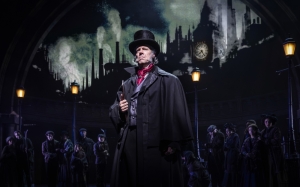
Few holiday stories are as deeply woven into the fabric of the season as A Christmas Carol, yet Paramount Theatre's lavish production in Aurora finds fresh magic within Charles Dickens' familiar classic. Combining spectacular stagecraft, heartfelt performances, and an infectious sense of holiday delight, the production embraces both the story's timeless sentiment and its enduring relevance. Whether encountering the tale for the first time or returning to it as an annual tradition, audiences are invited into a richly realized Victorian London where Dickens’ beloved tale unfolds with warmth, humor, and a sense of wonder that feels tailor-made for the holiday season.
For the uninitiated, A Christmas Carol follows the miserly Ebenezer Scrooge, a wealthy businessman whose devotion to profit has left little room for kindness, generosity, or human connection. On Christmas Eve, Scrooge dismisses the joy of the season, rebuffs charitable appeals, and treats his loyal employee Bob Cratchit with cold indifference. That night, however, his solitary existence is interrupted by the ghost of his former business partner, Jacob Marley, who warns that Scrooge's selfish ways have forged the very chains that bind him in death.
What follows is a fascinating passage through time as Scrooge is visited by the Ghosts of Christmas Past, Present, and Yet to Come. Each spirit reveals moments from his life, exposing long-forgotten joys, painful regrets, and the consequences of his hardened heart. Through these supernatural encounters, Scrooge witnesses the struggles and triumphs of those around him, including the loving but impoverished Cratchit family and the frail young Tiny Tim, whose fate becomes central to the story's emotional impact. As the visions unfold, Scrooge is forced to confront not only the man he has become, but also the possibility that his future is not yet written.
First published in 1843, Charles Dickens' A Christmas Carol has become one of the most enduring works in English literature. Written during a period of stark economic inequality in Victorian England, the novella helped popularize many of the charitable and family-centered traditions associated with Christmas today. More than 180 years later, the novella remains a cornerstone of holiday storytelling, inspiring countless adaptations while continuing to attract new audiences.
Under the thoughtful stewardship of adapter and director Trent Stork, Paramount's A Christmas Carol unfolds with a cinematic sense of scale while never losing sight of the intimate human moments that make Dickens' story so enduring. Stork's adaptation balances spectacle, humor, and emotional depth with remarkable confidence, while Matt Deitchman's lush arrangements, orchestrations, and original music provide a stirring musical backbone that enriches the storytelling without overwhelming it. The evening is further enriched by a series of beautifully rendered choral arrangements drawn from familiar Christmas carols. A standout sequence layers "O Holy Night" with several other seasonal favorites, creating a soaring vocal tapestry that showcases both the strength of the ensemble and the production's musical sophistication. Brenda Didier's choreography adds energy and festive charm throughout, and Music Director and Conductor Kory Danielson ensures the production's musical elements are delivered with grace and expressiveness, helping create a holiday experience that feels both grand and deeply personal.
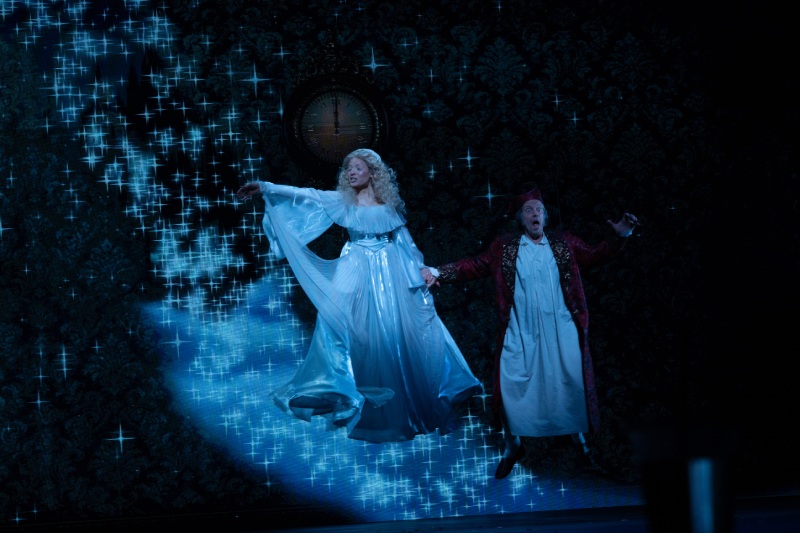
The Ghost of Christmas Past (Isabel Arianna Romero-Rodriguez) is the first spirit to haunt Ebenezer Scrooge (Michael Moreland Milligan) in Paramount Theatre’s new, reimagined holiday spectacular, A Christmas Carol by Charles Dickens.
At the center stands Michael Moreland Milligan, making a magnificent Paramount debut as Ebenezer Scrooge. Avoiding caricature, Milligan presents a layered and deeply human portrait of a man consumed by regret and emotional isolation. He charts Scrooge's transformation with conviction, allowing the character's growing self-awareness to emerge naturally rather than feeling rushed or overly sentimental. It's a commanding performance that anchors the evening and reminds audiences why Scrooge remains one of literature's most iconic characters. The accomplishment is hardly surprising given Milligan's extensive stage credentials, which include appearances on Broadway, a Fringe First Award for his acclaimed solo play Mercy Killers, and a featured role in the forthcoming Angel Studios film Hershey.
Also memorable is Scott Westerman as Jacob Marley, whose ghostly warning arrives with both chilling intensity and heartfelt concern. As Bob Cratchit, Shawn Pfautsch brings warmth, humility, and quiet strength, serving as the story's moral compass, while Aja Alcazar lends Mrs. Cratchit a tender resilience that enriches the family's most moving scenes. Isabel Arianna Romero-Rodriguez imbues the Ghost of Christmas Past with grace and mystique, guiding Scrooge through memories that are as poignant as they are illuminating. Meanwhile, Jared David Michael Grant radiates joy and generosity as the Ghost of Christmas Present, his exuberant performance embodying the spirit of the holiday season, while Ben Dow's imposing Ghost of Christmas Yet to Come provides some of the production's most striking and haunting imagery.
The supporting principals are also effective. Schyler Vargas shines as Fred, offering an infectious optimism that stands in stark contrast to his uncle's cynicism. Russell Konstans makes a lasting impression as the jovial Mr. Fezziwig, whose generosity serves as a powerful reminder of the path Scrooge abandoned long ago, while Michelle Duffy delivers memorable work across multiple roles, particularly as the warm-hearted Mrs. Fezziwig. Together, this exceptional company and creative team breathe vibrant life into Dickens' classic, crafting a production filled with good cheer, heart, and enough holiday spirit to warm even the coldest soul.
Paramount goes all out for this staging. Jeffrey D. Kmiec's breathtaking scenic design is a production unto itself, transforming Paramount's stage into a sprawling and richly detailed vision of 1840s London. Utilizing virtually every square inch of the theater's expansive playing space, the set creates a living, breathing city that feels both grand in scale and intimate in detail. From weathered street corners and bustling thoroughfares to the meticulously crafted interiors of Scrooge's gloomy chambers and the Cratchits' humble home, every environment possesses a distinct character and authenticity. The transitions between locations unfold with extraordinary fluidity, maintaining the story's momentum while constantly revealing new visual surprises.
Equally impressive are the production's projections and special effects, which infuse the performance with an added sense of magic and wonder. Whether conjuring spectral apparitions, transporting audiences through Dickens' snow-dusted London, or illuminating Scrooge's supernatural journey, these technical elements are executed with remarkable polish and imagination. Rather than serving as mere spectacle, the projections and effects enhance the storytelling, seamlessly bringing Dickens' otherworldly vision to life while preserving the emotional heart of the narrative. Combined, these elements create moments of genuine awe that make this already sumptuous production feel even more enchanting.
The visual storytelling is further elevated by Izumi Inaba's exquisite costume design, which fills the stage with period fashions that help define both social status and personality, adding another layer of authenticity to the Victorian setting. Greg Hofmann's atmospheric lighting design shifts effortlessly between warm holiday glow and spectral unease, guiding audiences through Scrooge's emotional and spiritual evolution, while Adam Rosenthal's sound design immerses viewers in the sights and sounds of Dickensian London. The result is a production whose visual and technical artistry continually deepens the storytelling, surrounding Scrooge's metamorphosis with a sense of mystery, atmosphere and holiday magic.
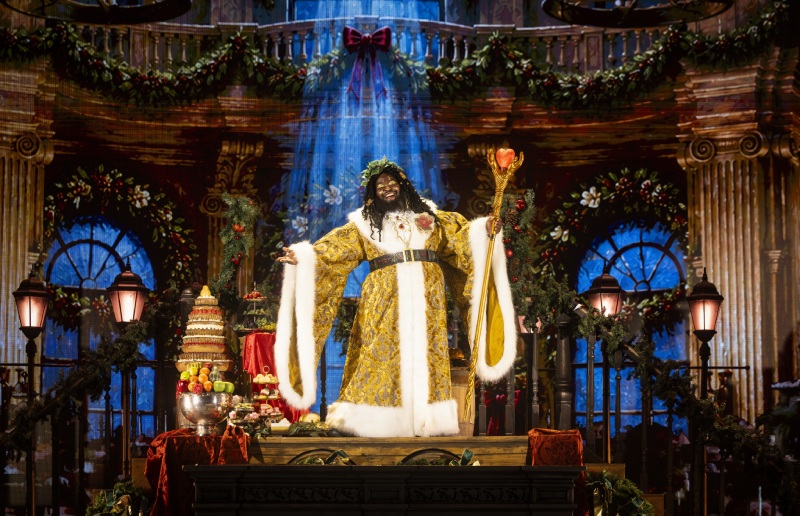
Jared David Michael Grant makes a grand entrance as The Ghost of Christmas Present.
Few stories have enjoyed the cultural longevity of A Christmas Carol. Since its publication, Dickens' tale has inspired countless stage adaptations, radio dramas, television specials, and feature films, with each generation finding its own way to revisit Ebenezer Scrooge's transformative journey. Few works of literature have demonstrated the staying power of A Christmas Carol, a fact reflected in the continued stream of new adaptations, including the recent release of Ebenezer starring Johnny Depp. Yet for all the versions that have come and gone, Paramount's production stands among the very best. Its combination of spectacular design, heartfelt performances, and genuine holiday magic places it firmly among the elite presentations of this beloved classic.
Goodman's legendary A Christmas Carol finally has some legitimate competition this holiday season. While Chicago audiences remain fortunate to have the downtown institution continuing its cherished annual tradition, Paramount's grand and emotionally resonant staging in Aurora proves every bit as compelling. Rather than competing for the same spotlight, the two productions complement one another, giving the region not one but two outstanding opportunities to experience Dickens' immortal tale.
Whether you're revisiting a cherished holiday tradition or introducing the story to a new generation, Paramount Theatre's A Christmas Carol delivers everything one could hope for from this timeless tale. Anchored by Michael Moreland Milligan's outstanding Scrooge, supported by a superb cast and creative team, and brought to life through breathtaking production values, it captures both the wonder and the heart of Dickens' masterpiece.
Highly recommended, A Christmas Carol continues at Paramount Theatre in Aurora through January 3rd. Don't miss the opportunity to experience one of the season's finest theatrical gifts.
For tickets and/or more show info, click here.
- Paramount Theatre
- A Christmas Carol
- Charles Dickens
- Ebenezer Scrooge
- Michael Moreland Milligan
- Trent Stork
- Scott Westerman
- Shawn Pfautsch
- Aja Alcazar
- Isabel Arianna Romero-Rodriguez
- Schyler Vargas
- Russell Konstans
- Jared David Michael Grant
- holiday classic
- Christmas
- live theatre
- Musical theatre
- on stage
- Chicago events
- Aurora theatre
- holiday magic
- family theatre
Citadel Theatre Captures the Magic of Old-Time Radio in It's a Wonderful Life: A Live Radio Play
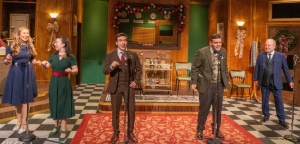
There is something undeniably captivating about witnessing the magic of old-time radio brought to life on stage. In an era long before television dominated living rooms, talented performers relied solely on their voices, sound effects, and the audience's imagination to create entire worlds. What was once a staple of American entertainment has largely become a lost art, making productions like It's a Wonderful Life: A Live Radio Play feel especially rare and rewarding. I jumped at the chance to see this beloved holiday classic interpreted through such a unique lens, and part of the joy came from watching a small ensemble of actors seamlessly inhabit multiple characters throughout the evening. Equally fascinating was the foley artistry on display, as everyday objects were transformed into footsteps, slamming doors, storm winds, and countless other sounds before the audience's eyes. The result was not only a tribute to a bygone era of broadcasting but also a celebration of the creativity and craftsmanship that made radio storytelling so memorable.
From the moment audiences enter Citadel Theatre, they are welcomed into the world of WBFR's holiday broadcast complete with illuminated "On Air" signs and flashing applause cues. Rather than waiting for the action to begin, patrons are greeted by performers already bustling about the stage, making final preparations as though a live radio transmission is only moments away. The setting evokes the warmth and nostalgia of a 1940s broadcast studio, complete with four vintage-style microphone stands, a prominently placed sound effects station, and festive holiday touches that create an inviting, cozy atmosphere. Scenic Designer Bob Knuth's richly detailed studio, complemented by Rachel M. Spyniewski's period-perfect costumes and Reiley Duffy's carefully curated properties, fully immerses audiences in the era. Wood-paneled walls, vintage furnishings, and authentic broadcast touches further enhance the illusion of stepping back in time. Before a single line is spoken, viewers feel less like theatergoers and more like guests witnessing a special Christmas Eve radio event.
Joe Landry's inventive stage adaptation of Frank Capra's beloved 1946 film It's a Wonderful Life, famously starring James Stewart and Donna Reed, transports audiences to a 1946 radio studio where a troupe of performers brings George Bailey's story to life. A devoted husband, father, and lifelong resident of Bedford Falls, George has spent years placing the needs of others ahead of his own dreams. Facing a personal crisis on Christmas Eve, he finds himself questioning the value of his life until a visitor from above offers an extraordinary glimpse into what the world might have looked like had he never existed.
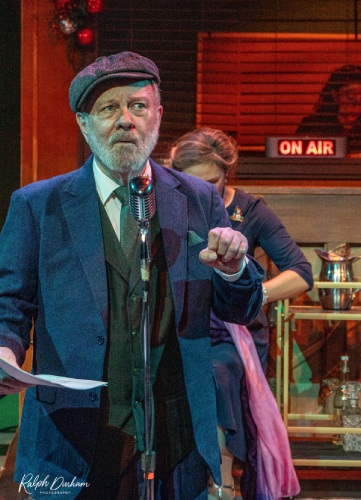
Brian Parry in Citadel's It's a Wonderful Life: A Live Radio Play. Photos by Ralph Durham Photography.
What unfolds is a heartfelt reminder of the profound impact one person can have on family, friends, and an entire community. By framing the story as a live radio broadcast, the production adds an extra layer of charm, inviting audiences to appreciate both the timeless emotional power of George Bailey's journey and the remarkable theatrical ingenuity required to create it in real time.
Director Jack Hickey assembles a remarkably talented ensemble that fully embraces the demands of the live radio play format. What could easily become a gimmick instead serves as one of the production's greatest strengths, as actors effortlessly shift between multiple characters, often changing personalities, accents, ages, and emotional registers in a matter of seconds. The transitions are so fluid that audiences never struggle to distinguish one character from another, despite the intentionally minimalist presentation. Particularly impressive are the moments when performers engage in conversations with themselves, adopting entirely different vocal identities with remarkable clarity and precision. The cast's ability to create such a vivid world using little more than voice, timing, and imagination speaks volumes about both their talent and the enduring power of storytelling.
Leading the company is Brian Parry, known to Chicago audiences for acclaimed portrayals of Willy Loman, King Lear, and Richard Nixon. As radio actor Freddie Filmore, Parry brings an appropriately imposing presence to Mr. Potter while also lending distinctive voices to characters such as Mr. Drucker and Uncle Billy. Jake Harrison Murphy and Rachel J. Jones anchor the evening as radio performers Jake Laurents and Sally Applewhite, seamlessly portraying George and Mary Bailey along with several additional roles. Meanwhile, John Dooley, as Harry “Jazzbo” Haywood, and Cait Kelly, as Lana Sherwood, prove indispensable as they cycle through a seemingly endless roster of supporting characters. Each performer develops distinct vocal patterns and mannerisms that make every role feel fully realized, regardless of stage time.
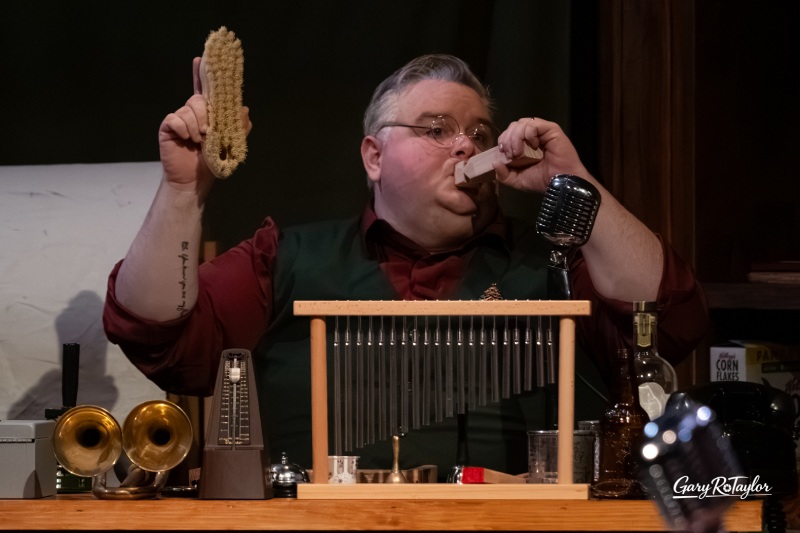
Caleb Ryan Jones as both the stage manager and foley operator.
Adding another layer of authenticity, Caleb Ryan Jones serves as both radio stage manager and foley artist, generating a steady stream of sound effects that become a source of fascination in their own right. Equally delightful are the vintage-style commercials woven throughout the program. Watching the performers transition from playing George Bailey and the citizens of Bedford Falls to enthusiastically delivering old-fashioned radio advertisements adds even more appeal to the evening while reinforcing the illusion that audiences are witnessing a genuine live broadcast from the 1940s. Under Hickey's assured direction, the entire company works in seamless harmony, transforming a familiar holiday favorite into a lively celebration of theatrical ingenuity and old-fashioned storytelling.
In the end, Citadel Theatre's production is far more than a clever exercise in nostalgia. It is a lovingly crafted reminder of why It's a Wonderful Life has endured for generations. Through sharp performances, inventive sound design, and a genuine affection for both the source material and the golden age of radio, the company transforms a familiar holiday story into an engaging theatrical event. Whether audiences come for the beloved Christmas tale or the rare opportunity to witness the artistry of live radio drama, they are likely to leave with renewed appreciation for both and perhaps a fresh reminder of the lasting impact one life can have on countless others.
Whatever form it takes, It's a Wonderful Life has become an annual Christmas tradition for countless families. Whether revisiting Frank Capra's beloved film starring James Stewart and Donna Reed, attending a theatrical adaptation, or experiencing the story through the lens of a live 1946 radio broadcast, its message remains as timeless as ever and its story every bit as engaging. As someone who can happily revisit all three and still come away wanting more, I suspect fans of the Capra classic who have yet to experience the radio-play version will find this production especially fulfilling.
Recommended.
It's a Wonderful Life: A Live Radio Play and is being performed through December 13th at Citadel Theatre in Lake Forest with a running time of 90 minutes and no intermission. For tickets and/or more show information, click here.
- Citadel Theatre
- Its a Wonderful Life
- ITS A WONDERFUL LIFE A LIVE RADIO PLAY
- James Stewart
- Donna Reed
- Frank Capra
- Jack Hickey
- Brian Parry
- Jake Harrison Murphy
- Rachel J Jones
- John Dooley
- Cait Kelly
- Caleb Ryan Jones
- Christmas Tradition
- holiday favorite
- Christmas
- holiday play
- live theatre
- radio broadcast
- on stage
- Chicago events
- Lake Forest
Genuine Heart Meets Classic Charm in Drury Lane’s Sunny Holiday Revival of Annie
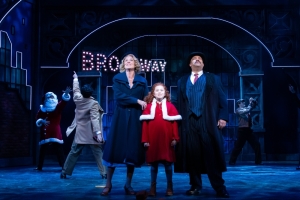
Almost fifty years after she first sang her way into Broadway history, the sun is still shining bright in Oakbrook Terrace as Drury Lane Theatre brings the beloved holiday classic Annie back to its stage for the first time in over a decade. Directed by Scott Weinstein and starring young powerhouse Emerson Mae Chan in the title role on opening night (with Catharina Araujo playing the part at select performances and Kate in others), this lavish seasonal revival captures all the Depression-era charm and infectious optimism of the original 1977 hit. From the opening notes of the overture, Drury Lane delivers a polished, crowd-pleasing take on a familiar favorite.
The story never gets old and remains a warm tale of resilience and hope. Set in New York City during December 1933, Annie follows an irrepressibly optimistic 11-year-old streetwise orphan determined to find the birth parents who left her on the steps of the New York City Municipal Orphanage a decade earlier. Armed with only half of a silver locket and a handwritten note promising they would return for her, Annie endures the daily misery of the orphanage’s bitter, scheming matron, Miss Hannigan. But her luck takes a dramatic turn when Grace Farrell, the warmhearted personal secretary to billionaire industrialist Oliver Warbucks, selects Annie to spend the Christmas holidays at Warbucks' Fifth Avenue mansion. Though initially awkward around children, the gruff tycoon is quickly charmed by Annie's pluck and determination, growing so fond of her that he asks to adopt her himself. When Annie gently declines - still holding out hope of finding her real parents - Warbucks vows to help her search, eventually offering a massive cash reward, and enlisting some help from none other than President Franklin D. Roosevelt. Predictably, the promise of a payout attracts the greed of Miss Hannigan, her swindler brother Rooster, and his accomplice Lily St. Regis, sparking a frantic race for Warbucks to expose their con and give Annie a true home just in time for Christmas.
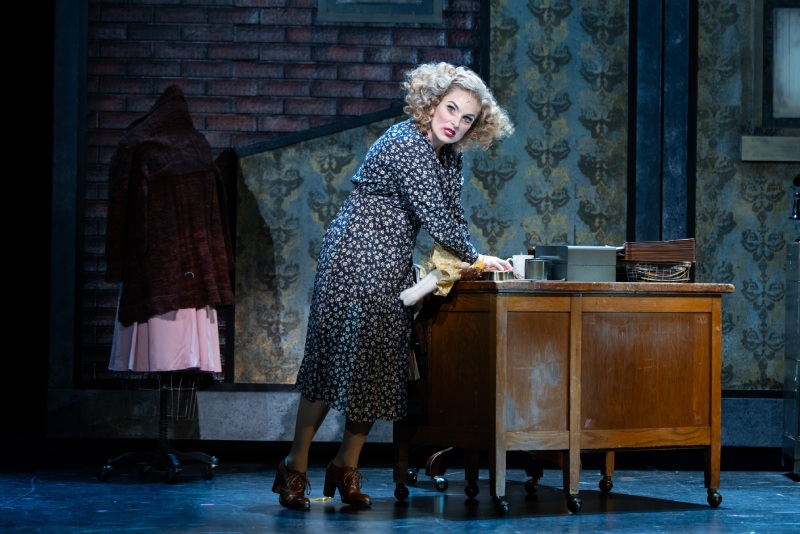
Kelly Felthous as Miss Hannigan in Annie at Drury Lane Theatre. Photos by Justin Barbin.
Weinstein’s direction keeps that familiar plot moving at a brisk, buoyant pace, anchored by standout performances across the board. After two years of touring full-time, Emerson Mae Chan returns home in her Drury Lane debut, capturing Annie’s spunky spirit with effortless charm, hitting her funniest lines with great timing and delivering a nice vocal highlight on “Tomorrow” - the signature number that defines Annie’s sunny outlook. Anand Nagraj delivers one of my favorite performances of the evening as Oliver “Daddy” Warbucks, impressing with both his strong baritone vocals and his nuanced acting. Rather than playing the billionaire as a one-note caricature, Nagraj brings genuine warmth and subtle humor to the role, making it a treat to watch his guarded exterior soften as his heart fills with love and he finds his childlike joy again. Meanwhile, nobody commands the stage quite like Kelly Felthous as Miss Hannigan, who delivers a gloriously unhinged, standout comedic performance from her very first entrance. She makes the iconic villainess unmistakably her own. Felthous is joined by Jackson Evans (Rooster) and Amanda Walker (Lily St. Regis), who each score solid laughs in their roles and help turn “Easy Street” into a high-energy highlight. Elsewhere, Allison Sill impresses vocally as Grace Farrell, lending a calming, assured presence whenever she steps onstage.
A large, energetic ensemble gives the entire production an undeniable lift. The young performers portraying the orphans often take center stage with sharp timing and genuine personality, holding their own alongside a hard-working adult ensemble that fills out the show's many worlds - stepping into everything from street vendors and radio performers to servants and politicians with ease.
Equally irresistible is Georgie, the real live dog playing Annie’s loyal companion, Sandy. Well-behaved and utterly endearing onstage, Georgie melts the theater on contact - every appearance triggers a chorus of affectionate "awwws" from the audience.
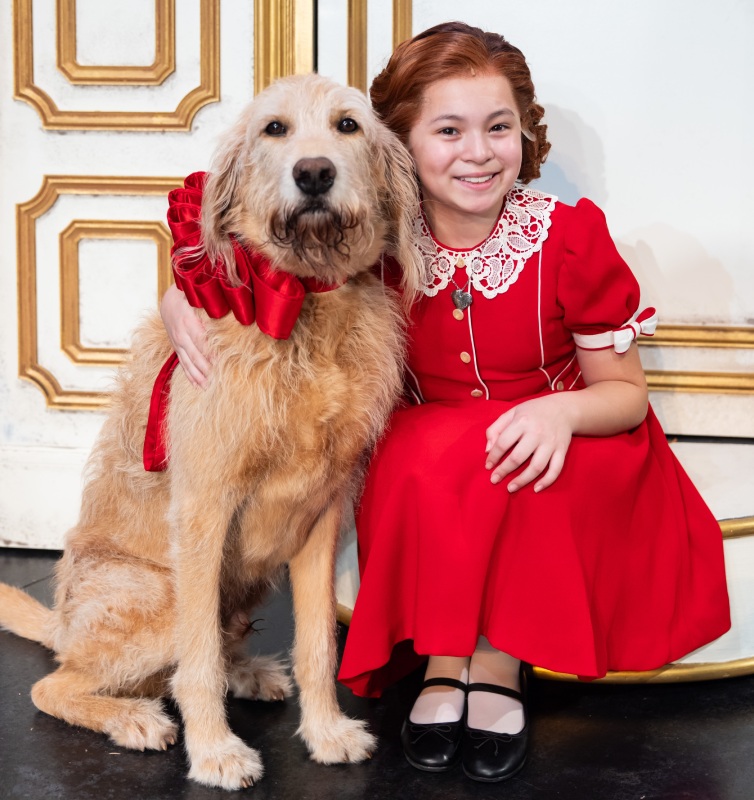
Georgie as Sandy and Emerson Mae Chan as Annie in Annie.
One of my favorite moments in the show arrives in Act II during a trip to the White House, where Annie interrupts a tense, pessimistic meeting between President Roosevelt (wonderfully played by Ron E. Rains) and his Cabinet as they struggle to pull the country out of the Great Depression. While his advisors bicker over grim economic forecasts, FDR turns to Annie for her perspective, sparking a playful back-and-forth that perfectly captures her ability to find a silver lining in everything. Sharing her simple philosophy that the sun will always come out tomorrow, Annie wins over the President - who nudges his gloomy Cabinet members to take her advice to heart before joining her in a spirited reprise of "Tomorrow" that turns a dreary policy session into a lively sing-along.
Another standout sequence was the live radio broadcast scene, which offers a fun glimpse back in time at how an old-school radio show operated - complete with a scene-stealing foley operator whose deadpan, almost-bored demeanor suggested every sound effect was pure second nature.
Visually, the production strikes a rich, theatrical balance. Under the crisp musical direction of Julia Schade, the live orchestra brings Charles Strouse’s definitive score vibrantly to life. Tijana Bjelajac’s scenic design effortlessly transitions between the bleak, shadowy grays of 1930s Hoovervilles and the warm, gilded grandeur of the Warbucks estate. Paired with Mara Blumenfeld’s period-authentic costumes and Jose Santiago’s atmospheric lighting, the staging highlights the stark economic contrasts of the era while keeping the holiday magic front and center. Mara Newberry Greer’s crisp, athletic choreography gives the young performers plenty of room to shine, particularly during high-energy numbers like "It’s the Hard-Knock Life" and "You’re Never Fully Dressed Without a Smile."
Ultimately, Drury Lane’s Annie succeeds because it treats its classic material with genuine affection rather than mere nostalgia. By pairing strong performances and polished stagecraft with an honest, heartfelt approach to the story, the production reminds audiences why this scrappy orphan has endured for nearly half a century without ever feeling dated or overly saccharine. Running at Drury Lane Theatre in Oakbrook Terrace through January 10, this joyous revival makes for the perfect holiday treat for the entire family.
Recommended.
For tickets and/or more show information, click here.
Warm Hearts in a Wintry Arendelle: Disney's Frozen the Musical Shines at Marriott Theatre
Disney's Frozen the Musical arrives at Marriott Theatre's intimate in-the-round stage with a story most audience members already know, though its enduring appeal relies on far more than ice castles and snowstorms. At its center is a moving tale of two sisters struggling to reconnect after years of fear and misunderstanding. Surrounding the audience on all sides, the production draws patrons directly into the kingdom of Arendelle, where family ties prove stronger than any spell.
The musical follows Princesses Anna and Elsa, whose childhood changes forever when Elsa's unexplained ability to create ice and snow accidentally puts her younger sister in danger. As Elsa grows older, she retreats into isolation, afraid her powers will hurt the people she loves. When those abilities are exposed during her coronation as queen, Elsa flees into the mountains, unintentionally plunging Arendelle into an endless winter.
Refusing to give up on her sister, Anna sets out to find Elsa and save the kingdom. Her journey introduces her to the rugged ice harvester Kristoff, his loyal reindeer Sven, and the endlessly optimistic snowman Olaf. Together they navigate frozen landscapes, unexpected obstacles, and long-buried truths as Anna searches for a way to bring Elsa home.
While the show delivers plenty of humor, adventure, and recognizable songs, its real strength lies in its focus on acceptance and unconditional love. As Anna and Elsa confront the fears that have kept them apart, Disney's Frozen the Musical reminds audiences that true love does not always look like a fairy-tale romance. Sometimes it means having the courage to accept who you are and holding tight to family.
The production is led by Morgan Anita Wood as Elsa and Chloé Nadon-Enriquez as Anna, whose sisterly relationship anchors the entire evening. Wood is fabulous in the role; her voice is truly special because she combines disciplined, commanding vocal range with an effortless, rich, and velvety tone that you simply cannot teach. Opposite her, Nadon-Enriquez is a ball of energy whose lively animation completely wins over the crowd, delivering plenty of laughs alongside enjoyable singing.
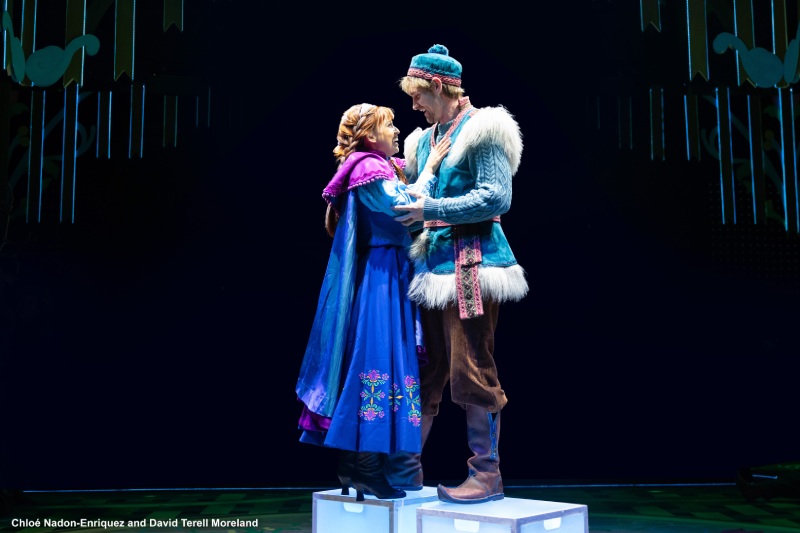
Chloé Nadon-Enriquez as Anna and David Terrell Moreland as Kristoff in Marriott Theatre's production of Disney's Frozen the Musical. Photo by Justin Barbin.
They are joined by David Moreland, who delivers an earnest, disarming, vocal-rich performance as Kristoff. Fresh from his riveting, powerhouse lead turn in Jekyll & Hyde - a collaboration between Broadway In Chicago and Kokandy - Moreland proves he is a talent to watch. Rounding out the principal cast are Nick Berninger as the ever-cheerful Olaf and Justin Albinder as a smoothly charming Hans, both helping bring the beloved world of Arendelle to the stage. The puppetry is equally impressive, with Olaf (designed by The Rock Shop) and the reindeer Sven (designed by Jesse Mooney-Bullock) bursting with personality. Like Berninger, Garrett Lutz brings Sven to life with remarkable skill, operating the puppet with expressive movements that make the character feel genuinely alive. Their work is further supported by a talented, richly utilized ensemble that fills the stage with memorable townsfolk, bustling crowd scenes, and lively theatrical touches.
The score remains one of the show's biggest draws, with crowd-pleasing favorites such as "Let It Go," "Do You Want to Build a Snowman?," "For the First Time in Forever," and Olaf's delightful "In Summer" earning enthusiastic applause. The stage adaptation also benefits from several numbers written specifically for Broadway, most notably Elsa's soaring "Monster," which digs deeper into her inner turmoil.
Much of the production's success belongs to the creative team. Ashley Rodbro's direction keeps the characters' relationships front and center, even during the splashier production numbers. Katie Spelman fills the space with choreography that feels purposeful rather than decorative, and Ryan T. Nelson's music direction gives the score warmth and clarity, helping the cast tackle big vocal demands with confidence. Visually, the design turns the theater into a winter wonderland. From the moment audiences walk in, they are greeted by a snowy Arendelle artfully staged in the round, complete with dazzling special effects that bring the magic right to their seats. Swirling snow falls on and around the stage and wraparound lightboards encircling the theater shift dynamically with the action, flaring to life with icy brilliance whenever Elsa unleashes her powers.
Disney's Frozen the Musical succeeds because of the genuine humanity running through its core. Beneath the dazzling stagecraft, Elsa’s ice powers serve as a poignant metaphor for the truths we fear are too dangerous, too different, or too overwhelming to share with the world. The endless winter that overtakes Arendelle becomes more than a fairy-tale curse; it reflects the quiet, aching isolation we create when we lock away our authentic selves out of fear of hurting the people we love. Ultimately, the story reminds us that shame thrives in secrecy, and that real thaw only begins when we allow ourselves to be fully seen and accepted. Marriott Theatre's immersive staging delivers that message of forgiveness and self-acceptance with real theatrical flair.
Running November 4, 2026, through January 3, 2027, Disney's Frozen the Musical is a crowd-pleasing holiday outing that will delight longtime fans while welcoming a new generation to Arendelle.
Recommended.
For tickets and/or more show information, click here.
A Murder Is Announced Is Murderously Entertaining
Few authors have mastered the art of the whodunit quite like Agatha Christie, whose intricate mysteries continue to captivate audiences decades after they were first penned. Adapted for the stage by Leslie Darbon from the prized author’s celebrated novel, A Murder Is Announced, the Saint Sebastian Players bring one of Christie's most ingenious puzzles to life at St. Bonaventure, blending suspense, humor, and a colorful collection of suspects into an evening of classic detective theater. Filled with secrets, red herrings, and unexpected twists, the production invites audiences to play detective alongside Christie's beloved amateur sleuth, Miss Marple, as she untangles a mystery that proves far more complicated than anyone initially suspects.
The intrigue begins when the residents of the quiet English village of Chipping Cleghorn discover a peculiar notice in the local newspaper announcing that a murder will take place at the home of Letitia Blacklock at a specific time and date. Assuming it must be some sort of joke or party game, curious neighbors gather at the appointed hour, only to find themselves present when an actual murder occurs. As the investigation unfolds, hidden identities, long-buried secrets, and unexpected motives begin to emerge from beneath the village's seemingly respectable facade. With suspicion falling on nearly everyone involved, Miss Marple gradually pieces together the clues, patiently separating fact from deception until the startling truth is revealed. Rich in wit and packed with clever misdirection, A Murder Is Announced remains one of the incomparable crime novelist’s most satisfying mysteries, rewarding audiences with a puzzle that keeps them guessing until the very end.
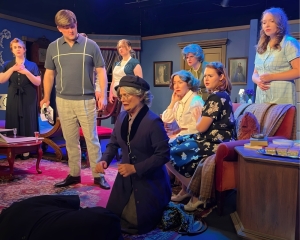
As the intrigue deepens, the Saint Sebastian Players benefit from a cast that readily embraces the source material's suspense and sly sense of humor. Abby McEntee's Miss Marple is confidently in command throughout, bringing a sharp intelligence and quiet determination to the role while skillfully connecting the dots that elude everyone else. Eric S. Prahl makes for a likable and engaging Inspector Craddock, balancing the character's investigative instincts with an approachable charm that keeps audiences invested in the case. Dawn Cole nearly steals every scene she enters as Mitzi, delivering some of the evening's biggest laughs through impeccable comic timing and a wonderfully authentic-sounding Hungarian accent. Emilia Barrosse is equally entertaining as Dora Bunner, injecting warmth, nervous energy, and several well-earned moments of humor into the proceedings. Meanwhile, Jill Chukerman Test provides a steady presence as Letitia Blacklock, maintaining the poise and composure necessary for a character suddenly thrust into extraordinary circumstances. Supported by a capable ensemble that includes Shelley DeHosse, Adam Hoak, Sophie Marantette, Molly McGillivray-Smith, Joleigh Reiss, and Sam Waddell, the company creates a lively collection of suspects and witnesses that makes nearly every character seem capable of murder.
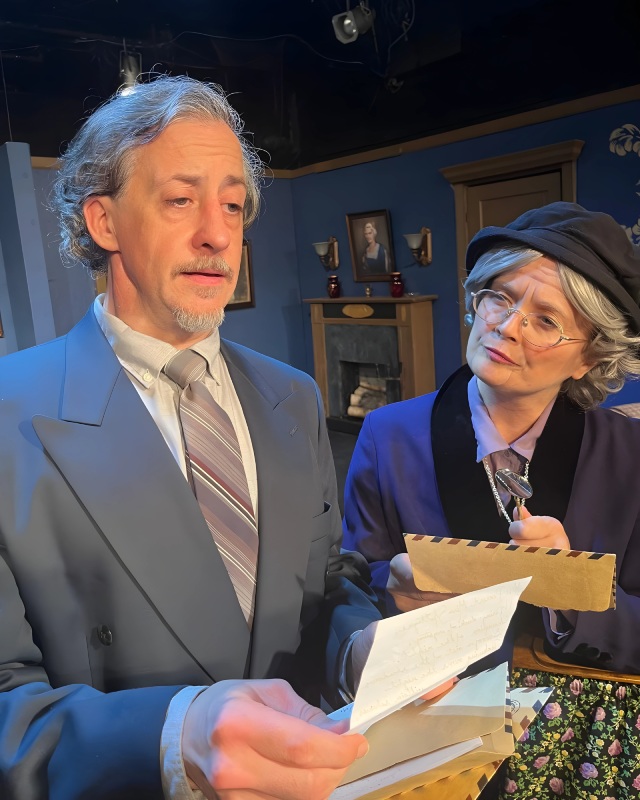
(left) Eric S. Prahl as Inspector Craddock and Abby McEntee as Miss Marple. Photo by Laura Peterson.
Under Aliza Feder's assured direction, the story unfolds with a steady sense of momentum, adeptly balancing the author's trademark suspense with moments of humor and character-driven warmth. Part of the production's success lies in its well-judged pacing, which allows the ensemble's strong chemistry to shine as characters exchange accusations, secrets, and surprising new information throughout the evening. Feder keeps the large ensemble moving fluidly throughout the production, ensuring that the stage never feels overcrowded despite the number of suspects constantly drifting in and out of the action. Much of that success is aided by Emil Zbella's impressive scenic design, which transforms the stage into a spacious, period-authentic English drawing room that immediately establishes the play's setting and atmosphere. The expansive set provides ample room for the cast to spread out naturally while still maintaining the intimacy necessary for a classic drawing-room mystery. Grace M. Weir's costumes further enhance the production's sense of time and place, outfitting each character in attire that feels true to the era while helping to define their personalities and social standing. Feder's direction, coupled with the scenic design and costuming, provides a strong framework for the story's many surprises and discoveries.
This was my first visit to a Saint Sebastian Players production, and I came away very impressed. The company's home at St. Bonaventure possesses an appeal all its own, with the church environment creating a setting quite different from that of a traditional theater. The cozy lobby, lined with photographs from past productions, provides a welcoming place to gather before curtain, while the performance space offers comfortable sightlines and ample room for the action to unfold. Supported by an expansive stage and an impressive set, the venue complements the production nicely and helped make the evening an enjoyable introduction to the company.
With its engaging cast, sharp direction, impressive production values, and one of Agatha Christie's most entertaining mysteries, A Murder Is Announced delivers an evening of classic theatrical suspense. The production is well-acted, well-paced, and filled with enough twists, turns, and unexpected detours to keep audiences guessing until the final reveal. Whether you're a longtime Christie devotee or simply enjoy a good whodunit, Saint Sebastian Players Theatre Company's latest offering proves to be an enjoyable and rewarding detective tale that should satisfy fans of the genre.
A Murder Is Announced runs through November 15th at St. Bonaventure with a runing time of two hours and thirty minutes, which includes a fifteen minute intermission.
For tickets and/or more show information, click here.
Highly recommended.
Mexodus Gives Voice to a Rarely Told Story of Freedom
What is Mexodus? Part concert, part theatrical journey, and part history lesson, it explores a rarely told chapter of the Underground Railroad in which enslaved Black Americans sought freedom not in the North, but across the Mexican border. Following Mexico's abolition of slavery in 1829, enslaved Black Americans fleeing bondage in Texas found a path to freedom across the southern frontier, though the trek remained perilous and uncertain. Created and performed by Chicago native Brian Quijada and Nygel D. Robinson, Mexodus combines innovative live-looping, movement, and storytelling under the direction of David Mendizábal and choreography by Tony Thomas. Now playing at Chicago's historic Studebaker Theater, the production offers a fresh and compelling perspective on a little-known chapter of American history.
The story follows an escaped enslaved man who flees Texas for Mexico, where he encounters an unexpected ally and discovers that freedom, while attainable, is never simple. As the pair navigate cultural divisions, political tensions, and the lingering realities of oppression, Mexodus reveals a powerful tale of resilience, friendship, and liberation. Together, their journey becomes a moving exploration of companionship and human connection amid a world shaped by division and oppression.
But it is the way this story is told that truly sets Mexodus apart. One of Mexodus's most distinctive features is its virtuosic use of live-looping, a process that proves fascinating to watch unfold. Quijada and Robinson serve not only as performers but as the production's orchestra, creating beats, rhythms, harmonies, and sound effects in real time through a combination of voice, percussion, and live instrumentation. The score draws heavily from hip-hop while incorporating spoken word, layered vocals, and atmospheric sound design, resulting in a soundscape that is both modern and richly theatrical. Seemingly every instrument imaginable finds its way into this staging, showcasing the artists' remarkable versatility and creativity.
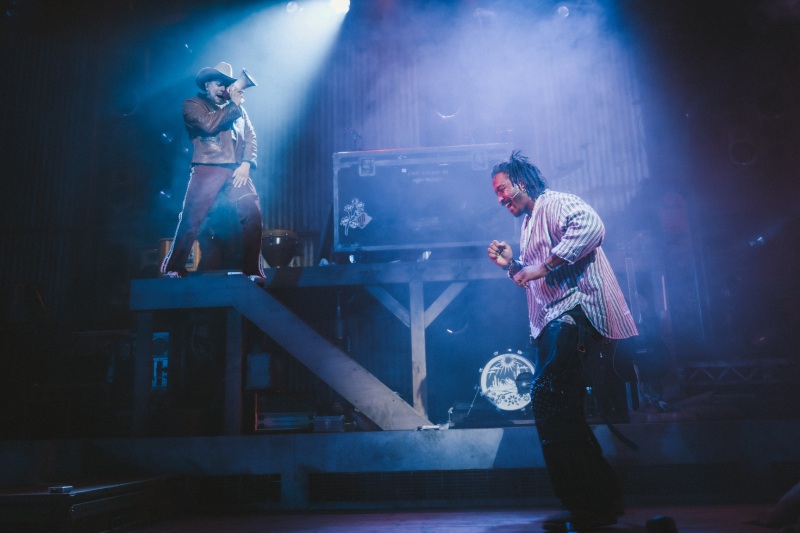
Brian Quijada and Nygel D. Robinson in Mexodus. Photo by Thomas Mundell.
Beyond its impressive musicianship, Mexodus also departs from conventional musical theater structure. Mexodus unfolds as a fluid blend of concert, historical exploration, spoken-word performance, and dramatic storytelling. Quijada and Robinson make full use of the performance space, shifting seamlessly between narration, character work, choreography, and music-making. As they travel across the stage, performance, movement, and music-making merge into a seamless theatrical language, creating an experience in which storytelling unfolds through both sound and motion. At times, audiences may find themselves just as captivated by the remarkable process of watching the music take shape in real time as they are by the narrative itself. For many, however, that genre-defying approach is precisely what makes the production so engaging, allowing the history at its center to feel immediate, contemporary, and emotionally resonant.
At the center of Mexodus are Quijada and Robinson, two tremendously talented and charismatic performers whose effortless collaboration makes even the show's most technically demanding moments appear natural. Their chemistry is undeniable, creating a sense of spontaneity and joy that carries throughout the evening. Behind the scenes, Music Director Alan Mendez expertly shapes Mexodus' rich musical tapestry, while Mikhail Fiksel's sophisticated looping systems architecture and sound design provide the foundation that makes the show's ambitious live music creation possible. Complemented by Johnny Moreno's evocative projections integrated into Riw Rakkulchon's scenic design, the show delivers a captivating theatrical experience for both the eyes and ears. The collaboration between P3 Productions, Audible, and Teatro Vista further underscores the ambitious scope of the undertaking.
By blending history, music, and performance into a seamless whole, Mexodus brings a little-known chapter of the Underground Railroad vividly to life in the most unique of ways. The production's inventive use of live-looping and its dynamic central performers create an experience unlike anything else currently on Chicago stages. Mexodus plays a limited three-week run at Chicago's historic Studebaker Theater in the Fine Arts Building, 410 S. Michigan Avenue, from November 7 through November 21, 2026. For additional information and tickets, click here.
Highly recommended.
A Masterwork Reanimated: Manual Cinema's Frankenstein Still Inspires Awe
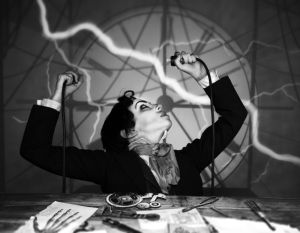
Since premiering at Court Theatre in 2018, Manual Cinema's Frankenstein has stood as one of Chicago's most remarkable theatrical achievements. Returning for just five performances at the Studebaker Theater, the work remains every bit as mesmerizing today as when theatergoers first encountered it. More than an adaptation of Mary Shelley's classic Gothic novel, Frankenstein is a work of brilliant art, a breathtaking fusion of theater, film, music, and visual storytelling that pushes the boundaries of what live performance can accomplish.
Few companies blur the line between theater, cinema, and visual art as completely as Manual Cinema. Through the collective's signature combination of shadow puppetry, miniatures, projected imagery, live acting, original music, and meticulously crafted sound design, Frankenstein unfolds with the wonder of watching a dream take shape in real time. Perhaps most impressive is the dual experience the company creates, allowing audiences to become immersed in the finished cinematic image while simultaneously appreciating the artistry required to produce it.
What makes this version so compelling is its refusal to settle for a straightforward retelling. Rather than focusing solely on Victor Frankenstein and his doomed creation, the piece intertwines the familiar narrative with the life of Mary Shelley herself. Conceived and directed by Drew Dir and devised by Dir, Sarah Fornace, and Julia Miller, the work finds unexpected psychological depth in the parallels between creator and creation. The result is an emotionally resonant exploration of grief, ambition, responsibility, and the mysterious spark behind artistic creation. Shelley's experiences become inseparable from the tale she imagined, giving fresh dimension to a story many may think they know by heart.
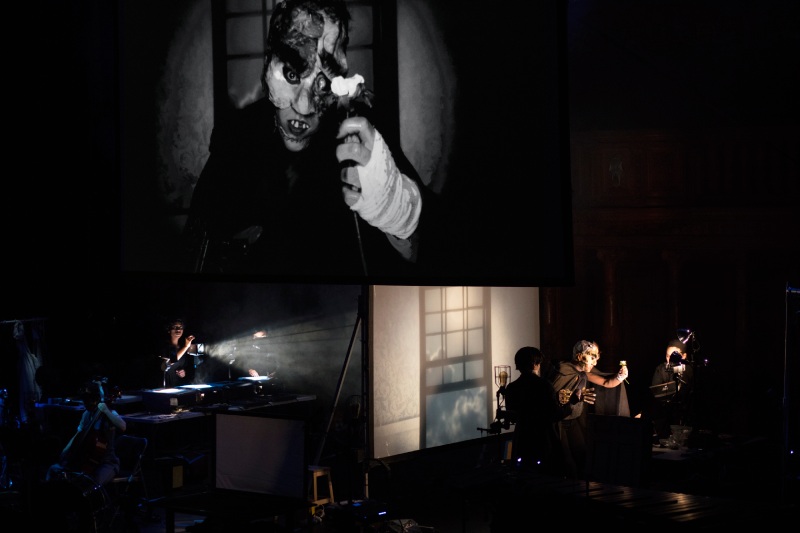
Manual Cinema's Frankenstein. Photo courtesy Elly White.
Manual Cinema's technical accomplishments remain astonishing. The performers serve simultaneously as actors, puppeteers, camera and overhead projection operators, and illusionists, constructing intricate visual worlds before our eyes. Every shadow, every miniature landscape, and every carefully choreographed movement contributes to a cinematic language that feels both innovative and timeless. At times, the work's rich layering of imagery demands careful attention, but the payoff more than justifies the investment. Watching the mechanics at work only deepens one's appreciation for the craftsmanship involved. The production's richly imagined visual language owes much to an exceptional design team. Shadow Puppet Design by Drew Dir and Liza Breit, Projections and Scenic Design by Rasean Davante Johnson, and 3D Puppet Design by Liza Breit provide the foundation for the show's arresting imagery. Lighting Design by Claire Chrzan adds atmosphere and dramatic texture, while Costume and Wig Design by Meka van der Ploeg and Prop Design by Lara Musard enrich the world with thoughtful detail and period character.
Sarah Fornace is a force and anchors the evening with beautifully realized portrayals of both Victor Frankenstein and Mary Shelley, illuminating the parallels between the ambitious scientist and the visionary author who imagined him. Kara Davidson proves equally compelling as both the Creature and Elizabeth Frankenstein, bringing remarkable humanity and quiet complexity to each role. Together, their performances ensure that beneath the show's dazzling technical achievements beats a deeply human heart.
The evocative original score and sound design by Ben Kauffman and Kyle Vegter prove equally vital, transforming every scene into an immersive sensory experience. The music heightens the emotional stakes while the live effects establish an atmosphere that ranges from intimate reflection to Gothic grandeur. There is also something undeniably enjoyable about watching the musicians positioned around the stage assemble the show's haunting sonic landscape in real time, revealing yet another layer of Manual Cinema's theatrical ingenuity. The visual and sonic elements combine to produce an experience that feels as sweeping as a feature film while maintaining the immediacy and vulnerability of live theater.
That artistry was especially evident from our seats directly in front of percussionist Justin Peters (performing the night I attended), whose work became a captivating attraction in its own right. Surrounded by towering xylophones and an eclectic collection of suspended objects that ranged from hubcaps and planters to what appeared to be a kitchen sink, Peters coaxed an astonishing variety of sounds from each piece, his dexterity and precision adding another captivating layer to Manual Cinema's intricate theatrical machinery. The variety of instruments on display is every bit as fascinating as the sounds they produce.

Sarah Fornace as Mary Shelley in Manual Cinema's Frankenstein. Photo by Drew Dir.
One of the evening's greatest delights came after the final curtain. Guests were invited to join the actors, musicians, projectionists, and artistic team onstage to discover firsthand how Manual Cinema brings its signature illusions to life. Visitors could handle puppets, experiment with projectors, appear on camera, and watch their own silhouettes become part of the visual storytelling. Beyond the opportunity to ask questions, take photographs and videos, and interact with the artists, the experience beautifully reinforced one of the company's central ideas: understanding the process does not diminish the magic - it makes it even more extraordinary.
Yet for all its technical and musical wizardry, Frankenstein never loses sight of its humanity. At its heart lies a poignant examination of loneliness, longing, and the desperate need for connection. The Creature emerges not merely as a monster but as a profoundly sympathetic figure whose search for acceptance speaks across centuries. Likewise, the portrayal of Mary Shelley reveals the often-painful relationship between art and life, suggesting that creation itself can be both beautiful and terrifying.
The Halloween season offers no shortage of spooky entertainment, but few works achieve the artistic depth, technical ingenuity, and emotional impact of Manual Cinema's Frankenstein. Years after its debut, it remains a defining achievement of Chicago theater and a shining example of the city's creative excellence. For those fortunate enough to experience one of its five performances only, October 28-November 1, 2026, at the Studebaker Theater, this extraordinary presentation serves as a reminder that great theater can still inspire awe.
Frankenstein is more than a theatrical event. It is a masterwork of visual storytelling, a triumph of imagination and technique, and one of the most distinctive theatrical works to emerge from Chicago in the past decade.
Manual Cinema returns to the Studebaker Theater with A Christmas Carol for a limited engagement December 18-27.
Highly Recommended.
Studebaker Theater in the Fine Arts Building
75 minutes – no intermission
Tickets and information: Fine Arts Building - FrankensteinFrankenstein
BrightSide’s Addams Family Musical Revives the Wonderfully Weird World of the Addams Clan
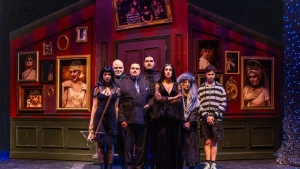
They're creepy and they're kooky, Mysterious and spooky, They're altogether ooky, The Addams Family.
Yes, ooky.
BrightSide Theatre’s production of The Addams Family Musical at the Theater at Meiley Swallow Hall feels like stepping back into the wonderfully odd world of a family we’ve all grown up with. There’s an immediate charm in seeing Gomez and Morticia - the passionately devoted, darkly elegant heads of the Addams clan - presiding over their spooky, loving household with the same theatrical flair that made them iconic. With a book by Marshall Brickman and Rick Elice and music and lyrics by Andrew Lippa, the show’s blend of gothic quirk, musical comedy warmth, and big-hearted family chaos lands with a personal, familiar joy that makes this staging especially inviting. And right at the center is Wednesday Addams, their sharp tongued, deadpan daughter whose unexpected leap into romance sets everything spiraling.
In this musical comedy, Wednesday has fallen in love with Lucas Beineke, a sweet, decidedly “normal” young man from Ohio. Determined to prove she’s ready for something real, she asks her parents to host a dinner so the two families can meet - but she also begs Gomez to keep her engagement a secret from Morticia. That single request throws Gomez into a hilarious moral crisis, while Morticia senses something is off and the rest of the Addams household prepares for an evening guaranteed to go sideways. When the straight-laced Beinekes arrive, their collision with the gloriously eccentric Addamses sparks a night of confessions, misunderstandings, unexpected alliances, and more than a few supernatural surprises. What unfolds is a heartfelt, funny, and delightfully macabre exploration of love, loyalty, and the beautifully strange ways families learn to accept one another - quirks and all.
BrightSide’s production thrives on the strength of its performers, and this cast brings the Addams world to life with personality, precision, and a magnificently off-center spirit.
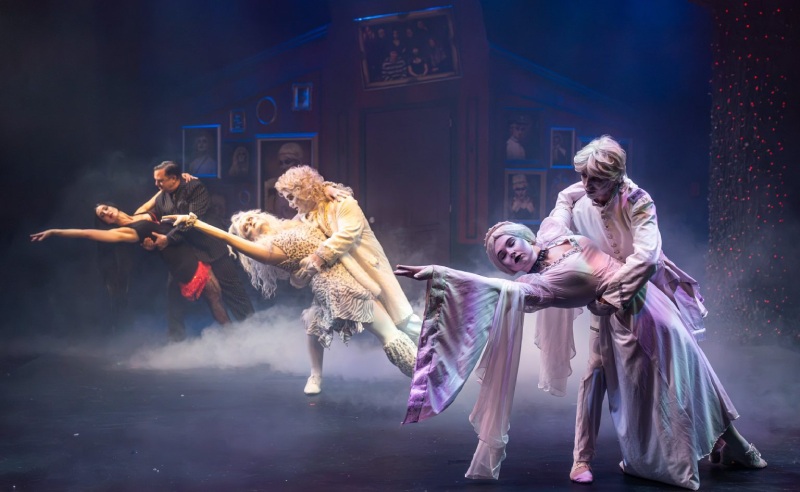
Scott Kelley and Samatha Keret (rear) as Gomez and Morticia and Ancestors in Brightside Theatre’s The Addams Family Musical. Photos by CM Stage Photography.
At the center of the production are Scott Kelley’s Gomez Addams and Samantha Keret’s Morticia Addams, who anchor the show with an easy chemistry that makes their partnership feel lived in and genuinely affectionate. Their banter and romantic interactions are fantastic - playful, sharp, and full of the kind of idiosyncratic mutual understanding that makes their marriage the emotional core of the evening. Kelley gives Gomez a warm, slightly frantic presence, the kind of theatrical bravado that feels both funny and sincere. Keret, with her beautiful voice and cool, elegant presence, matches him beat for beat, creating a dynamic that feels both grounded and pleasantly heightened. Together, they knock their roles out of the ballpark.
The ensemble - from the Addams clan to the buttoned-up Beinekes, along with the ghostly Ancestors who linger in the house until Wednesday’s journey toward love sets them free - brings strong energy and cohesion to the production, giving the show a vibrant foundation for some standout performances.
Lauren Mathews’ Wednesday Addams is terrific, offering a Wednesday who is smart, guarded, and brimming with the dry, deadpan wit audiences expect - but also carrying the emotional uncertainty of someone stepping into adulthood faster than she planned. Her performance captures a teenager caught between loyalty to her wonderfully strange family and the terrifying possibility of real change. Because the story ultimately revolves around love - romantic, familial, and everything in between - Mathews becomes the hinge of the entire narrative, and she handles that responsibility with clarity and confidence.
Collin Borisenko’s Uncle Fester adds a welcome dose of sweetness and eccentricity, leaning into Fester’s gentle oddball nature without tipping into caricature, while Amy Arbizzani’s Alice Beineke provides some of the evening’s biggest laughs as a tightly wound suburban mom whose unraveling becomes a comedic highlight. Arbizzani’s timing - and her ability to really belt when the moment calls for it - turns her musical outbursts into genuine showstoppers.
BrightSide’s creative team shapes this production with care and a clear affection for the material. Under De Haddad’s direction, the musical moves with clear, unfussy ease, balancing the story’s humor and heart while keeping the unconventional Addams world feeling cohesive and inviting. Shane Brown’s choreography adds light, well placed movement that supports the storytelling without crowding the stage, giving each number a clear, character focused lift. Phil Videckis leads the music with steady assurance, keeping the score’s personality and emotional beats aligned with the action. Cheryl Newman’s costumes offer a thoughtful blend of familiar Addams silhouettes and clean, stage ready designs, while Kurt Ottinger’s lighting brings subtle shifts in mood and color with just enough theatrical shadow to frame the world effectively. The production’s scenic design, crafted by Ariel Mozes, provides a space that feels both spooky and welcoming - a home that fits the Addams tribe and the story unfolding within it. One of the production’s most engaging details is the way the Ancestors drift in and out of the family portraits, turning the walls of the Addams home into a living gallery that observes the action as it unfolds.
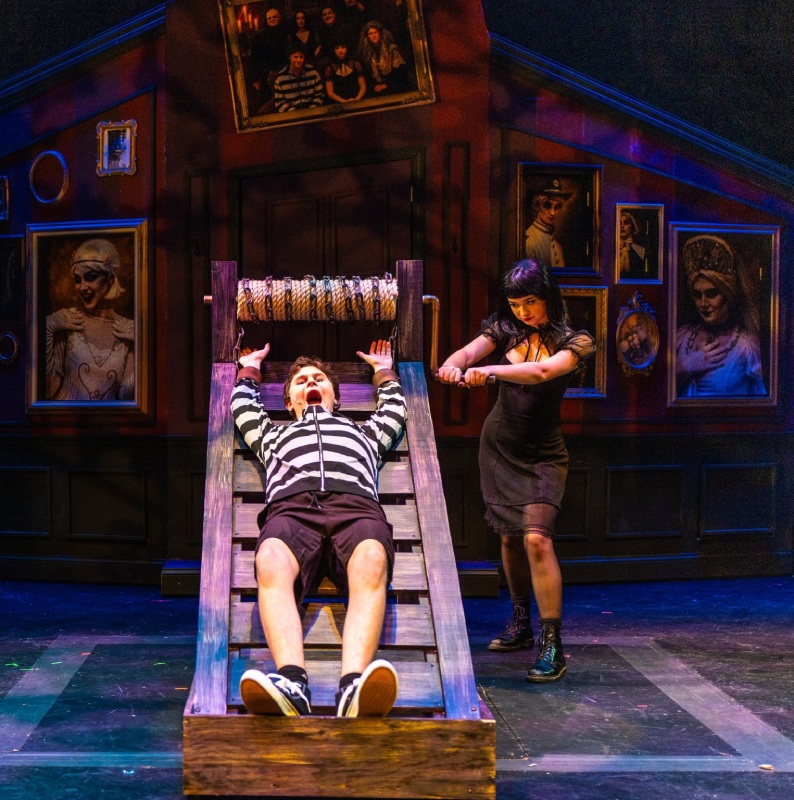
Pugsley and Wednesday Addams (Carson Kelley and Lauren Mathews) in Brightside Theatre’s The Addams Family Musical.
This is a funny show that is all about love, and BrightSide delivers that humor with a light, playful touch that keeps the audience laughing. And even when some of the jokes are predictable, they still land, because the delivery, timing, and sheer Addams‑style absurdity make the familiar feel fun rather than tired. I did wonder whether comedy born sixty years ago would still resonate with today’s crowd, but the production blends the classic Addams deadpan with a few modern winks - including some sly innuendo and contemporary asides - that make the jokes feel fresh without betraying the spirit of the original. The crowd was a mix of longtime Addams fans and newer generations, something made instantly clear when the familiar theme kicked in - a handful snapped right on cue while others clapped along. It was a fun blend of reactions, and the overall effect showed that the humor lands for everyone.
Big musical moments like When You’re an Addams burst with playful choreography and gothic silliness, setting the tone right from the start. Later, Full Disclosure turns a family dinner into a brilliantly chaotic spectacle, layering jokes, reveals, and ensemble energy in a way that feels both sharp and amusingly messy. Morticia’s Just Around the Corner is another highlight - a charming bit of dark humor built around her cheerful pun that “death is just around the coroner… get it?” delivered with exactly the kind of melodramatic glint the character thrives on.
For so many of us, The Addams Family began in grainy black and white reruns on TV - the kind you’d stumble upon on a quiet afternoon, or watch curled up on the couch, instantly pulled into that wonderfully odd little world. Those episodes became part of childhood in a way that sticks, shaping our sense of humor and giving us characters who felt strange, sweet, and strangely familiar all at once. Seeing the Addamses still make people smile today - onstage, in full color, with all their offbeat charm intact - is a reminder of how enduring they are. Decades later, they’re still beautifully weird, still welcoming, and still capable of bringing out that same simple, shared joy.
BrightSide Theatre’s The Addams Family Musical is recommended, offering a spirited, nostalgic, and thoroughly enjoyable night out for audiences of all ages. The production runs October 2–18, 2026 at the Theater at Meiley Swallow Hall at North Central College, located at 31 S. Ellsworth St. in Naperville. With an estimated running time of 2 hours and 30 minutes, including intermission, it’s an evening that delivers plenty of laughs, charm, and quirky family fun - a welcome return to the wonderfully weird world of the Addams clan.
Chicago City Opera Delivers a Rare Operatic Haunting with Der Vampyr
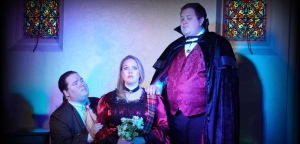
With Halloween creeping closer, there’s something fitting about revisiting one of opera’s earliest flirtations with macabre horror - especially in a production presented and performed by Chicago City Opera (COT). Der Vampyr may not enjoy the mainstream familiarity of later supernatural works, but its mix of moonlit superstition, doomed romance, and aristocratic menace makes it an ideal October offering. As audiences lean into the season’s appetite for the eerie, Marschner’s opera emerges as a surprisingly modern ancestor to everything from Victorian melodrama to contemporary horror musicals.
Though often treated as a standalone curiosity, Der Vampyr has a lineage that begins well outside the opera house. The story originates with John Polidori’s 1819 prose tale The Vampyre, one of the first works to codify the seductive, aristocratic vampire archetype. Polidori’s narrative was adapted into a German stage play by Heinrich Ludwig Ritter, whose dramatization became the direct source for Wilhelm August Wohlbrück’s libretto. Heinrich Marschner’s 1828 opera builds on Ritter’s theatrical version, shaping the material into a darkly romantic, musically driven narrative that blends early Romantic lyricism with gothic theatrics. In short: Polidori’s story inspired Ritter’s play, and Ritter’s play became the foundation for Marschner’s opera.
Set in early 19th century Scotland, the opera follows Lord Ruthven, a charismatic nobleman cursed with vampirism and bound to claim new victims before dawn or face eternal damnation. After surviving a near fatal attack, the young hero Edgar becomes unknowingly entangled in Ruthven’s hunt. Ruthven first targets the innocent Janthe, luring her to a ruined castle under the guise of seduction, and later sets his sights on Malwina, Edgar’s beloved, whose wedding night becomes his final opportunity to fulfill his deadly pact. As Edgar pieces together the truth, the opera accelerates toward a frantic race against sunrise: Ruthven’s identity is exposed, his supernatural bargain collapses, and the community rallies to save Malwina as the vampire is ultimately destroyed. What remains is a blend of gothic suspense, romantic rescue, and early Romantic moral drama - a seasonally perfect slice of operatic horror as Halloween approaches.
Jeremiah Strickler commands the evening as Lord Ruthven, delivering a performance that blends aristocratic charm with a chilling, predatory stillness. His presence anchors the production - vocally assured, theatrically magnetic, and always in control of the opera’s gothic pulse. Opposite him, Jordan Loyd brings a clear, earnest intensity to Edgar Aubry, shaping the role with a bright tenor and a palpable sense of moral urgency. Loyd had some of the most spectacular and heartfelt vocal moments of the evening, particularly toward the end of Act II as he reflects on his past love. Jessie Lyons’ Malwina adds welcome tenderness, her lyrical phrasing and grounded sincerity adding to the opera’s romantic core. Ariel Emma’s Janthe provides one of the night’s most striking early moments, her brief arc handled with vivid color and fearless commitment, and some of the notes she held were genuinely astounding - the kind that stop the room for a beat. Keaton Payne’s Humphrey von Davenaut provides a sturdy, authoritative counterweight, shaped by both his assured delivery and his expressive, sharply drawn presence. Meanwhile, Molly Clementz (also the production’s graphic designer) brings Emmy Perth to life with bright energy and an impressive finesse that lifts every moment she’s given, adding flashes of warmth, wit, and a polished musicality - especially in the way she shapes and sustains her notes with such control and clarity.
Bat Collazo’s George Dibdin and Kevin Wheatle’s John Berkley round out the ensemble with crisp, well-shaped character work that keeps the world of the opera humming with specificity.
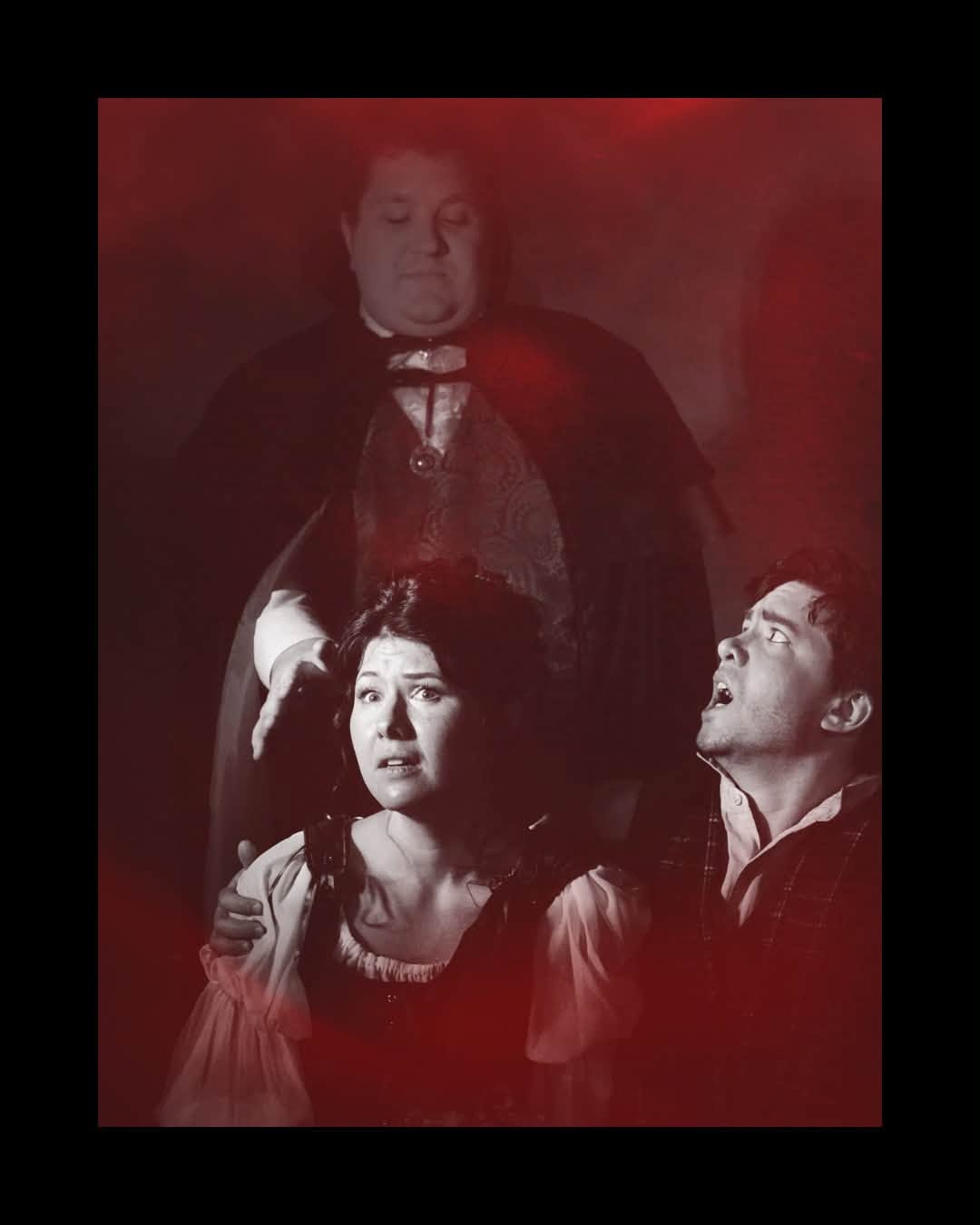
Jerimiah Strickler (rear) Molly Clemenntz (left) and Bat Collazo in Chicago City Opera's Der Vampyr.
One of the unexpected pleasures of the evening was simply hearing each singer on their own - every voice carrying its own color, character, and emotional weight. But when paired, those timbres intertwined with a striking naturalness, and in the moments when all eight sang off one another at once, the result was nothing short of exquisite. The ensemble sound had a richness and immediacy that felt almost architectural, each voice reinforcing the next until the room seemed to vibrate with a unified, resonant force. It was a reminder of how thrilling Marschner’s writing can be when performed by artists who listen as intently as they sing.
Behind the scenes, Alexis Enyart conducts with sharp dramatic instinct, shaping Marschner’s score with clarity and momentum. SarahAnn Sutter’s direction deepens the production’s impact, treating Der Vampyr not merely as gothic spectacle but as a living, breathing psychological drama. She embraces the opera’s supernatural flair with confidence - the shadows, the proximity, the sudden shifts in tone - yet she never lets the human stakes slip away. Sutter has a keen sense for spatial storytelling, using the venue’s architecture to heighten tension and intimacy; she sends performers through the aisles and along the home’s sweeping historic staircase, activating much of the house as part of the dramatic landscape. Her staging choices reveal a director who understands how early Romantic horror works best: not through excess, but through precision, ambience, and emotional clarity. Supported by Jordan Crice’s deft piano work and Adam Nicholson’s distinctive set design, the result is a production where every element feels intentionally placed and dramatically charged. Thanks to this talented cast and creative team, Chicago City Opera builds a world where early Romantic horror feels both stylish and surprisingly immediate.
Although Der Vampyr travels through a handful Chicago area venues during its run, the performance I attended on opening night unfolded inside the storied Colvin House - a location that feels almost predestined for this opera. Colvin House, beautifully placed across the street from Lake Michigan on the corner of Thorndale Avenue and Sheridan Road, proves to be an inspired setting for Der Vampyr, its historic architecture and intimate, richly textured rooms amplifying the opera’s gothic mood in ways a traditional proscenium simply can’t match. The building’s carved woodwork, shadow friendly corners, period furnishings, and old-world elegance create a natural sense of suspense and closeness, allowing the audience to feel almost inside the drama rather than observing it from a distance. The scale of the space heightens the tension - Ruthven’s entrances feel more dangerous, Janthe’s fate more immediate, Malwina’s peril more personal. Colvin House becomes a living extension of the opera’s supernatural world and a perfect match for Marschner’s early Romantic horror.
Despite all its strengths, the evening wasn’t without a minor but noticeable drawback. Although brief stretches of dialogue were exchanged in English, the opera itself is sung in its original German, making the surtitles essential for most. Unfortunately, the monitor displaying those subtitles sat off to the front side and too low to be easily seen by much of the audience; only those in the unobstructed front section had a consistently clear view. Sitting in the third row opposite the monitor side, I was able to catch most of the surtitles when first‑row head movement allowed, but many around me – and further back - were blocked entirely. I’m no set designer, but raising the monitor and centering it - even if it encroached slightly into the stage picture - would make the surtitles far more accessible, a small trade off that would greatly improve audience experience. In the meantime, I strongly recommend that attendees read the Act I and Act II synopsis in the program before the performance begins; with that context in hand, most will have a solid grasp of the unfolding drama even if the surtitles prove difficult to see.
Regardless of that small hiccup, the opera itself remained a beautiful, wonderfully performed experience - rich in mood, artistry, and musical power.
Der Vampyr is recommended as a rare and atmospheric experience - the kind of intimate, site specific opera that feels tailor made for October. For audiences looking to embrace the season with something truly unique, this production offers a gothic thrill you won’t find anywhere else. Upcoming performances include Wednesday, October 7 at Colvin House (7pm), Friday, October 9 at Fulton Street Art Center (7pm), and Sunday, October 11 at Skokie Theatre (3pm).
- Chicago City Opera
- Der Vampyr
- Heinrich Marschner
- John Polidori
- The Vampyre
- Heinrich Ludwig Ritter
- Vampire
- Jeremiah Strickler
- Jordan Loyd
- Jessie Lyons
- Ariel Emma
- Keaton Payne
- Molly Clementz
- Bat Collazo
- Kevin Wheatle
- Alexis Enyart
- SarahAnn Sutter
- Jordan Crice
- Opera
- Halloween
- Chicago events
- Chicago opera
- live theatre
- live opera
- on stage
- Colvin House
- Fulton Street Art Center
- Skokie Theatre
Dial M for Mastery: Oil Lamp’s Thriller Tightens the Screws
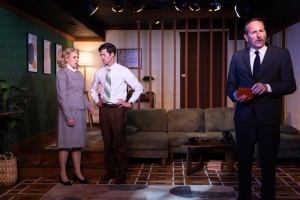
As a lifelong Hitchcock fan, Dial M for Murder has always been one of my comfort film thrillers - the kind of tightly wound mystery where every glance, every pause, and every seemingly harmless detail becomes a loaded clue. I’m a sucker for a well-crafted whodunnit, especially the kind that balances elegance with danger and wit with dread. That’s why October feels like a gift for mystery lovers: a chance to watch Frederick Knott’s classic story step off the screen and onto the stage in Glenview, where its suspense sharpens and its twists land with fresh immediacy.
Although Hitchcock’s 1954 film remains the most widely known version of the story - with Ray Milland’s suave menace, Grace Kelly’s cool radiance, and John Williams’ unforgettable turn as Inspector Hubbard - Dial M for Murder began its life onstage. Knott’s play premiered in 1952 at London’s Westminster Theatre before transferring to Broadway later that year, where its tight structure and chamber thriller design quickly earned acclaim. It’s easy to forget that Knott’s play came first, but remembering its theatrical origins makes Oil Lamp Theater’s staging feel like a return to the story’s true form rather than just a nod to the famous film.
Oil Lamp Theater’s production of Dial M for Murder, adapted by Jeffrey Hatcher and sharply directed by Daniel King, taps into into that live wire energy. The plot remains deliciously tense - Tony Wendice’s meticulous plan to murder his wife Margot, the hired killer who fumbles the job, and the spiraling cover up that follows - but Hatcher’s adaptation trades Hitchcock’s cool, camera-controlled precision for something more intimate and kinetic. Without the film’s polished detachment, the danger unfolds mere feet away, every shift in tone or tactic happening in real time. Character motivations sharpen, pacing tightens, and the unraveling of Tony’s scheme feels more visceral, more human, and far less theoretical than it does on screen.
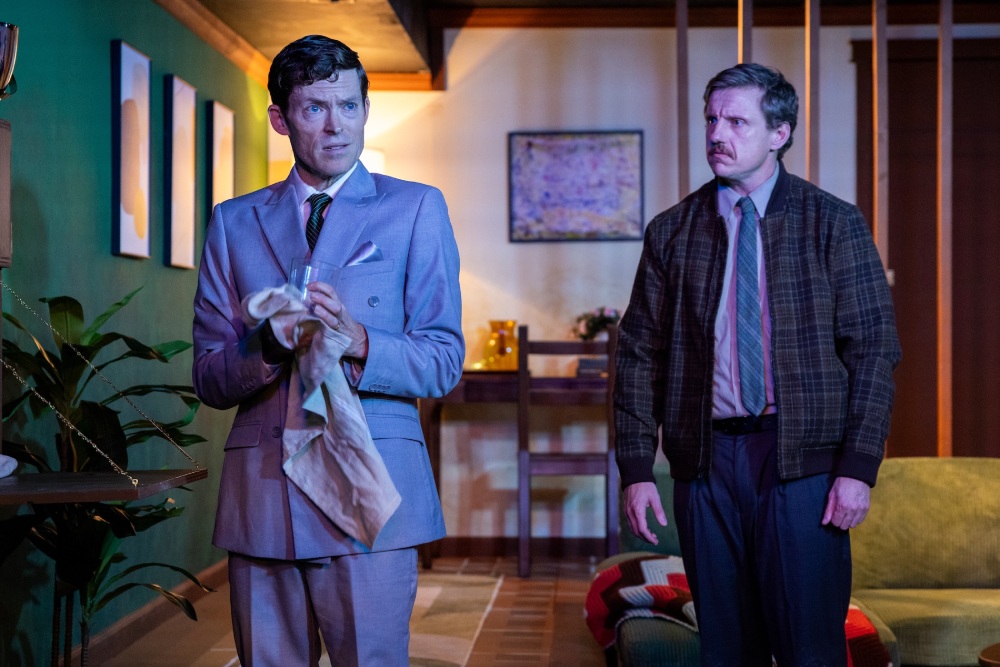
(L to R) John Chambers and Robert Austin Love in Dial M for Murder at Oil Lamp Theater.
The result is a sleek, modernized thriller that honors Knott’s original structure while embracing the momentum and immediacy only theatre can deliver. Oil Lamp Theater transforms a familiar classic into an edge of your seat experience - one that rewards Hitchcock devotees, satisfies whodunnit purists, and proves that some mysteries are even better when you can feel the strain in the room. It’s outstanding.
This is a dialogue driven thriller, and the ensemble handles its quick witted, fast paced exchanges with remarkable ease, building off one another so fluidly that the charge and rhythm feel almost effortless. The production finds its center of gravity in the icy cool poise and controlled calculation of Tony Wendice, played with crisp precision by John Chambers – Roger Moore-esque charm and all. His performance has an almost surgical sharpness - every pivot, every adjustment in tone feels intentional - making Tony’s manipulations both believable and unsettling. Chambers gives the show its spine, grounding the thriller in a performance that’s quietly dangerous and consistently compelling.
Margot Wendice emerges as far more than a plot device thanks to Paige Klopfenstein, who brings emotional clarity and a welcome sense of agency to the role. Her Margot is vulnerable without ever seeming fragile, and Klopfenstein’s grounded presence deepens the stakes of Tony’s scheme. The unease in her scenes feels lived in, giving the unraveling mystery a human pulse.
Adding a modern spark, Charlotte Foster’s Maxine Hadley offers wit, intelligence, and a refreshing directness. Foster leans into the character’s independence, making Maxine feel like a genuine complication in Tony’s carefully engineered world rather than a narrative accessory. Her scenes crackle with contemporary energy that complements Hatcher’s adaptation. Hatcher’s decision to gender swap the film’s Mark Halliday into Maxine shifts the dynamic in a fresh, contemporary way, transforming the romantic outsider into a sharper, more dynamic presence without altering the story’s core tension.
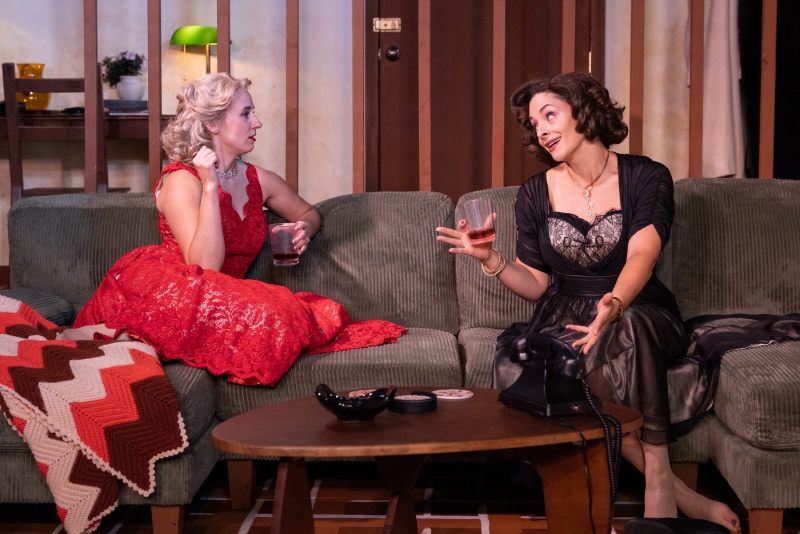
(L to R) Paige Klopfenstein and Charlotte Foster in Dial M for Murder. Production Photos by Gosia Matuszewska/Gosia Photography.
Robert Austin Love’s Lesgate brings grit and unease to the production. He captures the desperation of a man who knows he’s in over his head but can’t resist the lure of Tony’s offer. There’s a standout moment when what begins as an innocent visit to purchase an automobile suddenly twists into a realization that he’s being backed into a treacherous corner, and Love plays that shift with gripping precision. His tense exchanges with Chambers are among the show’s most suspenseful moments, adding texture to the thriller’s middle stretch.
And then there’s Inspector Hubbard - perhaps my favorite character to watch throughout - played with warm, grounded intelligence by James Sparling. It’s a role forever associated with John Williams’ cool, amused detachment in Hitchcock’s film, but Sparling wisely avoids imitation. Instead, he offers a more human, quietly charismatic take that suits the intimacy of Oil Lamp Theater. His Hubbard is observant, methodical, and confident without showiness, proving the character can be just as brilliant without echoing the film’s iconic performance.
The mid-century modern set design instantly establishes the play’s refined, high-stakes ambience, transforming the theater’s cozy space into a stylish apartment in one of London’s ritziest neighborhoods. Scenic designer Spencer Donovan leans into clean lines, warm woods, and period perfect décor to create a room that feels both elegant and quietly confining - an ideal environment for a thriller that unfolds entirely within this single space. Rachel D. Hemm’s lighting sculpts the atmosphere with strategic shadows and crisp highlights, guiding the audience through every shift in power, while Taylor Pfenning’s costumes reinforce the era’s sophistication with subtle, character driven detail. Rick Reid’s sound design is spot on, adding just the right atmospheric touches to heighten suspense without ever overwhelming the room. Ellen Markus’ meticulous props complete the illusion, grounding the world in tactile authenticity. The design team crafts a mid-century setting that not only sets the mood but becomes an active part of the unfolding drama. Oil Lamp’s finely scaled space is a perfect match for this particular thriller.
Mystery lovers and Hitchcock devotees should make a point of catching this production while it’s still onstage. Dial M for Murder at Oil Lamp Theater delivers all the elegance, tension, and twisty satisfaction of the classic story, but with the added thrill of watching the entire scheme unfold in an intimate space where every glance and shift in strategy feels immediate. It’s a rare chance to experience a whodunnit not from the safe distance of a screen, but right in the room as the danger tightens around the characters. Playing through November 1st, this is exactly the kind of smart, tightly crafted thriller that makes you grateful to see the story come alive just a few feet away.
Highly recommended - one of my personal standout productions of the year, driven by a stellar cast, precise direction, pitch‑perfect design, and pacing that keeps you on your toes from start to finish.
For tickets and/or more information, visit https://www.oillamptheater.org/mainstage-productions/dial-m-for-murder.




Latest Articles
-
 CELESTIA: A Heavenly Event
Written by Mary Beth EukerIn 1871 our broad city burned in the Great Chicago Fire. In 1875 St. Vincent de Paul church rose in Lincoln Park. It was constructed of Indiana limestone and still stands proudly at the corner of Webster and Sheffield like…
-
Paramount's A Christmas Carol Stands Among the Season's Finest Gifts
Written by Ken PayneFew holiday stories are as deeply woven into the fabric of the season as A Christmas Carol, yet Paramount Theatre's lavish production in Aurora finds fresh magic within Charles Dickens' familiar classic. Combining spectacular stagecraft, heartfelt performances, and an infectious…
-
 Jackalope’s ‘Engines and Instruments of Flight’ Gives Wings to the Legend of Tony Kushner
Written by John AccroccoEngines and Instruments of Flight: A Fantasia in Three Acts by local playwright Calamity West is everything you’ve ever wanted to know about Angels in America but have been too afraid to ask Tony Kushner. Jackalope Theatre gives this fascinating…
-
 Steppenwolf Theatre Presents JESSIE MUELLER WITH SETH RUDETSKY – December 18 & 19
Written by Buzz Center StageSteppenwolf Theatre Company and Mark Cortale welcome back Tony Award winner Jessie Mueller (Beautiful: The Carole King Musical, Waitress) for a special holiday engagement. Catch the Broadway star live in Chicago before she heads back to New York next spring in the…
Does your theatre company want to connect with Buzz Center Stage or would you like to reach out and say "hello"? Message us through facebook or shoot us an email at This email address is being protected from spambots. You need JavaScript enabled to view it..
*This disclaimer informs readers that the views, thoughts, and opinions expressed in the text belong solely to the author, and not necessarily to Buzz Center Stage. Buzz Center Stage is a non-profit, volunteer-based platform that enables, and encourages, staff members to post their own honest thoughts on a particular production.