
Displaying items by tag: Dado
A Red Orchid Theatre Opens 34th Season with Chicago Premiere of HEROES OF THE FOURTH TURNING October 29 – December 6, 2026
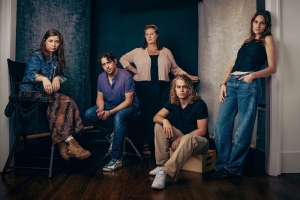
A Red Orchid Theatre is pleased open its 34th Season, exploring the theme of "world on fire," with the Chicago premiere of Will Arbery's politically-charged drama Heroes of the Fourth Turning, directed by Ensemble member dado*, playing October 29 – December 6, 2026 at 1531 N. Wells St. in Chicago's Old Town neighborhood. Single tickets are now on sale at aredorchidtheatre.org or by calling (312) 943-8722. Season subscriptions are currently available.
Heroes of the Fourth Turning features Ensemble Member Kirsten Fitzgerald* with Magdalena Dalzell, Isa Grofsorean, Beck Nolan and Nate Santana.
About the Production:
It's nearing midnight in Wyoming, where four recent graduates have gathered to celebrate their beloved mentor and professor Gina, newly inducted as president of their tiny Catholic liberal arts college. The reunion spirals into spiritual chaos, clashing generational politics and a vicious fight to be understood. Offering grace and disarming clarity, this haunting play speaks to the torn heart of a country at war with itself.
The production team includes Ensemble Member Grant Sabin* (Scenic Designer), Madeleine Shows (Costume Designer), Josiah Croegaert (Lighting Designer), Ethan Korvne (Composer & Sound Designer), Eel Black (Props Designer), Chels Morgan (Violence & Intimacy Director), Caroline Michele Uy (Dramaturg), Omar Fernandez (Assistant Director), Kira Nutter (Production Manager), Tom Daniel (Technical Director), Mark Brown (Master Electrician), JC Widman (Stage Manager) and Faith Locke (Assistant Stage Manager).
*Denotes A Red Orchid Theatre Ensemble Member
PRODUCTION DETAILS:
Title: Heroes of the Fourth Turning
Playwright: Will Arbery
Director: Ensemble member dado*
Cast: Ensemble Member Kirsten Fitzgerald* (Gina) with Magdalena Dalzell (Emily), Isa Grofsorean (Teresa), Beck Nolan (Kevin) and Nate Santana (Justin).
Understudies: Rachel Ives (Emily & Teresa), Kyle Ringley (Justin & Kevin) and Sarafina Vecchio (Gina).
Location: A Red Orchid Theatre, 1531 N. Wells St., Chicago
Dates: Previews: Thursday, October 29 at 7 pm, Friday, October 30 at 7 pm, Sunday, November 1 at 3 pm, Thursday, November 5 at 7 pm and Friday, November 6 at 7 pm
Opening: Sunday, November 8 at 6 pm
Regular run: Thursday, November 12 – Sunday, December 6, 2026
Curtain Times: Thursdays and Fridays at 7 pm; Saturdays 3 pm & 7 pm; and Sundays at 3 pm. Please note: there will not be performances on Saturday, October 31 at 7 pm (Halloween) or Thursday, November 26 (Thanksgiving); there will be an added Industry Night performance on Monday, November 23 at 7 pm.
Tickets: Previews: $33 – $44*. Regular run: $55*. Access, student, senior, and group discounts available. Single tickets are now on sale at aredorchidtheatre.org or by calling (312) 943-8722. Season subscriptions are currently available. *Ticket prices include a processing fee.
Full Casting Announced for A Red Orchid Theatre's HEROES OF THE FOURTH TURNING - October 29 – December 6, 2026 - Chicago Premiere!
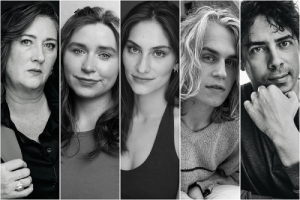
A Red Orchid Theatre is pleased to announce full casting for its Chicago premiere of Will Arbery's politically-charged drama Heroes of the Fourth Turning, directed by Ensemble Member dado*.
The talented line-up includes Ensemble Member Kirsten Fitzgerald* with Magdalena Dalzell, Isa Grofsorean, Beck Nolan and Nate Santana.
Launching A Red Orchid's 34th Season, exploring the theme of "world on fire," Heroes of the Fourth will play October 29 – December 6, 2026 at 1531 N. Wells St. in Chicago's Old Town neighborhood. Single go on sale Tuesday, September 29, 2026 at aredorchidtheatre.org or by calling (312) 943-8722. Season subscriptions are currently available.
About the Production:
It's nearing midnight in Wyoming, where four recent graduates have gathered to celebrate their beloved mentor and professor Gina, newly inducted as president of their tiny Catholic liberal arts college. The reunion spirals into spiritual chaos, clashing generational politics and a vicious fight to be understood. Offering grace and disarming clarity, this haunting play speaks to the torn heart of a country at war with itself.
The production team includes Ensemble Member Grant Sabin* (Scenic Designer), Madeleine Shows (Costume Designer), Josiah Croegaert (Lighting Designer), Ethan Korvne (Composer & Sound Designer), Eel Black (Props Designer), Chels Morgan (Violence & Intimacy Director), Omar Fernandez (Assistant Director), JC Widman (Stage Manager), Kira Nutter (Production Manager), Tom Daniel (Technical Director), Faith Locke (Assistant Stage Manager) and Duncan Hon (Master Electrician).
*Denotes A Red Orchid Theatre Ensemble Member
PRODUCTION DETAILS:
Title: Heroes of the Fourth Turning
Playwright: Will Arbery
Director: Ensemble member dado*
Cast: Ensemble Member Kirsten Fitzgerald* (Gina) with Magdalena Dalzell (Emily), Isa Grofsorean (Teresa), Beck Nolan (Kevin) and Nate Santana (Justin).
Understudies: Rachel Ives (Emily & Teresa), Kyle Ringley (Justin & Kevin) and Sarafina Vecchio (Gina).
Location: A Red Orchid Theatre, 1531 N. Wells St., Chicago
Dates: Previews: Thursday, October 29 at 7 pm, Friday, October 30 at 7 pm, Sunday, November 1 at 3 pm, Thursday, November 5 at 7 pm and Friday, November 6 at 7 pm
Opening: Sunday, November 8 at 6 pm
Regular run: Thursday, November 12 – Sunday, December 6, 2026
Curtain Times: Thursdays and Fridays at 7 pm; Saturdays 3 pm & 7 pm; and Sundays at 3 pm. Please note: there will not be performances on Saturday, October 31 at 7 pm (Halloween) or Thursday, November 26 (Thanksgiving); there will be an added Industry Night performance on Monday, November 23 at 7 pm.
Tickets: Previews: $33 – $44*. Regular run: $55*. Access, student, senior, and group discounts available. Single tickets go on sale Tuesday, September 29, 2026 at aredorchidtheatre.org or by calling (312) 943-8722. Season subscriptions are currently available. *Ticket prices include a processing fee.
About the Artists:Will Arbery (Playwright, Heroes of the Fourth Turning, he/him) is a playwright and screenwriter from Texas. His play Heroes of the Fourth Turning premiered at Playwrights Horizons in 2019 and was a Pulitzer Prize finalist and the winner of an OBIE, Lucille Lortel and New York Drama Critics Circle Award, among other honors. It was named one of the "new canon" plays by American Theatre. Other plays include: You Hateful Things (upcoming London premiere), Spite House (upcoming New York premiere), Corsicana (Playwrights Horizons), Evanston Salt Costs Climbing (The New Group), Plano (Clubbed Thumb) and Wheelchair (3 Hole Press). He was the recipient of a Whiting Award in 2020. Will wrote on the fourth season of Succession, for which he won the WGA Award for Episodic Drama. He is the creator of two upcoming shows with FX: Seven Sisters (starring Elizabeth Olsen) and The Marriage Plot (starring Sadie Sink). Texas Monthly flagged him as one of the most influential cultural figures of the past 50 years out of Texas, and The New Yorker has called him the playwright of the moment.dado (Director, Heroes of the Fourth Turning, she/her) last directed the world premiere of JoJo Jones' Veal at A Red Orchid, and before that Six Men Dressed Like Joseph Stalin by Dianne Nora. In 2025 dado directed Lobster by Kallan Dana for the Wirtz Center at Northwestern and Dance Nation by Clare Barron for UIC, where she currently serves on the faculty. Other projects dado has directed are Revolt. She Said. Revolt Again. by Alice Birch with The Feast Collective, Right Now by Catherine Anne Toupin (Facility Theatre), Anny Ouyang Moench's In Quietness at A Red Orchid and The Lover by Harold Pinter (with Yasen Peyankov at Facility Theatre). She has also directed The Ruse of Medusa by Erik Satie (Facility Theatre) and Killing Game by Eugene Ionesco (A Red Orchid). Next spring she will direct The Cherry Orchard for UIC's mainstage.Kirsten Fitzgerald (Gina, she/her) is a proud member of the Ensemble at A Red Orchid Theatre and has served as the Artistic Director since 2008. As an actor Kirsten has originated roles in the world premieres of The Targeted, The Cave, Grey House, Traitor, Pilgrim's Progress, Weapon of Mass Impact, and more at A Red Orchid; Swing State, I Hate It Here (Goodman); Lettie, Appropriate (Victory Gardens); Mary Page Marlowe, The Qualms (Steppenwolf). TV: Dark Matter, Shining Girls, Somebody Somewhere, The Exorcist, Sirens, The Big Leap, Chicago Med/Fire/Justice, Underemployed, ER. Film: Rain Reign, Widows, Working Man. Directing credits include Birds of North America (Jeff Award for Best Production and Best Director of a Play-Midsize) and The Moors (Jeff Award for Best Production and Best Director of a Play-Midsize) at A Red Orchid, the world premiere of Gorgeous by Keiko Green at Raven Theatre and Dance Nation at Northwestern University's Wirtz Center. Kirsten is represented by Grossman & Jack Talent.Magdalena Dalzell (Emily, she/her) is so excited to make her Red Orchid debut! Recent acting credits include The Seagull (Red Theater), Beatrix Potter Holiday Tea Party (Chicago Children's Theatre), Meet Me at Dawn, Fefu and Her Friends and Eurydice (Snails on a Bike), and Chicago P.D.. She is a founding ensemble member of Snails on a Bike, a site-specific and found space theatre collective, and the bookstore manager at The Understudy. Magdalena studied theatre and Russian language and literature at Northwestern University, as well as the Moscow Art Theatre School. Rep: Talent X Alexander | IG: @maggie_.grace.
Isa Grofsorean (Teresa, she/her) is an actor hailing from Ann Arbor, Mi and is thrilled to be making her debut at A Red Orchid Theatre! Credits include: Strawdog Theatre Company, The Guthrie Theater, Montana Shakespeare in the Schools, Theatre L'Homme Dieu, The Gremlin Theatre and Summit Theatre Project. She is a graduate of the University of Minnesota-Guthrie Theater BFA Actor Training Program.
Beck Nolan (Kevin, he/him) is a Chicago-based actor making his Red Orchid debut. Theatre: Keerah, Television: Widows Bay, Win or Lose, Too Much. Film: Mouse, System of Colors, Big Time, Slay, Line Cooks, Good Guy with a Gun. Beck is a graduate of The Theater School at DePaul University.
Nate Santana (Justin, he/him) is an Artistic Collective Member at Teatro Vista Productions and Artistic Affiliate at American Blues. Directing credits: Romeo and Juliet, American Jornalero (Teatro Vista); Lobby Hero (Jeff Award Best Director and Best Play – Shattered Globe). Selected acting credits: Taming of the Shrew (Court); Things with Friends (American Blues); Ironbound (Raven) The Thanksgiving Play, Ironbound (Steppenwolf); Legend of Georgia McBride (Northlight); Balm in Gilead, Golden Boy (Griffin); The Abuelas, White Tie Ball, Momma's Boyz (Teatro Vista); The Rainmaker (BoHo); References to Salvador Dali Make Me Hot (Phoenix). Television credits: Chicago Med, Chicago PD, Suits and The Exorcist.
Production sponsors: Terrance and Carol Coleman and Dawn and Jim Kink.
About A Red Orchid Theatre:A Red Orchid Theatre has served as an artistic focal point in the heart of the Old Town community of Chicago since 1993 and was honored with a 2016 MacArthur Award for Creative and Effective Institutions. Over the past 33 years, its Resident Ensemble has welcomed into its fold an impressive array of award-winning actors, playwrights and theatre artists with the firm belief that live theatre is the greatest sustenance for the human spirit. A Red Orchid is well known and highly acclaimed for its fearless approach to performance and design in the service of unflinchingly intimate stories.A Red Orchid Theatre is: Karen Aldridge, Lance Baker, Kamal Angelo Bolden, Esteban Andres Cruz, Dado, Mike Durst, Sherman Edwards, Myron Elliott, Jennifer Engstrom, Kirsten Fitzgerald, Joseph Fosco, Steve Haggard, Levi Holloway, Mierka Girten, Larry Grimm, John Judd, Karen Kawa, Karen Kessler, Travis A. Knight, Danny McCarthy, Shade Murray, Brett Neveu, Sadieh Rifai, Grant Sabin, Michael Shannon, Guy Van Swearingen, Doug Vickers and Natalie West.Sponsor Information:A Red Orchid Theatre remains grateful for the support of our board, donors and loyal audience who continue to champion our ambitious and powerful storytelling. These sponsors help to create a platform for our talented Ensemble to reach new audiences, and ensure that we remain a source for honest, compassionate, and aesthetically rigorous theatre-making.A Red Orchid Theatre's 34th Season is sponsored by The Bayless Family Foundation and Heidi Hoblit Graham. Heroes of the Fourth Turning is sponsored by Terrance and Carol Coleman and Dawn and Jim Kink.Interested in sponsoring a production? By partnering with us as a sponsor, you will help to take our work to the next level of artistic excellence, while also receiving deeper access to our artists and the creative process. To learn more, please contact Development Director Stephanie Shum at This email address is being protected from spambots. You need JavaScript enabled to view it. or (312) 943-8722.
A Red Orchid Theatre Opens 34th Season with Chicago Premiere of HEROES OF THE FOURTH TURNING October 29 – December 6, 2026

A Red Orchid Theatre is pleased open its 34th Season, exploring the theme of "world on fire," with the Chicago premiere of Will Arbery's politically-charged drama Heroes of the Fourth Turning, directed by Ensemble member dado*, playing October 29 – December 6, 2026 at 1531 N. Wells St. in Chicago's Old Town neighborhood. Casting to be announced shortly. Single go on sale Tuesday, September 29, 2026 at aredorchidtheatre.org or by calling (312) 943-8722. Season subscriptions are currently available.
About the Production:
It's nearing midnight in Wyoming, where four recent graduates have gathered to celebrate their beloved mentor and professor Gina, newly inducted as president of their tiny Catholic liberal arts college. The reunion spirals into spiritual chaos, clashing generational politics and a vicious fight to be understood. Offering grace and disarming clarity, this haunting play speaks to the torn heart of a country at war with itself.
*Denotes A Red Orchid Theatre Ensemble Member
PRODUCTION DETAILS:
Title: Heroes of the Fourth Turning
Playwright: Will Arbery
Director: Ensemble member dado*
Cast: to be announced shortly
Location: A Red Orchid Theatre, 1531 N. Wells St., Chicago
Dates: Previews: Thursday, October 29 at 7 pm, Friday, October 30 at 7 pm, Saturday, October 31 at 7 pm, Sunday, November 1 at 3 pm, Thursday, November 5 at 7 pm and Friday, November 6 at 7 pm
Opening: Sunday, November 8 at 6 pm
Regular run: Thursday, November 12 – Sunday, December 6, 2026
Curtain Times: Thursdays and Fridays at 7 pm; Saturdays 3 pm & 7 pm; and Sundays at 3 pm. Please note: there will not be a performance on Thursday, November 26 (Thanksgiving); there will be an added Industry Night performance on Monday, November 23 at 7 pm.
Tickets: Previews: $33 – $44*. Regular run: $55*. Access, student, senior, and group discounts available. Single tickets go on sale Tuesday, September 29, 2026 at aredorchidtheatre.org or by calling (312) 943-8722. Season subscriptions are currently available. *Ticket prices include a processing fee.
About the Artists:
Will Arbery (Playwright, Heroes of the Fourth Turning, he/him) is a playwright and screenwriter from Texas. His play Heroes of the Fourth Turning premiered at Playwrights Horizons in 2019 and was a Pulitzer Prize finalist and the winner of an OBIE, Lucille Lortel and New York Drama Critics Circle Award, among other honors. It was named one of the "new canon" plays by American Theatre. Other plays include: You Hateful Things (upcoming London premiere), Spite House (upcoming New York premiere), Corsicana (Playwrights Horizons), Evanston Salt Costs Climbing (The New Group), Plano (Clubbed Thumb) and Wheelchair (3 Hole Press). He was the recipient of a Whiting Award in 2020. Will wrote on the fourth season of Succession, for which he won the WGA Award for Episodic Drama. He is the creator of two upcoming shows with FX: Seven Sisters (starring Elizabeth Olsen) and The Marriage Plot (starring Sadie Sink). Texas Monthly flagged him as one of the most influential cultural figures of the past 50 years out of Texas, and The New Yorker has called him the playwright of the moment.
dado (Director, Heroes of the Fourth Turning, she/her) last directed the world premiere of JoJo Jones' Veal at A Red Orchid, and before that Six Men Dressed Like Joseph Stalin by Dianne Nora. In 2025 dado directed Lobster by Kallan Dana for the Wirtz Center at Northwestern and Dance Nation by Clare Barron for UIC, where she currently serves on the faculty. Other projects dado has directed are Revolt. She Said. Revolt Again. by Alice Birch with The Feast Collective, Right Now by Catherine Anne Toupin (Facility Theatre), Anny Ouyang Moench's In Quietness at A Red Orchid and The Lover by Harold Pinter (with Yasen Peyankov at Facility Theatre). She has also directed The Ruse of Medusa by Erik Satie (Facility Theatre) and Killing Game by Eugene Ionesco (A Red Orchid). Next spring she will direct The Cherry Orchard for UIC's mainstage.
Production sponsor: Terrance and Carol Coleman and Dawn and Jim Kink.
About A Red Orchid Theatre:
A Red Orchid Theatre has served as an artistic focal point in the heart of the Old Town community of Chicago since 1993 and was honored with a 2016 MacArthur Award for Creative and Effective Institutions. Over the past 33 years, its Resident Ensemble has welcomed into its fold an impressive array of award-winning actors, playwrights and theatre artists with the firm belief that live theatre is the greatest sustenance for the human spirit. A Red Orchid is well known and highly acclaimed for its fearless approach to performance and design in the service of unflinchingly intimate stories.
A Red Orchid Theatre is: Karen Aldridge, Lance Baker, Kamal Angelo Bolden, Esteban Andres Cruz, Dado, Mike Durst, Sherman Edwards, Myron Elliott, Jennifer Engstrom, Kirsten Fitzgerald, Joseph Fosco, Steve Haggard, Levi Holloway, Mierka Girten, Larry Grimm, John Judd, Karen Kawa, Karen Kessler, Travis A. Knight, Danny McCarthy, Shade Murray, Brett Neveu, Sadieh Rifai, Grant Sabin, Michael Shannon, Guy Van Swearingen, Doug Vickers and Natalie West.
Sponsor Information:
A Red Orchid Theatre remains grateful for the support of our board, donors and loyal audience who continue to champion our ambitious and powerful storytelling. These sponsors help to create a platform for our talented Ensemble to reach new audiences, and ensure that we remain a source for honest, compassionate, and aesthetically rigorous theatre-making.
A Red Orchid Theatre's 34th Season is sponsored by The Bayless Family Foundation and Heidi Hoblit Graham. Heroes of the Fourth Turning is sponsored by Terrance and Carol Coleman and Dawn and Jim Kink.
Interested in sponsoring a production? By partnering with us as a sponsor, you will help to take our work to the next level of artistic excellence, while also receiving deeper access to our artists and the creative process. To learn more, please contact Development Director Stephanie Shum at This email address is being protected from spambots. You need JavaScript enabled to view it. or (312) 943-8722.
In Jojo Jones 'Veal,' Middle School Bullies Cower as Their Former Target Now Rules the World

Jojo Jones’ “Veal,” premiering at A Red Orchid Theatre in Old Town, is among the recent wave of plays set in a post-apocalyptic near future - the better to show how core social values and structures might play out for individuals placed abruptly in a clean-slate setting. The increasing frequency with which this plot line appears on stages and screens tells us much about the trending thoughts of playwrights, who likely are voicing societal angst about the state of things - and reasonably so.
Directed by dado, the apocalypse in “Veal” is loosely defined but certainly political in nature, a revolution that has reset things. We do know this much: it has resulted in the character Chelsea (well played by Alexandra Chopson) to be installed as Queen of North America. That simple fact packs loads of information: that the U.S., Mexican, and Canadian governments have fallen, their respective Constitutions trashed, and a monarch now rules.
That Queen Chelsea is likely a despotic type is suggested immediately by her regal demeanor in royal array, on a throne, and by her side a servant, Unnamed Male Concubine (Jasper Johnson) who sits silently a step below. When Chelsea descends from her throne to walk upon the floor below her, the silent Concubine unbidden gets on his hands and knees, and with infinite care wipes up the floor where Chelsea has trodden, then resumes his vigil on the step below.
Soon enough three characters arrive: Franny (Jojo Brown), Lulu (Carmia Imani) and Noa (Alice Wu), all of whom were in middle school with Chelsea 13 years ago. In fact, we learn, this setting is the very middle school they attended, a place this monarch has chosen as the site for her palace. She has resurfaced the floor with imported marble and demolished the gym.
“My advisers kept telling me to use the White House, but I’d never been there,” Chelsea lets her classmates know, and they all offer obsequities as they converse with her. Their fear and trepidation is palpable as they try to avoid taboo subjects or potentially incite Chelsea's anger.
“The Revolution was weird,” offers Franny, as Chelsea benevolently asks if they are hungry, then orders her Concubine to provide a repast for the visitors. This ends up being Lunchables that are 13 years past their expiration date, still sitting from their school days. This tips us off that Queen Chelsea harbors some resentments from those days.
Gingerly, they decline the food, except for LuLu, who having allowed that she was hungry, is now ordered to eat, and Chelsea shows her tyrannical side. After this set-to subsides, Franny reveals the reason for this visit: to petition the Queen of North America for medicine for her sister and she begins gingerly on her sibling’s behalf. “We all knew you would be successful,” Franny says of their middle school days. “But Queen of North America?!”
After that, a bit more groveling. “The revolution - huge fan - kinda messed up the supply chain,” Franny says, and lets Queen Chelsea know she cannot find insulin for her sister, a Type 1 diabetic, to which Chelsea replies, indirectly, that she is always being asked for things.
“You know, it is so hard. I keep getting people telling me I’m like Nero, or Caligula.” Though the subject of “Veal” is completely absorbing, every now and then I found myself thinking of current events and another despot who rules by whim, and loves to surround himself with sycophants.
As the action advances, Queen Chelsea dispatches the Unknown Male Concubine to look into insulin availability, but signals there will be a price to pay, and the play moves into territory somewhere between “Mean Girls” and “Carrie.” The dramatic tension hinges on whether and how much Queen Chelsea’s former classmates will debase themselves in the hopes of securing the insulin for Franny’s sister. Queen Chelsea forces them to re-enact the classroom scenes in which she suffered their bullying and ostracism. But eventually the trio reaches a limit, each on their own terms, and ultimately Queen Chelsea tires of the game.
The performances are really excellent, especially Alice Wu as Noa, and Jojo Brown, who does the lion's share of the dramatic heavy lifting as Franny. Accolades for the most intriguing character go to Jasper John as the Unknown Male Concubine, a largely silent role with huge stage presence.
“Veal” runs through November 9, 2025 at A Red Orchid Theatre, 1531 N. Wells in Chicago.
10 Out of 12 Offers an Eye-opening, Behind the Scenes Look into Theater Production

Ever wonder what happens behind the scenes leading up to opening night at the theater? Do you have any idea how much detail goes into a stage production? Can you imagine the funny moments that could take place while building a set or rehearsing lines? Do directors really get as frustrated as we hear?
Theater Wit brings to the stage the latest, and possibly most innovated, work by author Anne Washburn 10 Out of 12. A headset rests on each seat in the theater for audience members to wear as they become engulfed the midst of tech rehearsals just one week prior to a production opening. We hear random chatter and instruction from the stage crew as 10 Out of 12 gives us an in-depth view of the goings on behind the scenes of mounting a show. Burns, known most recently as the playwright behind Mr. Burns, A Post Electric Play that found a successful run at Theater Wit in 2014, delves into the high stress that comes with detailing theater specifics such as lighting, cues and prop placement while also touching on actor stereotypes, tantrums and the desire in some to hold their work to a standard that demands integrity.
“No one in Chicago has ever seen anything like 10 Out of 12. Simultaneously exacting real-to-life and riotously funny, Anne Washburn’s detonation of a single technical rehearsal is promising to be a unique and thrilling viewing experience,” said Jeremy Wechsler, Artistic Director of Theater Wit and director of 10 Out of 12.
We watch as the production team fastens bolts to secure the set, samples the lighting and sound from scene to scene, place each mark to the director’s satisfaction and amuse themselves during down time. We see actors rehearsing their lines, suggesting where changes might be made (usually to the director’s chagrin). In our headsets we get a real feel for the high levels of demand that must be met along within a time crunch that increases by the minute. We also hear stage hands discussing their lunch and such, along with occasional side remarks about what is transpiring on the set. The fourth wall is often broken with actors using the aisles and theater as though an audience were not present, the director and actors often taking a seat amongst us to watch their handiwork from a patron vantage point.
The production as a whole is a truly inimitable experience and provides an insight to theater that most may not be familiar with, adding a new appreciation for the art. Upon leaving the theater many discuss how they’ve had no idea the work and precision involved in mounting a play, making 10 Out of 12 an informative piece – perhaps also an homage to those behind the scenes.
Star Chicago theater personalities are recruited to provide pre-recorded roles such as John Mahoney, Martha Lavey, Barbara Robertson and Jeremy Wechsler, Mahoney delivering some of the play’s funniest lines. The stage cast also packs a punch with Erin Long, Adam Shalzi, Dado, and Riley McGliveen as the production team, Shane Kenyon as The Director, and Eunice Woods, Gregory Fenner, Christine Vrem-Ydstie, Kyle Gibson and Stephen Walker as the actors. Walker, taking advantage of several moments to shine in only the way he can in delivering highly-charged monologues with just the right amount of entitlement and sardonic flair as the veteran actor brought in to bring credence to the production. Walker’s character questions the truthfulness in his character, conflicted by his passion for honest art, which he feels is losing its grip in modern day theater.
So what does the title 10 Out of 12 mean? A 10 out of 12 is a day in which, per the rules of Actors Equity, the actors are contracted to work for 12 hours with one 2-hour dinner break. It’s during that time that all the designing elements of the production are united as a whole, as costumes, sound, lighting, projections, set and acting are fine-tuned just prior to a show’s opening.
When asked why she wrote a play about a tech rehearsal, Washburn descriptively states, “A decade ago most theaters didn’t have Wi-Fi…and no one is more useless in tech than the playwright. So, I began taking notes. I was fascinated by the strange surreal interplay of light and music. I loved the mysterious technical languages being used around me, the rhythmic drone of the calling light and sound cues. I liked watching the actors freed from their normal self-consciousness. I liked the low continual volume of play which bubbled up throughout the tech as a desperate counterpoint to the long periods of tedium and waiting. And the endless snacking, and discussion of snacking.”
Throughout the production we hear small talk between the techs – everyday musings that are often quite humorous. We also hear the actors talking hopefully about getting their big break, but also turning down roles for the sake of integrity. At one point the leading actress asks the stage manager if she can leave early to audition for a role in a pilot. We have entered the world of theater.
As much as this often funny and revealing play is a fantastic chance to catch the inner-workings of theater production, it misses a few opportunities that were begging for the injection of timely humor, at points drifting away only to grab the audience again just in time. It would also have been nice if the script called for a larger role from Mahoney, whose well-timed remarks were almost always met with crowd laughter. Notable was the play’s pace, perhaps running about thirty minutes too long (two and a half hours plus intermission), making the thought of a slightly condensed version somewhat appetizing. Washburn's story nicely envelopes the stresses, complications and rewards in theater production.
Still, there is much to like in 10 Out of 12, the good outweighing the bad by significant measure. One should expect a fun lesson in Theater Production 101 that is coupled with fine acting performances and enough humor that insures an overall pleasant experience. The headsets are a nice touch, giving audience members an opportunity to feel at times as though they were part of the production team.
10 Out of 12 is being performed at Theater Wit through April 23rd. For tickets and/or more show information click here.



Latest Articles
-
 Operation Mincemeat: A Smart, Scrappy Musical That Shines When Its Cast Takes the Wheel
Written by Maddie BurroughsIn the 2019 film Yesterday, a struggling musician wakes up in a world where The Beatles never existed. A similar theatrical case study could be done with every musical that might not exist without Hamilton; Operation Mincemeat should be first…
Operation Mincemeat: A Smart, Scrappy Musical That Shines When Its Cast Takes the Wheel
Written by Maddie BurroughsIn the 2019 film Yesterday, a struggling musician wakes up in a world where The Beatles never existed. A similar theatrical case study could be done with every musical that might not exist without Hamilton; Operation Mincemeat should be first… -
 MAMMA MIA! and HADESTOWN Return to Chicago in Spring 2027
Written by Buzz Center StageBroadway In Chicago is excited to announce two fan-favorite shows are returning to our stages this year: MAMMA MIA! and HADESTOWN. Current subscribers can add these to their season package when renewing by clicking here or calling (312) 977-1717. Group…
MAMMA MIA! and HADESTOWN Return to Chicago in Spring 2027
Written by Buzz Center StageBroadway In Chicago is excited to announce two fan-favorite shows are returning to our stages this year: MAMMA MIA! and HADESTOWN. Current subscribers can add these to their season package when renewing by clicking here or calling (312) 977-1717. Group… -
SANCTUARY STORIES - A JOURNALISM THEATER PROJECT October 9-18 at the Athenaeum Center for Thought and Culture
Written by Buzz Center StageThrough music, documentary video, sound, photos and live actors, “SANCTUARY STORIES: A JOURNALISM THEATER PROJECT” captures in words and images the lives and communities deeply connected with — and affected by — immigration in Chicago. This “living documentary” is a…
-
Red Theater presents the world premiere of CHURCH HURT October 24 - November 21, 2026
Written by Buzz Center StageRed Theater is thrilled to announce the cast and production team of the world premiere of Church Hurt by Brynne Frauenhoffer and directed by Jessica Love, running October 24 - November 21, 2026 at The Edge Off Broadway in Chicago’s…


Does your theatre company want to connect with Buzz Center Stage or would you like to reach out and say "hello"? Message us through facebook or shoot us an email at This email address is being protected from spambots. You need JavaScript enabled to view it..
*This disclaimer informs readers that the views, thoughts, and opinions expressed in the text belong solely to the author, and not necessarily to Buzz Center Stage. Buzz Center Stage is a non-profit, volunteer-based platform that enables, and encourages, staff members to post their own honest thoughts on a particular production.