
Displaying items by tag: on stage
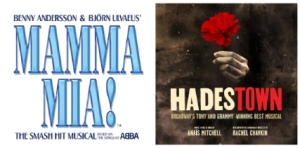
MAMMA MIA! and HADESTOWN Return to Chicago in Spring 2027
|
Broadway In Chicago is excited to announce two fan-favorite shows are returning to our stages this year: MAMMA MIA! and HADESTOWN. Current subscribers can add these to their season package when renewing by clicking here or calling (312) 977-1717. Group tickets of 10 or more are now available for both productions by emailing This email address is being protected from spambots. You need JavaScript enabled to view it. or calling (312) 977-1710. Individual tickets will go on sale at a later date. For more information, see below or visit www.BroadwayInChicago.com.
|
|
|
acclaimed new show from celebrated singer-songwriter and original director Rachel Chavkin (Natasha, Pierre & The Great Comet of 1812) is a love story for today... and always. For more information and tickets, visit www.BroadwayInChicago.com. |
SANCTUARY STORIES - A JOURNALISM THEATER PROJECT October 9-18 at the Athenaeum Center for Thought and Culture

Through music, documentary video, sound, photos and live actors, “SANCTUARY STORIES: A JOURNALISM THEATER PROJECT” captures in words and images the lives and communities deeply connected with — and affected by — immigration in Chicago.
This “living documentary” is a unique and unprecedented adventure in multimedia storytelling that brings journalism to life.
The stories presented by the actors are based on extensive reporting, told verbatim from interview transcripts. And they are complemented with vivid documentary video and sound, illustrating the thoughts and storytelling, showing the Chicagoans behind the stories.
The project returns after an incredibly successful run in January that sold out in its first weekend.
Among those portrayed are clergy who have stepped forward to help immigrants; a veteran Immigration Court judge who resigned over a changed system; a politician driven to join demonstrators; a young immigrant who frets that the successful life she has found can be instantly swept away; and a refugee who cannot sleep or smile because of the torture he suffered for years as he made his way to the U.S.
The evening also features insights from visual journalists who’ve been covering the crackdown, as well as original music by Chicago singer-songwriter Flo Estes.
After the premiere showing on Northwestern’s campus, one former Chicago Tribune journalist wrote: “Just when you think there are no new ideas... this ‘journalism theater project’ called SANCTUARY STORIES comes along from Northwestern's Medill School of Journalism.”
The production is the work of Emmy award-winning documentarian Craig Duff, a former video journalist at CNN, the New York Times and Time Magazine. Duff is now a journalism professor at Northwestern University’s Medill School. He is also an actor and theater artist. Stephen Franklin, a former Chicago Tribune journalist, Borderless Magazine contributor and trainer for Chicago’s immigrant and minority news media, conducted the reporting and interviews.
Performing the stories is a cast of talented Chicago actors: Gabriela Barrios, George Dougherty, Amber Dow, Flo Estes, Jean Marie Koon, Lori Navarrete, Matt Specht and Caonguyen Vu.
Duff serves as narrator and created the documentary video elements, and Jeff Award-winning Petter Wahlbäck crafted the sound design and music. Riley Bulson serves as stage manager and Brenden Marble will design the lighting for the Athenaeum shows.
The performances also feature two original songs, including “I Come From the World,” by Flo Estes, who will perform it live to video accompaniment with Emily Haden Lee on supporting vocals.
The project attempts to create a Chicago story in the way that the great storyteller Studs Terkel immortalized our everyday lives. It honors Chicago’s history as a national leader as a Sanctuary City, begun with the drive in the 1980s to give sanctuary to Central Americans fleeing wars and violence. It is a tribute to the vibrant and imaginative theatre community that draws inspiration from Chicago's vibrant life.
LISTING INFORMATION
SANCTUARY STORIES: A JOURNALISM THEATER PROJECT
Devised and directed by Craig Duff, Based on interviews conducted by Stephen Franklin
Original Music by Petter Wahlbäck
October 9-18, 2026
Fridays and Saturdays at 7:30pm, Sundays at 3:00 pm, with an additional matinee on Saturday, October 17 at 2pm.
Studio B, The Athenaeum Center for Thought and Culture
2936 N Southport Ave, Chicago, IL 60657.
Tickets are $35 and can be purchased at https://athenaeumcenter.org/events/2026/sanctuary-stories-a-journalism-theater-project/
Additional information can be found at https://sanctuarystories.org and on Instagram @sanctuarystorieschicago
###
Red Theater presents the world premiere of CHURCH HURT October 24 - November 21, 2026

Red Theater is thrilled to announce the cast and production team of the world premiere of Church Hurt by Brynne Frauenhoffer and directed by Jessica Love, running October 24 - November 21, 2026 at The Edge Off Broadway in Chicago’s Edgewater neighborhood, 1133 W. Catalpa Ave. Tickets are available now at www.redtheater.org.
When Mar gets hired at the church she grew up in, she’s reunited with her onetime youth group besties Faith, who has become head of People Operations, and Julie, who serves as an outspoken volunteer with progressive goals. Though the three once bonded over Relient K songs and scripture, now they must reconcile very different faith journeys in the intervening years. Old wounds and new points of view disrupt ministry efforts as queerness and the non-denominational movement collide. - New Play Exchange
The production features Alice Wu as Faith, Sara Sadjadi as Mar, and Laura Michele Erle as Julie. Understudies include Mindy Shore for Faith, Sara BenBella for Mar, and Hailey Hance for Julie.
Comments Artistic Directors Clare Brennan and Wyatt Kent, “Church Hurt is our third world premiere from a Chicago playwright in as many seasons, and we’re so fortunate to be collaborating with Brynne for the first time. This tight-knit narrative features two stalwarts of the storefront scene, as well as Sara Sadjadi’s debut on Chicago’s stage after a season with Door Shakespeare and Milwaukee Rep. With director Jessica Love back at the helm after her incredible work on last season’s The Pilon, this production will pull you into this story of queerness, faith, female friendship, and stress-tested trust.”
The production team includes Emily Marrazzo (assistant director), Sarah Patisaul (stage manager), Rose Johnson (scenic design), Suzanne Barnes (props design), Amina Gilbert (lighting design), kClare McKellaston (costume design), Kate Schnetzer (sound design), Skyler Simpson (poster design), Faith Decker (photographer), Daniel Bird Tobin (audience experience dramaturg), AJ Mueth (technical director), Becca Holloway (casting director), Cailyn Murray (casting associate), Hunter Baumann-Cole (director of production), Wyatt Kent and Clare Brennan (co-artistic directors).
PRODUCTION DETAILS
Title: Church Hurt
Playwright: Brynne Frauenhoffer
Director: Jessica Love
Cast: Alice Wu (Faith), Sara Sadjadi (Mar), Laura Michele Erle (Julie), Mindy Shore (u/s Faith), Sara BenBella (u/s Mar), and Hailey Hance (u/s Julie).
Production Team: Emily Marrazzo (assistant director), Sarah Patisaul (stage manager), Rose Johnson (scenic design), Suzanne Barnes (props design), Amina Gilbert (lighting design), kClare McKellaston (costume design), Kate Schnetzer (sound design), Skyler Simpson (poster design), Faith Decker (photographer), Daniel Bird Tobin (audience experience dramaturg), AJ Mueth (technical director), Becca Holloway (casting director), Cailyn Murray (casting associate), Hunter Baumann-Cole (director of production), Wyatt Kent and Clare Brennan (co-artistic directors).
Location: The Edge Off Broadway, 1133 W. Catalpa Ave, Chicago
Opening night: Saturday, October 24, 2026 @ 7:30P
Previews: Wednesday, October 21, Thursday, October 22, & Friday, October 23, 2026 @ 7:30P
Run dates: Saturday October 24 - Saturday November 21, 2026
Curtain times: Mondays, Thursdays, Fridays, & Saturdays @ 7:30P, Sundays @ 3P
Tickets: General admission tickets are $35. As part of Red’s mission to make theater by putting people first, a limited number of $10 access tickets are available for students, artists, or anyone on a tight budget. Purchasing a ticket at our $50 pay-it-forward tier helps us sustain Red’s accessibility efforts. Tickets are currently available at www.redtheater.org. A limited number of access tickets are available for every performance. Use code ACCESS at checkout for $10 tickets. Monday nights are Industry Nights! Artists and service industry professionals can use code RELIENTK for half price tickets.
Direct Box Office Link: https://ci.ovationtix.com/35021/production/1284321
A Red Orchid Theatre Opens 34th Season with Chicago Premiere of HEROES OF THE FOURTH TURNING October 29 – December 6, 2026
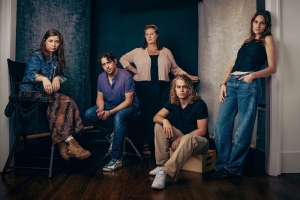
A Red Orchid Theatre is pleased open its 34th Season, exploring the theme of "world on fire," with the Chicago premiere of Will Arbery's politically-charged drama Heroes of the Fourth Turning, directed by Ensemble member dado*, playing October 29 – December 6, 2026 at 1531 N. Wells St. in Chicago's Old Town neighborhood. Single tickets are now on sale at aredorchidtheatre.org or by calling (312) 943-8722. Season subscriptions are currently available.
Heroes of the Fourth Turning features Ensemble Member Kirsten Fitzgerald* with Magdalena Dalzell, Isa Grofsorean, Beck Nolan and Nate Santana.
About the Production:
It's nearing midnight in Wyoming, where four recent graduates have gathered to celebrate their beloved mentor and professor Gina, newly inducted as president of their tiny Catholic liberal arts college. The reunion spirals into spiritual chaos, clashing generational politics and a vicious fight to be understood. Offering grace and disarming clarity, this haunting play speaks to the torn heart of a country at war with itself.
The production team includes Ensemble Member Grant Sabin* (Scenic Designer), Madeleine Shows (Costume Designer), Josiah Croegaert (Lighting Designer), Ethan Korvne (Composer & Sound Designer), Eel Black (Props Designer), Chels Morgan (Violence & Intimacy Director), Caroline Michele Uy (Dramaturg), Omar Fernandez (Assistant Director), Kira Nutter (Production Manager), Tom Daniel (Technical Director), Mark Brown (Master Electrician), JC Widman (Stage Manager) and Faith Locke (Assistant Stage Manager).
*Denotes A Red Orchid Theatre Ensemble Member
PRODUCTION DETAILS:
Title: Heroes of the Fourth Turning
Playwright: Will Arbery
Director: Ensemble member dado*
Cast: Ensemble Member Kirsten Fitzgerald* (Gina) with Magdalena Dalzell (Emily), Isa Grofsorean (Teresa), Beck Nolan (Kevin) and Nate Santana (Justin).
Understudies: Rachel Ives (Emily & Teresa), Kyle Ringley (Justin & Kevin) and Sarafina Vecchio (Gina).
Location: A Red Orchid Theatre, 1531 N. Wells St., Chicago
Dates: Previews: Thursday, October 29 at 7 pm, Friday, October 30 at 7 pm, Sunday, November 1 at 3 pm, Thursday, November 5 at 7 pm and Friday, November 6 at 7 pm
Opening: Sunday, November 8 at 6 pm
Regular run: Thursday, November 12 – Sunday, December 6, 2026
Curtain Times: Thursdays and Fridays at 7 pm; Saturdays 3 pm & 7 pm; and Sundays at 3 pm. Please note: there will not be performances on Saturday, October 31 at 7 pm (Halloween) or Thursday, November 26 (Thanksgiving); there will be an added Industry Night performance on Monday, November 23 at 7 pm.
Tickets: Previews: $33 – $44*. Regular run: $55*. Access, student, senior, and group discounts available. Single tickets are now on sale at aredorchidtheatre.org or by calling (312) 943-8722. Season subscriptions are currently available. *Ticket prices include a processing fee.
Backyard Theatre Company’s Red Bike - Berger Park Coach House Theatre - Through October 24th
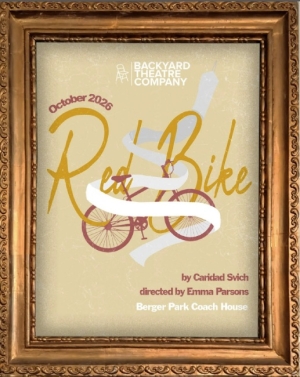
Red Bike is an intimate, movement‑driven play that follows a young person navigating a town transforming faster than they can comprehend. Told through memory, motion, and the rhythm of a bicycle, the play traces The Kid’s journey through shifting streets, storefronts, neighborhoods, and the larger questions of money, power, childhood, and belonging. As the world around them is bought, sold, and renamed, Red Bike asks what we hold onto—and what we lose—when the place that raised us begins to disappear.
Staged inside the Berger Park Coach House, this production offers audiences a close‑up theatrical experience where language, movement, and community shape the storytelling, capturing the raw immediacy of being eleven years old.
Red Bike opens Friday and runs Thursdays and Fridays at 7pm and Saturdays at 3pm through October 24. Performance dates and ticket information are available at: https://events.humanitix.com/red-bike-by-caridad-svich-btc
More details, including rehearsal photos and behind‑the‑scenes previews, can be found on Backyard Theatre Company’s Instagram: https://www.instagram.com/backyardtheatreco/.
Steppenwolf’s Topdog/Underdog: When History Deals the Cards
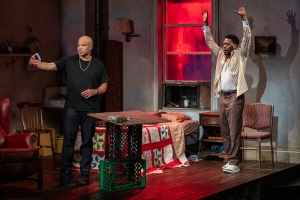
Susan-Lori Parks’ Topdog/Underdog, the Pulitzer Prize-winning masterpiece, is the kind of play that changes depending on when—and how many times—you see it. Directed by Kenny Leon, this revival stars Tony nominee Glenn Davis as Lincoln and Namir Smallwood as Booth, two brothers whose names alone tell us that Parks is preparing to play a very dangerous game with her audience.
The play was originally produced in Chicago by Steppenwolf Theatre Company in 2003, directed by ensemble member Amy Morton, with ensemble member K. Todd Freeman as Booth and David Rainey as Lincoln. More than two decades later, this revival demonstrates just how much material Parks packed into the story of two brothers living on the edge of survival.
Parks begins her own version of Three-Card Monte by giving us the names Lincoln and Booth. We already know the historical ending: John Wilkes Booth assassinated Abraham Lincoln. Parks puts that card on the table immediately—and then spends the rest of the play moving it around.
Lincoln and Booth are not historical figures, of course, but the names become a psychological trap. Lincoln works as an Abraham Lincoln impersonator, repeatedly allowing strangers to “assassinate” him as part of the act. The brothers themselves simulate the murder, turning history into performance and performance into something increasingly dangerous.
That is where Parks’ Three-Card Monte becomes so effective. We know the card. We know what is coming. Yet Parks keeps moving our attention elsewhere—to money, women, abandonment, brotherly rivalry, masculinity and the desperate need to survive. The audience is watching closely, thinking we know exactly where Parks is going. But like the mark in a Three-Card Monte game, we can never be completely sure which card we are actually watching.
The brilliance is that Parks gives us the ending and still manages to create suspense.
The question isn't simply, “Will Booth kill Lincoln?” We already know that story. Instead, Parks asks us to consider how and why these two brothers arrive at that moment. By the time the real gun is fired, we have become so invested in these men that the historical inevitability becomes a genuine emotional shock.
Having seen Topdog/Underdog several times, I’ve gained new insight into Lincoln and Booth with each production. I’ve always imagined these brothers as relatively young men—perhaps somewhere between 21 and 35 at the oldest. There is something about their desperation, their dreams and their constant jockeying for position that feels connected to men still trying to figure out who they are.
Seeing older actors inhabit these roles changes the equation. This production brings a greater sense of history and introspection to Lincoln and Booth. These aren't simply two young men making bad decisions. They feel like men who have accumulated years of disappointment, mistakes and missed opportunities. Their arguments have the weight of history behind them.
That being said, the acting is first-rate.
Glenn Davis delivers some of the best work I have seen in his storied career. His Lincoln carries weariness beneath the humor, as though every card trick, every performance and every attempt to maintain dignity has taken something from him. Davis understands that Lincoln is not simply trying to make a living; he is trying to hold onto an identity.
There is an extraordinary sadness to his Lincoln because he has found a way to make a living by pretending to be someone who, historically, has already been dead for generations. Every night he puts on the stovepipe hat, becomes Abraham Lincoln and allows strangers to reenact his assassination. The joke is that he survives the murder every night—until, of course, the night he doesn't.
Namir Smallwood is equally compelling as Booth. Smallwood has the remarkable ability to morph into whatever character is placed before him, and here he creates a Booth whose swagger and insecurity exist simultaneously. Booth wants to be seen, respected and successful, but beneath that ambition is a brother desperate to prove himself.
Their relationship is the heart of the play. They love each other, resent each other, depend on each other and compete with each other. They are simultaneously brothers and adversaries. One minute they can make each other laugh; the next, they are fighting over money, women or the invisible scorecard of who has accomplished more.
Arnulfo Maldonado’s set—a room in a New York City boarding house—captures the basic circumstances of their existence, but for me, it is far too sanitized for the gritty New York City world Parks has created.
Rooms like this were common, particularly in neighborhoods such as Hell’s Kitchen. They were tight. Space was at a premium. They were not necessarily neat or clean. These were places where people lived because they had few alternatives. The room should feel less like a place where two men are actually struggling to survive.
That distinction matters because Lincoln and Booth are in survival mode. The room is not simply their home; it is a pressure cooker. Every inch of space should remind us that there is nowhere for these brothers to escape—not from each other, not from their past and ultimately not from the consequences of their choices.
Kenny Leon's direction keeps the focus where it belongs: on two brothers trapped between history, memory and survival. He allows Parks' language, humor and repetitions to accumulate rather than rushing toward the inevitable conclusion.
Ultimately, Topdog/Underdog remains a remarkable piece of American theatre because Parks refuses to let history stay in the past. She takes two names everybody recognizes, places them on two Black brothers living in New York, and transforms a familiar historical tragedy into an intimate story about family, survival, masculinity and fate.
We may enter the theatre believing we know who Lincoln and Booth are and how their story ends. But Parks makes us see them as brothers first—two men desperately trying to survive each other, their circumstances and the histories they have inherited.
By the time the final card is played, the tragedy is no longer about Abraham Lincoln and John Wilkes Booth. It belongs entirely to these two brothers. And that is Parks’ greatest trick: she makes us think we are watching history repeat itself, when what we are really watching is the heartbreaking collapse of an American family.
Highly Recommended
When: Through Nov. 1
Where: Steppenwolf Theatre, 1650 N. Halsted St.
Running time: 2.5 hours (15 minute intermission)
Tickets: $20 -$142.50
312-335-1650
Steppenwolf Theatre Continues 51st Season with World Premiere of ADIRONDACK CHAIR CIRCLE October 22 — December 6

Steppenwolf Theatre Company, the nation's premier ensemble theater company, is pleased to launch its 51st Season with the world premiere of Chicago playwright Stephanie Alison Walker's biting satire Adirondack Chair Circle, directed by Tony Award winner Pam MacKinnon (Downstate, Edward Albee's Who's Afraid of Virginia Woolf?), playing October 22 — December 6, 2026 in Steppenwolf's Ensemble Theater, 1646 N. Halsted St. in Chicago. Single tickets are now on sale at steppenwolf.org or the Box Office at (312) 335-1650.
The Adirondack Chair Circle cast features a stellar lineup of talent including ensemble member Caroline Neff, who returns to the Steppenwolf stage, adding to her extensive Steppenwolf credits including Mr. Wolf, Fool for Love, POTUS and Another Marriage. She is joined by David Darrow, who dazzled Steppenwolf audiences as Mozart in last season's record-breaking Amadeus. Broadway favorite Katrina Lenk, who received Tony and Grammy Awards for her turn in The Band's Visit, returns to Steppenwolf for the first time since 2005's Lost Land. Making her Steppenwolf debut is Chicago actor Wendy Mateo, while Sadieh Rifai returns to Steppenwolf after captivating audiences in last year's You Will Get Sick.
About the Production:
A gaggle of suburban moms, armed with pickleball paddles and hard kombucha, are ready to take on the school board in the fight of their lives: attempting to ban the controversial books available to their kids in the school library. But is this trusted inner circle all on the same page? A piercing world premiere from a Chicago playwright, Stephanie Alison Walker's Adirondack Chair Circle exposes the hilarious hypocrisy of the causes we claim and the company we keep. And has a damn good time doing it.
The creative team includes Todd Rosenthal (Scenic Design), Izumi Inaba (Costume Design), Barbara Samuels (Lighting Design), Mikhail Fiksel (Sound Design), Nicholas Hussong (Projection Design), Steph Paul (Choreographer), Kate DeVore (Vocal Coach), Bryar Barborka (Dramaturg), Patrick Zakem (Creative Producer), Elise Hausken (Production Manager), JC Clementz, CSA (Casting), Michelle Medvin (Production Stage Manager) and Kathleen Barrett (Assistant Stage Manager). For full cast and creative team bios, click here.
Production Details:
Title: Adirondack Chair Circle
Playwright: Stephanie Alison Walker
Director: Pam MacKinnon
Cast: ensemble member Caroline Neff (Evelyn Grace) with David Darrow (Crow), Katrina Lenk (Banna), Wendy Mateo (Winona) and Sadieh Rifai (Libby).
Understudies: Tiffany Bedwell (Banna), Brittany Burch (Evelyn Grace), Alex Casillas (Winona), Warren Keith Duncan (Crow) and Erinn Fredin (Libby).
Location: Steppenwolf's Ensemble Theater, 1646 N. Halsted St., Chicago
Dates: Previews: Thursday, October 22 – Saturday, October 31, 2026
Opening: Sunday, November 1, 2026 at 6 pm
Regular run: Tuesday, November 3 – Sunday, December 6, 2026
Curtain Times: Tuesdays, Wednesdays, Thursdays and Fridays at 7:30 pm; Saturdays at 3 pm & 7:30 pm; and Sundays at 3 pm. Please note: there will not be 7:30 pm performances on Tuesday, October 27, Thursday, November 5, Tuesday, November 10, Wednesday, November 18, Wednesday, November 25, Thursday, November 26 and Tuesday, December 1; there will be an added 2 pm matinees on Wednesday, November 25 and Wednesday, December 2.
Tickets: Classic Memberships starting as low as $165 are now on sale for Steppenwolf's 2026/27 season at steppenwolf.org/myseason. Single tickets for Adirondack Chair Circle ($20 – $149*) are now on sale at steppenwolf.org and the Box Office at (312) 335-1650. Steppenwolf Flex Memberships are currently on sale: Black Card Memberships with six tickets for use any time for any production and RED Card Memberships for theatergoers under 30. *Pricing includes an $8.50 handling fee
Steppenwolf offers 20 tickets for $20 (no added fees) for each performance of every Main Series production. Use promo code 20FOR20 to redeem this offer online, available in advance until they're sold out for every main series show. Limit 2 tickets per person. You can also purchase by phone at (312) 335-1650 on the day-of show at 12 pm for main series performances. Limit 2 tickets per person.
Accessible Performance Dates:
Audio-Described and Touch Tour: Sunday, November 22 at 3 pm (1:30 pm Touch Tour)
Open-Captioned: Saturday, November 7 at 3 pm, Thursday, November 19 at 7:30 pm and Saturday, November 28 at 3 pm
ASL-Interpreted: Friday, December 4 at 7:30 pm
Education and Engagement:
Throughout the 2026/27 season, Steppenwolf continues its commitment to the next generation of theatre learners, makers and appreciators with robust education and engagement programming. Programming includes dedicated student matinee performances during four of the five Main Series productions including Topdog/Underdog, Adirondack Chair Circle, The Comeuppance and Ellen B., in-school residencies in partnership with Chicago Public schools, workshops, panels and events specifically geared towards teens, as well as professional development trainings and resources for educators. For additional information about Steppenwolf's Education and Engagement programming and to register your school for a field trip visit steppenwolf.org/education-community/school-teacher-programs/field-trips.
Artist Biographies:
Stephanie Alison Walker (Playwright) is an internationally-produced, award-winning playwright whose work is known for the personalization of the political, humor in darkness and the dramatization of the resilience of women. She is a native Chicagoburbian who has lived all over including London, Buenos Aires, San Juan Island and fifteen years in Los Angeles. She received her Bachelors in English/Creative Writing and Spanish from the University of Colorado and her Master of Professional Writing from the University of California. She began writing plays while working for Fox Theatricals in Chicago. Her play about the housing crisis, American Home, was the inaugural winner of American Blues Theatre's Blue Ink Award. Her play about the mothers of the disappeared in Argentina, The Madres, received a National New Play Network Rolling World Premiere at Teatro Vista in Chicago, Skylight Theatre Company in L.A., Moxie Theatre in San Diego and Shrewd Theatre Company in Austin. It was the 2019 Winner of the Francesca Primus Prize, winner of the Ashland New Plays Festival, the Generations Prize and semi-finalist for the CTG/ Humanitas Prize for playwriting. Her follow-up play The Abuelas, premiered at Teatro Vista and was recently adapted into a short film titled The Birthday Gift. The Art of Disappearing was a finalist for the Primus Prize and enjoyed critical praise for the world premiere in Chicago by 16th Street Theater in 2015. Friends with Guns, her play about liberals and gun ownership was an O'Neill Finalist, winner of Best New Play at the 2019 Valley Theatre Awards, and had its Chicago premiere by A Short Leap Theatre Company in 2025. Sophia Hayden Deserves Better tells the story of the architect of the Woman's Building at the 1893 World's Columbian Exposition in Chicago and was recently a part of Gglassfest by Lookingglass Theatre in Chicago. The Ordeal of Water, inspired by the first women to work as Longshoremen at the Port of Los Angeles, was most recently a part of Bay Street Theater's New Works Festival. Adirondack Chair Circle, her play that tackles suburban book-banning moms, was developed at The Inkwell Theater Company and A Red Orchid's Studio at A Red Orchid. Her short plays have been anthologized by Smith & Kraus. Her full-lengths are published by Broadway Publishing, Inc. In addition to writing plays, she is currently adapting Friends with Guns and The Abuelas as features while raising two spirited boys and selling real estate in the suburbs of Chicago. She is a proud member of the Dramatists Guild of America, Honor Roll Playwrights, NNPN Affiliated Artist, and a proud alumni of the Playwrights Union. stephaniealisonwalker.com
Pam MacKinnon (Director) is a Tony, Drama Desk and multi-Obie Award winning director. She is the artistic director of American Conservatory Theater in San Francisco. She has directed more than eighty productions. Her Tony Award-winning production of Edward Albee's Who's Afraid of Virginia Woolf? originated at Steppenwolf. Her production of Bruce Norris's Downstate (Steppenwolf, National Theatre and Playwrights Horizons) was celebrated with several Jeff Awards and won Pam her second Obie. She served as president of SDC, the national Union of choreographers and directors.
David Darrow (Crow) Steppenwolf Theatre Company: Amadeus; Off-Broadway: Memnon (Classical Theatre of Harlem), All Is Calm (Drama Desk Award), The Revival (Project Y Theatre); Regional: Over ten productions at The Guthrie including A Little Shop Of Horrors, Juno And The Paycock and The Tempest; Sweat (ACT); Ragtime, Sweeney Todd, Fiddler on the Roof (Asolo Repertory Theatre); Lookinglass Alice, Twelfth Night (Baltimore Center Stage); Romeo And Juliet (Ten Thousand Things); Television: RJ Decker, Ballard and Cupertino; Education: MFA Grad Acting – Tisch School of the Arts. David has written several musicals which have been developed/produced at theatres around the country.
Katrina Lenk (Banna) Broadway: Company, The Band's Visit (Tony, Grammy, Lucille Lortel Award), Indecent, Once, Spider-Man: Turn Off the Dark, The Miracle Worker. Additional theater credits include: High Spirits (New York City Center Encores!), Indecent (Vineyard, La Jolla Playhouse, Yale Rep), iWitness (Mark Taper Forum), Lost Land (Steppenwolf), Lovelace: A Rock Opera (L.A./Edinburgh). Television: Cupertino, Apples Never Fall, Ozark, The Marvelous Mrs. Maisel, Little Voice, The Good Fight, The Village, Tommy, Law & Order: SVU, Law & Order, et al.
Wendy Mateo (Winona) is beyond thrilled to make her Steppenwolf debut. Wendy is the Artistic Director of Teatro Vista Productions (TVP) and a Chicago-based actor, director and filmmaker. An iO and Second City alum, she has been seen on stage in Beyond Caring and Big Lake Big City (Lookingglass Theatre). Her directing work includes The Brief Wondrous Life of Oscar Wao (Goodman Theatre); ¡Bernarda! (TVP); Mojada (upcoming at Court Theatre). Her TV/film acting credits include Chicago Med, Station Eleven and Widows, while her filmmaking credits include Good Mothers and Hair.
Caroline Neff (Evelyn Grace) is a Steppenwolf ensemble member. At Steppenwolf, she was last seen in Mr. Wolf, Fool for Love, POTUS, Another Marriage, Describe the Night, Seagull, Dance Nation, The Curious Incident of the Dog in the Night-Time, You Got Older, Linda Vista (also Taper Forum and Broadway), The Fundamentals, The Flick, Airline Highway (also Broadway), The Way West, Three Sisters, Annie Bosh is Missing and Where We're Born. Select theatre credits include: Lettie (Jeff Award Best Actor, Victory Gardens Theater); Uncle Vanya (Goodman Theatre); A Brief History of Helen of Troy (Jeff Award for Best Actress), The Knowledge, Harper Regan, In Arabia We'd All Be Kings (Steep Theatre); The Downpour (Route 66 Theatre); Port (Griffin Theatre); 4000 Miles (Northlight Theatre); Moonshiner (Jackalope Theatre). Regional credits include: Peerless (Yale Repertory Theatre). Film and television credits include: Parallax (upcoming Apple tv) FBI, Three Women, Let the Right One In, The Red Line, Chicago P.D., Chicago Fire, Open Tables and Older Children, and heard in multiple Audible Projects such as: Song of the Northwoods, Crowded Hours, Denali and Boar's Nest. She is a proud company member of Steep Theatre and holds her BA from Columbia College.
Sadieh Rifai (Libby) Steppenwolf Theatre: You Will Get Sick, August: Osage County (u/s). The Targeted, Do You Feel Anger, An Evening at the Talk House, Grey House (A Red Orchid). She's performed at theaters such as Goodman, American Theatre Company, Chicago Shakespeare and Milwaukee Repertory. Film: Block Party, Hekla, The Wise Kids, Nate and Margaret, Olympia, All Happy Families. Television: Bettendorf Talks, The Red Line, Chicago Med, Patriot, Shining Girls and Somebody Somewhere. Sadieh received the Princess Grace Award in 2011 & The Princess Grace Fellow in 2026. She's a graduate of The School at Steppenwolf and is represented by Venture and Paonessa Talent.
Accessibility:
As a commitment to make the Steppenwolf experience accessible to everyone, performances featuring American Sign Language Interpretation, Open Captioning and Audio Description are offered during the run of each STC production. Assistive listening devices (ALDs), large-print programs and Braille programs are available for every performance and all our spaces are equipped with an induction hearing loop. Our building features wheelchair accessible seating and restrooms, push-button entrances, a courtesy wheelchair and all-gender restrooms, with accessible counter and table spaces at our bars. For additional information regarding accessibility, visit steppenwolf.org/plan-your-visit/accessibility or e-mail This email address is being protected from spambots. You need JavaScript enabled to view it..
Sponsor Information:
Adirondack Chair Circle is a recipient of the Edgerton Foundation New Play Award. United Airlines is the Official and Exclusive Airline of Steppenwolf. Steppenwolf is also grateful for the significant season support from lead sponsors Allstate Insurance Company, Paul Angell Foundation, Bloomberg Philanthropies, Crown Family Philanthropies, Caroline and Keating Crown, Julius Frankel Foundation, Lefkofsky Family Foundation, Northern Trust, Anne and Don Phillips, John Hart and Carol Prins, Shubert Foundation, Inc, and Zell Family Foundation. Steppenwolf also acknowledges generous support from premier sponsors Anonymous, Andrew and Amy Bluhm, Michael and Cathy Brennan, Ann and Richard Carr, Chicago Community Trust, Rich and Margery Feitler, FROST CHICAGO, Lloyd A. Fry Foundation, Jessica and Dominic Green Family Fund, John D. and Catherine T. MacArthur Foundation, The Orlebeke Foundation, Sacks Family Foundation, Gary Sinise Foundation, Harold and Mimi Steinberg Charitable Trust, Thoma Bravo, and Bryan Traubert and Penny Pritzker. Steppenwolf also acknowledges support from the National Endowment for the Arts, Illinois Arts Council, and the City of Chicago Department of Cultural Affairs and Special Events.
About Steppenwolf Theatre Company:
Steppenwolf Theatre Company is the nation's premier Ensemble Theater with 51 members who are among the top actors, playwrights and directors in the field. Thrilling, powerful, groundbreaking productions have made this theatre legendary. From the early phenomenon of Balm in Gilead, to The Grapes of Wrath, August: Osage County, Downstate, The Brother/Sister Plays, and more recently, the Pulitzer Prize and Tony Award-winning Purpose, Steppenwolf Theatre has had a long-running and undeniable impact on American Theatre and Chicago's cultural landscape. Founded in 1974 by Terry Kinney, Jeff Perry and Gary Sinise, Steppenwolf started as a group of friends in their teens and early 20s performing in the basement of a school in Highland Park, Illinois. Today, the company's artistic force remains rooted in the original vision of its founders: an artist-driven theatre, whose vitality is defined by its appetite for bold and innovative work. Every aspect of Steppenwolf is rooted in its Ensemble ethos, from the intergenerational artistic programming to the multi-genre performance series LookOut, to the nationally recognized work of Steppenwolf Education and Engagement which serves nearly 15,000 teens annually. While grounded in the Chicago community, more than 40 original Steppenwolf productions have enjoyed success nationally and internationally, including Broadway, Off-Broadway, London, Sydney, Galway and Dublin. Steppenwolf also holds accolades that include the National Medal of Arts, 14 Tony Awards, two Pulitzer Prize-winning commissions and more. Led by Artistic Directors Glenn Davis and Audrey Francis, Executive Director E. Brooke Flanagan and Board of Trustees Chair Keating Crown — Steppenwolf continually redefines the boundaries of live theater and pushes the limits of acting and performance.
Steppenwolf's Mission: Steppenwolf strives to create thrilling, courageous and provocative art in a thoughtful and inclusive environment. We succeed when we disrupt your routine with experiences that spark curiosity, empathy and joy. We invite you to join our ensemble as we navigate, together, our complex world. steppenwolf.org, facebook.com/steppenwolftheatre, twitter.com/steppenwolfthtr and instagram.com/steppenwolfthtr.
ALL THINGS EQUAL: THE LIFE AND TRIALS OF RUTH BADER GINSBURG 2027 NATIONAL TOUR - tickets now on sale

Innovation Arts & Entertainment, along with Broadway In Chicago, are thrilled to announce single tickets for ALL THINGS EQUAL: THE LIFE AND TRIALS OF RUTH BADER GINSBURG (www.allthingsequalrbg.com), will go on sale Friday, September 25. Produced by Scott Stander, the production that has toured more than 40 cities nationwide to date, is written by multiple Award-winner Rupert Holmes and directed by Laley Lippard. The production stars Michelle Azar who originated the role. Over the course of ninety fascinating and often funny minutes, the one-woman-production presents an intimate portrayal of Supreme Court Justice Ruth Bader Ginsburg, a true American original. ALL THINGS EQUAL: THE LIFE AND TRIALS OF RUTH BADER GINSBURG will play Broadway In Chicago’s Broadway Playhouse at Water Tower Place (175 E. Chestnut St., Chicago) for a limited three-day engagement, January 26 – 28.
“In creating this play about her richly-lived life and hard-fought struggles, I came to ever more deeply marvel at her strength, tenacity, sly wit, and compassion,” says Holmes. “Our play also reveals the love song that ran through her remarkable life and shares the music that was her giddy delight. ALL THINGS EQUAL offers each theatregoer the chance to better know this woman, her yearning for equality, and her love for this nation's precious institutions: Ruth ... Justice ... and the American way.”
In ALL THINGS EQUAL: THE LIFE AND TRIALS OF RUTH BADER GINSBURG , Supreme Court Justice “RBG” welcomes a friend of the family to her cozy chambers to convey, over the course of ninety fascinating and often funny minutes, a sense of her life and its many trials: losing her mother the day before she graduated as valedictorian of her Brooklyn high school; being one of only nine young women studying law at Harvard while also raising a daughter and helping her husband battle cancer; fighting for women's rights in the nineteen-seventies before condescending all-male courts; and taking courageous stands for human rights as a voice of reason amid a splintering and increasingly politicized Supreme Court. An evening with a great and compassionate icon of straight-thinking American justice emerges, an RBG who is not only “notorious” but victorious as she takes a stand for ordinary people facing the many challenges of a changing world.
"We couldn't be more excited to bring Ruth Bader Ginsburg's story to even more cities in 2027," says Producer Scott Stander. "Audiences across the country have responded to this show with laughter, tears, and a renewed appreciation for what one determined person can accomplish. Her story continues to resonate, and we can't wait to share it with new audiences everywhere we go."
“Bring your scrunchies, your hankies, your humor, and your heart to this entertaining and uplifting event,” says Holmes.
For more information, visit www.allthingsequalrbg.com. Follow All Things Equal: The Life and Trials of Ruth Bader Ginsburg on Instagram and Facebook.
About Rupert Holmes, Playwright
Rupert Holmes was the first person in Broadway history to solely win Tony awards for Book, Music, and Lyrics, this for his creation The Mystery of Edwin Drood, which also won the Tony award for Best Musical. He has received five New York Drama Desk awards in the categories of Book (twice), Music & Lyrics, Orchestrations, and--most recently (2025)--for Best Adaptation. His Broadway shows include Curtains with Kander and Ebb (Tony noms to Holmes for Book and Additional Lyrics), Say Goodnight, Gracie (Tony nom to Holmes for Best Play), Accomplice (Edgar award from The Mystery Writers of America), his stage adaptation of John Grisham's A Time to Kill, and his recent Gilbert and Sullivan adaptation of Pirates! The Penzance Musical (Tony nomination, Best Revival). He has written over twenty musicals and plays performed at major venues regionally and internationally. Holmes is author of the recent New York Times Best Seller Murder Your Employer. His first novel Where the Truth Lies was adapted for film starring Colin Firth and Kevin Bacon. His musical novel Swing reached #24 of all books on Amazon.
Holmes contributed songs to the Golden Globe-winning score of A Star is Born. For television, he created and scripted all 55 episodes of AMC’s first original series Remember WENN. He has written, arranged & conducted numerous recordings for Barbra Streisand, including the platinum album Lazy Afternoon; his songs have been recorded by Barry Manilow, Dionne Warwick, Dolly Parton, Judy Collins, Britney Spears, Rita Coolidge, Renée Fleming, and countless others. Holmes is also the singer-songwriter of his own iconic #1 Billboard hit “Escape (The Pina Colada Song)” featured in over fifty motion pictures and TV shows. He is recipient of the George M. Cohan Award from ASCAP and recently received an honorary doctorate from The Manhattan School of Music.
Michelle Azar, Actress (Ruth Bader Ginsburg)
Her performance background began in Chicago where she sang with the Lyric Opera of Chicago’s children’s choir. She received her BFA from NYU’s Tisch School of the Arts, and started working immediately as Janis Joplin in Beehive. Once moving to Los Angeles, she received Ovation awards for her roles in both dramatic and comedic roles and was the 2016 Stage Raw award winner for Best Actress in Eric Coble’s My Barking Dog directed by Michael Michetti. Most favorite stage credits: Fiddler on the Roof in Yiddish! (Soraya Theatre) Bella in Lost in Yonkers, and Berte in Boeing, Boeing (La Mirada Theatre) and Masha in Mayakovsky and Stalin (Cherry Lane Theatre). Select television and film credits include: NCIS LA, How To Get Away With Murder, Criminal Minds, The Magicians, Aquarius, Community, and the upcoming short, CryBaby Michelle is no stranger to the one-woman show, as her own original piece, FROM BAGHDAD TO BROOKLYN, continues to tour around the country after its sold out premiere at the United Solo Festival in NYC.
Laley Lippard (she/her), Director
Lippard is a director, dramaturg, educator and producer dedicated to social justice through the arts. Lippard has developed new work and directed across the country at theaters such as Eugene O’Neill Theatre Center, Woolly Mammoth Theatre Company, Alliance Theater, Round House Theatre, Cleveland Play House, Steppenwolf Theatre Company, American Theater Company, Magic Theatre, The Kennedy Center for the Performing Arts, Theater J, Kitchen Dog, Eaton Workshop, Dobama Theater, foolsFURY Theater, Z Space, Solas Nua, and Virginia Stage Company among others. Recently, she collaborated and trained throughout Japan, India and Greece on a premiere adaptation of Oedipus by Ellen McLaughlin which performed at ancient sites across Greece. Her site specific work has been noted in The New York Times (The Smuggler with Solas Nua) and her work was adapted to film which premiered in NYC’s 1st Irish Festival (In the Middle of the Fields - US premiere). Lippard was the co-founder and co-executive producer of The Chicago Home Theater Festival, a five-year city-wide artistic network and annual event that organized artists and neighbors to celebrate local culture, share a communal meal, experience diverse art forms in alternative spaces, and build intentional community across lines of difference. Other producing work includes Z/Magic Mondays at Magic Theatre as Artistic Associate, with The Welders as Interim Creative Producer, and as the Cleveland Play House inaugural Artistic Directing Fellow. She has artistically collaborated with HowlRound and the American Voices New Play Institute at Arena Stage, Guthrie Theater, Intersection for the Arts, American Conservatory Theater, Court Theatre, Syracuse Stage, and TheatreWorks. Lippard has taught, workshopped, and/or directed at Stanford University, Northwestern University, Kenyon College, Hampshire College, Carnegie Mellon University, and Case Western Reserve MFA Acting program. Lippard is a member of the National Directors Fellowship, the Lincoln Center Theater Directors Lab, an Associate Member of the SDC, and holds an MFA in Directing from Northwestern University.
Scott Stander, Producer
Stander has produced concerts and theatre attractions for the last 20 years including the Rocky Horror Picture Show Spectacular Tour with original cast members Barry Bostwick, Patricia Quinn and Nell Campbell, Clue: The Movie with original cast members Lesley Ann Warren and Tim Curry and “Judy Garland We Need A Little Christmas”, starring internet sensation Debbie Wileman. Upcoming: 40th Anniversary of Little Shop of Horrors with original cast member Ellen Greene. He has also produced Debbie Wileman’s Happy 100th Birthday, Judy! concert and her debut CD: "I'm Still Here - The Songs Judy Would Sing". Past hits: The Rocky Horror Picture Show 50th Anniversary Tour starring Tim Curry, Barry Bostwick, Patricia Quinn and Nell Campbell; An Evening With Sophia Loren (10 city US tour - Spring 2016); Dance To The Movies starring Shirley Jones and Lesley Ann Warren (Spring 2016); Dancing With A Twist-mas (Christmas 2015); Ballroom With Twist – starring TVs Derek Hough, Cheryl Burke, Maksim Chmerkovskiy, Karina Smirnoff, Tony Dovolani and Peta Murgatroyd (National Tour – 5 seasons) Broadway: If You Ever Leave Me I’m Going With You starring Renee Taylor and Joe Bologna (Broadway and Chicago Company and National Tour); Steve Allen and Phyllis Diller – Together Again For The First Time (12 city Concert Tour); An Evening With Shirley Bassey (10 city Concert Tour); Milton Berle’s 90th Birthday Celebration (13 city tour); Breaking Legs starring Frank Gorshin (Off Broadway and tour); Say Goodnight Gracie (2nd National Broadway Tour starring Don McArt – 3 year tour); Odd Couple – Female Version starring Barbara Eden and Rita McKenzie (National Tour – 3 seasons); Love Letters starring Barbara Eden and Larry Hagman and Hal Linden (National tour); Bermuda Avenue Triangle starring Renee Taylor, Joe Bologna and Lainie Kazan (National Tour); Ethel Merman’s Broadway starring Rita McKenzie (Off Broadway-John Houseman Theatre and National Tour).
PERFORMANCE SCHEDULE
Tuesday, January 26 – 7:00 p.m.
Wednesday, January 27 – 7:00 p.m.
Thursday, January 28 – 7:00 p.m.
TICKET INFORMATION (As of September 24, based on availability and subject to change)
Individual tickets for ALL THINGS EQUAL: THE LIFE AND TRIALS OF RUTH BADER GINSBURG go on sale on Friday, September 25 and range from $30.00 - $80.00 with a select number of premium tickets available. Ticket price listed is when purchased in person at the box office. Additional fees apply for online purchases. Tickets are available now for groups of 10 or more by calling Broadway In Chicago Group Sales at (312) 977-1710 or emailing This email address is being protected from spambots. You need JavaScript enabled to view it.. For more information, visit www.BroadwayInChicago.com.
ABOUT BROADWAY IN CHICAGO
Broadway In Chicago was created in July 2000 and over the past 26 years has grown to be one of the largest commercial touring homes in the country. A Nederlander Presentation, Broadway In Chicago lights up the Chicago Theater District entertaining up to 1.7 million people annually in five theatres. Broadway In Chicago presents a full range of entertainment, including musicals and plays, on the stages of five of the finest theatres in Chicago’s Loop including the Cadillac Palace Theatre, CIBC Theatre, James M. Nederlander Theatre, The Auditorium, and just off the Magnificent Mile, the Broadway Playhouse at Water Tower Place .
For more information and tickets, visit www.BroadwayInChicago.com.
Follow @BroadwayInChicago on
Facebook ● Instagram ● TikTok ● Bluesky ● YouTube
#broadwayinchicago
Writers Theatre continues its 35th Anniversary Season with explosive, high-stakes boxing drama The Royale October 22 – November 29

Writers Theatre, under the leadership of Executive Director Kathryn M. Lipuma and Alexandra C. and John D. Nichols Artistic Director Braden Abraham, continues its 35th Anniversary Season with the highly-theatrical historical boxing drama The Royale from Marco Ramirez (Orange is the New Black, Buena Vista Social Club) and directed by Tyrone Phillips (Fat Ham; Byhalia, Mississippi). Inspired by the first Black world heavyweight champion and Chicagoan Jack Johnson, The Royale follows Jay "The Sport" Jackson as he fights for his place in history, The Royale will run October 22 – November 29, 2026 in the Alexandra C. and John D. Nichols Theatre at 325 Tudor Court, Glencoe.
Jay is a really good boxer, so good they call him "The Sport." He's won his last seventy-six fights and has his sights set on being crowned the next heavyweight champion. But it's 1905, and in the Jim Crow era, a Black man doesn't get to fight a reigning white champion. When a surprising chance at the title appears, Jay gears up for the fight of his life—where the stakes are staggeringly high inside the ring and out. Inspired by real-world boxer Jack Johnson, this adrenaline rush of a play by Marco Ramirez (Orange is the New Black, Buena Vista Social Club) is a kinetic and poetic portrayal of what it takes and what it costs to make history.
"The Royale is inspired by the boundary-breaking boxer Jack Johnson and the price of his determination to get to the top, As Jay's obstacles grow, so does his determination, his pride, his discipline and the costs to the people who love him," comments says Alexandra C. and John D. Nichols Artistic Director Braden Abraham. "Director Tyrone Phillips and his incredible ensemble of performers will conjure an entire world and its systemic tension using a captivating blend of rhythmic and percussive choreography. It's an invigorating way to continue our 35th season at Writers with a play built from a piece of American history too often left out of the story."
The cast of The Royale includes: La'Tevin Alexander (Jay), Scott Aiello (Max), Ajax Dontavius (Fish), James Vincent Meredith (Wynton), AnJi White (Nina). The understudies are Yomade Adefeso (Jay Understudy; Fish Understudy), Kristin Ellis (Nina Understudy), Joel Gelman (Max Understudy), Frederick Paul Williams (Wynton Understudy).
The creative team includes: Tyrone Phillips (Director), Rasell Holt (Movement Director), Lauren M. Nichols (Scenic Designer), Gregory Graham (Costume Designer), Jason Lynch (Lighting Designer), Stephanie Farina (Sound Designer) and Kenya Hall (Dramaturg). The stage manager is Imani M. Ross.
Single Tickets for The Royale start at $35 are now on sale at the Writers Theatre Box Office at 325 Tudor Court, Glencoe, by calling 847-242-6000, and at www.writerstheatre.org.
About the Artists
Marco Ramirez (Playwright) has had plays produced at Lincoln Center Theater, The Kennedy Center, The Humana Festival, The Old Globe (San Diego), The Bush Theatre (London), American Theater Company (Chicago), Soulpepper (Toronto) and Center Theatre Group (LA). Honors include Helen Hayes and Drama Desk nominations, the Outer Critics Circle's John Gassner Playwriting Award, Juilliard's Lila Acheson Wallace Playwriting Fellowship, Lincoln Center's Le Comte du Nouy Award and TCG's Edgerton Foundation New Play Award. Marco is also a WGA and Emmy Award-nominated TV writer and producer, where his credits include Marvel's Daredevil (Netflix), Marvel's The Defenders (Netflix), Sons of Anarchy (FX), Orange is the New Black (Netflix) and Fear the Walking Dead (AMC).
Tyrone Phillips (Director) is the founding Artistic Director of Chicago's Definition Theatre. Recipient of the 2022 Alumni Award for Diversity and Inclusion, he is a graduate of the University of Illinois at Urbana-Champaign and has studied abroad at Shakespeare's Globe. As a first generation Jamaican-American, Tyrone is passionate about equity, diversity, inclusion and accessibility in the fine arts industry and has completed advanced anti-racism training to lead change in our community. Select theater credits: Definition Theatre, Chicago Shakespeare, Goodman, Steppenwolf, Writers, Old Globe, Berkeley Rep, Milwaukee Rep, St. Louis Rep and Stage 42 (off-Broadway). Tyrone is currently adjunct faculty at DePaul University and serves on the Board of Directors for the League of Chicago Theaters. He is the recipient of the Inaugural Arts Midwest Peter Capell Award for Midwestern Creativity and Entrepreneurship and proud member of SDC, SAG-AFTRA and the NAACP.
La'Tevin Alexander (Jay) is making his Writers Theatre debut. Regional credits include Joe Turner's Come and Gone as Herald Loomis (Penumbra Theatre); The Piano Lesson as Lymon (Milwaukee Rep and Cincinnati Playhouse In The Park); The Light as Rashad (Portland Center Stage); Paradise Blue as P-Sam (Portland Playhouse); A Christmas Carol as Scrooge (Portland Playhouse); Reggie Hoops as Muncie (Profile Theatre); and Dracula: A Feminist Revenge Fantasy as Jonathan Harker (Portland Center Stage). Film credits include Outdoor School (2025); Test Screening (2024); The Paper Tigers (2020); Marry, Fuck, Kill (2024); and Dearest Eva (2022). Television credits include: DELPHI (Prime); CHAD (TBS); The Wonderland Murders (ID); Portlandia (IFC); and Grimm (NBC). He has a BA from Florida A&M University.
Scott Aiello (Max) is returning to Writers Theater, where he previously appeared as Duke Frederick in As You Like It. Other Chicago Theater credits include: Ma Rainey's Black Bottom (Goodman), Hamlet (SS), A Midsummer Night's Dream (SS), Henry V and Richard III (Chicago Shakespeare), A View From the Bridge (Shattered Globe), Perfect Mendacity (Steppenwolf), Awake and Sing! (Timeline). T.V. and film: American Rust (Showtime, Recurring), Billions (Showtime, Recurring). Joseph Jefferson Awards- Leading Actor in a Play (A View From the Bridge, Shattered Globe, 2024), Supporting Actor in a Play (Broadway Bound, Pegasus Players, 2002) Scott has narrated over 300 audiobooks. Training: The Juilliard School.
Ajax Dontavius (Fish) is a Haitian-American actor. Recent credits include: Blues for an Alabama Sky (Seattle Rep and Remy Bumppo Theatre); Last Night and The Night Before (Steppenwolf Theatre); Measure for Measure (Chicago Shakespeare Theater); Fences (American Blues Theater); and Middle Passage (Lifeline Theatre). Television: NCIS: Origins, Chicago Fire, Chicago P.D., 61st Street. Education: B.F.A. Acting – Roosevelt University/Chicago College of Performing Arts.
James Vincent Meredith (Wynton) previously appeared at Writers Theatre in The Dutchess of Malfi and Othello. Broadway credits include Skin of Our Teeth (LCT), Book of Mormon (Eugene O'Neill, also National Tour), The Minutes, and Superior Donuts (both Music Box). Local credits include work at Chicago Shakespeare, Goodman, Court, Victory Gardens and Steppenwolf (ensemble member since 2007). Recent Television credits include Fargo (FX), Emperor of Ocean Park (MGM), Your Honor (Showtime), 61st Street (AMC/CW)
AnJi White (Nina) hails from the South Side of Chicago. She last appeared in Covenant and Fat Ham (Goodman Theatre). Some Chicago credits include East Texas Hot Links (Court Theatre, Jeff Award for Best Supporting Actress); For Colored Girls (Court Theatre Jeff Award for Best Ensemble); Sunset Baby (Black Theatre Alliance Award for Best Actress, TimeLine Theatre) and more. Regional credit: Paradise Blue (Studio Theatre in D.C., Helen Hayes for Outstanding Supporting Performer). TV credits include: Marvel's Ironheart, Fargo, 61st Street and more.
The Royale
Written by Marco Ramirez
Directed by Tyrone Phillips
Alexandra C. and John D. Nichols Theatre
October 22 – November 29, 2026
Cast: La'Tevin Alexander (Jay), Scott Aiello (Max), Ajax Dontavius (Fish), James Vincent Meredith (Wynton), AnJi White (Nina), Yomade Adefeso (Jay Understudy; Fish Understudy), Kristin Ellis (Nina Understudy), Joel Gelman (Max Understudy) and Frederick Paul Williams (Wynton Understudy).
Creative Team: Tyrone Phillips (Director), Rasell Holt (Movement Director), Lauren M. Nichols (Scenic Designer), Gregory Graham (Costume Designer), Jason Lynch (Lighting Designer), Stephanie Farina (Sound Designer), Kenya Hall (Dramaturg) and Imani M. Ross (Stage Manager).
Performance Schedule:
Wednesdays: 2:00pm and 7:30pm
Thursdays: 7:30pm
Fridays: 7:30pm
Saturdays: 2:00pm and 7:30pm
Sundays: 2:00pm and 7:00pm
Open Captioned Performance: Thursday, November 19 at 7:30pm
ASL-Interpreted Performance: Saturday, November 14 at 2:00pm
Pay-What-You-Can Performances: Thursday, October 22 at 7:30pm and Sunday, November 22 at 7pm
Location: Alexandra C. and John D. Nichols Theatre, 325 Tudor Court, Glencoe
Prices: $35+
Discounts are available for students, educators, theater industry professionals, active military personnel, veterans, police officers, firefighters and their immediate families. Information is available at: https://www.writerstheatre.org/plan-your-visit/box-office-and-theatre-center/pricing--special-offers
Box Office: The Box Office is located at 325 Tudor Court, Glencoe; 847-242-6000; www.writerstheatre.org
Single tickets will go on sale Tuesday, September 1. Flex subscriptions and tickets are available online at www.writerstheatre.org, and at the Box Office by calling 847-242-6000.
Teatro Vista Productions announces season
Teatro Vista Productions, the Midwest's only Latine-led Equity theatre company, led by Executive Director Lorena Diaz and Artistic Director Wendy Mateo in collaboration with Associate Artistic Director Cruz Gonzalez-Cadel, announces its 2026-27 Season. The season opens with the groundbreaking live looping hip-hop musical Mexodus, November 7-21, 2026, presented by Studebaker Theater, P3 Productions and Audible, in collaboration with Teatro Vista Productions. The musical, making its Chicago Premiere, is written and performed by Brian Quijada and Nygel D. Robinson, choreographed by Tony Thomas, and directed by David Mendizábal. The season continues with Luis Alfaro's Mojada, March 12 - April 11, 2027, directed by Wendy Mateo and Denise Yvette Serna, presented in partnership with Court Theatre. Concluding the season is the Chicago Premiere of Reggie Hoops by Kristoffer Diaz, directed by Khanisha Foster, and presented as part of Teatro Vista Productions' multi-year partnership with Steppenwolf Theatre Company.
As part of its commitment to community engagement, supporting its artists and creating new digital projects, the TVP Season 36 includes the launch of a new In Process: Podcast starting in October featuring in-depth Artist on Artist conversations. The first episode will feature TVP Artistic Collective members Max Arciniega and Paloma Nozicka. Live Mexodus Listening Parties, on October 11, 18, 25 and November 1, will be held in locations throughout the city and strategically en route - from Teatro Vista Productions' homebase at The Exchange in Jefferson Park to where Mexodus is playing at the Studebaker Theater downtown - with each stop mirroring a chapter in the play's journey. TVP will also continue workshopping plays to live audiences with In Process Live; presenting La Lupe: My Life, My Destiny, by Carmen Rivera and directed by Cándido Tirado, on January 23, 2027.
The 2026-2027 season includes:
Studebaker Theater, P3 Productions and Audible,
in collaboration with Teatro Vista Productions present
Mexodus
Written and performed by Brian Quijada and Nygel D. Robinson
Choreographed by Tony Thomas
Directed by David Mendizábal
Studebaker Theater, 410 S Michigan Avenue, Chicago
November 7-21, 2026
Press Opening: Saturday, November 7, 2026 at 7:30pm
Creators Brian Quijada and Nygel D. Robinson perform this groundbreaking hip-hop musical, using live instruments to build a soundscape live each night incorporating looping to layer rhythms, melodies, and harmonies to create full arrangements on the spot at each performance.
Told through bold storytelling and sick beats, Mexodus reimagines the Underground Railroad heading south to Mexico—unearthing a powerful, untold chapter of American history. Called "thrilling" by The Washington Post and "genius in motion" by the San Francisco Chronicle, this is theatre you feel in your body and your bones.
Tickets available at: https://www.fineartsbuilding.com/events/mexodus/.
Mojada
By Luis Alfaro
Directed by Wendy Mateo and Denise Yvette Serna
Presented In partnership with Court Theatre
Court Theatre, 5535 S Ellis Ave, Chicago
March 12 - April 11, 2027
Press Opening: Saturday, March 20, 2027 at 7:30pm
An adaptation of an ancient classic tale of revenge, sacrifice, and the high price of pursuing freedom, Mojada renders Euripides's Medea myth urgently and achingly alive in the city of Chicago.
Medea survived a treacherous journey from Mexico to the United States in search of a better life, but the promise of the American Dream is quickly unravelling. She sews exquisite garments in her backyard, suffocated by fear. Her son sheds tradition as fast as he can, trading huaraches for Vans. And her husband grows distant, seduced by ambition and proximity to power. Trapped between who she was and who America demands she become, Medea finds herself in a standoff with the very dream she risked everything to reach.
Co-directed by Teatro Vista Productions' Artistic Director Wendy Mateo and Artistic Collective member Denise Yvette Serna, Mojada confronts the contradictions at the center of American identity: opportunity and erasure, belonging and betrayal. Both a love letter and a searing indictment, this electrifying production asks: What are we willing to sacrifice in the pursuit of liberty?
Tickets are available at https://www.courttheatre.org/season-tickets/2026-2027-season/mojada/ .
The Chicago Premiere of
Reggie Hoops
By Kristoffer Diaz
Directed by Khanisha Foster
Co-Presented with Steppenwolf Theatre Company
Steppenwolf's 1700 Theater, 1700 N Halsted, Chicago
May 2027
Reggie was one of the NBA's most promising young executives and one of its most compelling characters: a queer Afro-Latina with a gift for structure and a keen appreciation of the art of on-court sacrifice. After an abrupt firing, she finds herself back at home navigating suburbia, parenthood, and her parents' anything but revolutionary past. An unexpected visit from a one-time fling forces her to reconsider what really matters and how far she's willing to go to succeed at the only things she's ever loved.
Reggie Hoops is a sharp, funny, and modern story about parenthood, generational pressures, and the pain that comes with chasing your passion, from the Tony-nominated writer of Hell's Kitchen and The Elaborate Entrance of Chad Deity.
Reggie Hoops is the second production presented as part of the multi-year partnership between Teatro Vista Productions and Steppenwolf. With Teatro Vista Productions in residency at Steppenwolf, both companies are modeling a relationship that they hope will inspire further collaboration in Chicago's iconic theater community among organizations of all sizes.
Tickets will be available soon at steppenwolf.org/.
Community Engagement and Special Events
In Process Podcast
Episode 1 featuring Max Arciniega and Paloma Nozicka
October 2026
Mexodus Listening Parties
Cafecito and Loops: A Mexodus Listening Tour headed South
October 11, 18 and 25, November 1, 2026
Mexodus will host four listening parties featuring excerpts from the Audible Original, each stop acting as a chapter in the experience. This series of events turns a night at the theater into a greater story. These listening parties will be scattered throughout the city, strategically en route from Teatro Vista Productions' homebase to the Studebaker Theater.
Sunday, October 11: The Exchange, home of TVP - Jefferson Park
Sunday, October 18: Magnifico Coffee Roasters & Coffee Shop - Avondale
Sunday, October 25: Caña - West Town
Sunday, November 1: Groundswell Coffee Roasters - Fine Arts Building - Chicago Loop
In Process Live: La Lupe: My Life, My Destiny
By Carmen Rivera
Directed by Cándido Tirado
Starring Melissa DuPrey as La Lupe
January 19-23, 2027 - Workshop
January 23, 2027 - Presentation with invited guests
Teatro Vista Productions will revisit this groundbreaking script 25 years after its world premiere with fresh talent and an evolved understanding of Afro-Latinidad in American pop culture.
Before there was Janis Joplin, Patti La Belle, and Madonna – there was LA LUPE. Best known for her powerful voice, electrifying performances, and controversial life, La Lupe gained fame as one of the first Latin cross-over musical superstars. She was born Guadalupe Yoli Raymond in Santiago de Cuba in 1936, and became one of the most influential Latin performers of the 20th century.
After a fall from grace, La Lupe - now far from the spotlight and living in the Bronx - receives an "F" on an essay about her own life from a skeptical professor, igniting a struggle to reclaim the truth of her extraordinary musical legacy in a powerful story of defiance, passion, and redemption.
About Teatro Vista
Teatro Vista is a non-profit theatre and production company dedicated to multidisciplinary artists of color whose artistic expression on stage and beyond is rooted in the transformative power of owning and telling our own stories.
When the Chicago theater world wasn't ready for us, Teatro Vista Productions made space. For 36 years, we've told true stories that reflect our community. We're not just building on this amazing legacy; we're strengthening and expanding it for the future. Today we continue to actively engage in advocacy that seeks to increase the authentic representations of us on stage and screen.
Teatro Vista Productions believes we are stronger together — across disciplines, across experiences, across mediums, across diasporas. We center our collective of artists at the heart of everything we do. We empower our artists to create with their own authentic voice by providing the tools and resources they need to thrive in the industry. Our work is timely, relevant and authentically reflects our community. Now, as always, We Are Theater With A View.
The company is led by Executive Director Lorena Diaz, Artistic Director Wendy Mateo, and Associate Artistic Director Cruz Gonzalez-Cadel.
Follow TVP on social media & YouTube to experience the multidisciplinary talents of our Artistic Collective and stay connected. @teatrovista
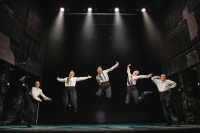
Operation Mincemeat: A Smart, Scrappy Musical That Shines When Its Cast Takes the Wheel
01 October 2026 in Theatre in ReviewIn the 2019 film Yesterday, a struggling musician wakes up in a world where The Beatles never existed. A similar…
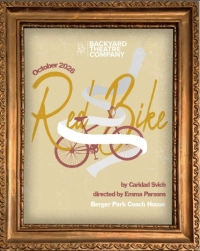
Backyard Theatre Company’s Red Bike - Berger Park Coach House Theatre - Through October 24th
30 September 2026 in Now PlayingRed Bike is an intimate, movement‑driven play that follows a young person navigating a town transforming faster than they can…

SANCTUARY STORIES - A JOURNALISM THEATER PROJECT October 9-18 at the Athenaeum Center for Thought and Culture
30 September 2026 in Upcoming TheatreThrough music, documentary video, sound, photos and live actors, “SANCTUARY STORIES: A JOURNALISM THEATER PROJECT” captures in words and images…

Red Theater presents the world premiere of CHURCH HURT October 24 - November 21, 2026
30 September 2026 in Upcoming TheatreRed Theater is thrilled to announce the cast and production team of the world premiere of Church Hurt by Brynne…
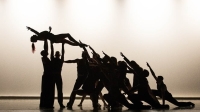
Ballets Jazz Montréal Makes Chicago debut at THE AUDITORIUM Saturday, November 7th
30 September 2026 in Upcoming DanceThe Auditorium (Chicago's landmark stage at 50 E. Ida B. Wells Drive) continues its 2026-27 Dance Season titled North American…
A Red Orchid Theatre Opens 34th Season with Chicago Premiere of HEROES OF THE FOURTH TURNING October 29 – December 6, 2026
29 September 2026 in Upcoming TheatreA Red Orchid Theatre is pleased open its 34th Season, exploring the theme of "world on fire," with the Chicago…
Lookingglass announces new leadership team
29 September 2026 in Theatre BuzzLookingglass Theatre Company today announced a new leadership structure that brings together four longtime members of its acclaimed ensemble and…
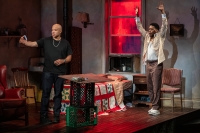
Steppenwolf’s Topdog/Underdog: When History Deals the Cards
28 September 2026 in Theatre in ReviewSusan-Lori Parks’ Topdog/Underdog, the Pulitzer Prize-winning masterpiece, is the kind of play that changes depending on when—and how many times—you…
MAMMA MIA! and HADESTOWN Return to Chicago in Spring 2027
28 September 2026 in Upcoming TheatreBroadway In Chicago is excited to announce two fan-favorite shows are returning to our stages this year: MAMMA MIA! and…
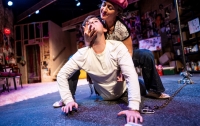
'I’m Going to Marry You Tobey Maguire,' Full of Laughs, Ends With a Fizzle
25 September 2026 in Theatre in ReviewHere’s a play that should be really good, based on its reputation alone. Written by Chicago comedy writer Samantha Hurley,…

ALL THINGS EQUAL: THE LIFE AND TRIALS OF RUTH BADER GINSBURG 2027 NATIONAL TOUR - tickets now on sale
25 September 2026 in Upcoming TheatreInnovation Arts & Entertainment, along with Broadway In Chicago, are thrilled to announce single tickets for ALL THINGS EQUAL: THE…

League of Chicago Theatres announces "It's Theatre Season" and celebrates the industry's impact
24 September 2026 in Theatre BuzzThe League of Chicago Theatres announces the return of It's Theatre Season, a campaign inviting Chicagoans and visitors to discover…

Steppenwolf Theatre Continues 51st Season with World Premiere of ADIRONDACK CHAIR CIRCLE October 22 — December 6
24 September 2026 in Upcoming TheatreSteppenwolf Theatre Company, the nation's premier ensemble theater company, is pleased to launch its 51st Season with the world premiere of…
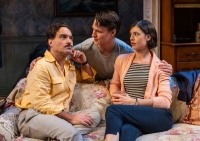
Lookingglass’ Kowalski Ignites a Battle of Wits Between Two Icons
24 September 2026 in Theatre in ReviewLookingglass Theatre’s production of Kowalski offers a gripping, fictionalized glimpse into the first meeting between two theater greats: Tennessee Williams…

Writers Theatre continues its 35th Anniversary Season with explosive, high-stakes boxing drama The Royale October 22 – November 29
23 September 2026 in Theatre in ReviewWriters Theatre, under the leadership of Executive Director Kathryn M. Lipuma and Alexandra C. and John D. Nichols Artistic Director Braden Abraham, continues…
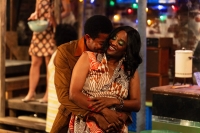
Detroit ’67: A Basement Becomes a City on the Brink
23 September 2026 in Theatre in ReviewDetroit was burning in the summer of 1967, inside one basement, life was still going on. That contrast is at…
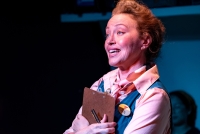
Now Boarding: Bonnie’s Last Flight, a Sky‑High Comedy with Real Heart
23 September 2026 in Theatre in ReviewRivendell Theatre Ensemble closes its milestone 30th season with Bonnie’s Last Flight, a sly, sky‑high comedy set during a flight…

Teatro Vista Productions announces season
22 September 2026 in Upcoming TheatreTeatro Vista Productions, the Midwest's only Latine-led Equity theatre company, led by Executive Director Lorena Diaz and Artistic Director Wendy…
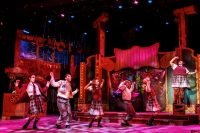
Step Right Up and Ride the Cyclone (The Musical) at Metropolis Arlington Heights
22 September 2026 in Theatre in ReviewIf anyone has ever told you to buckle up and enjoy the ride, they were talking about life—and even if…
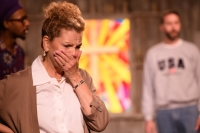
Funny ‘Prayer Circle’ Is Loaded With Laughs
22 September 2026 in Theatre in ReviewErik Gernand is resident playwright at Redtwist Theatre, and his Prayer Circle is absolutely laugh-out-loud funny. The strength of this…

Steppenwolf Presents GRACEFUL WARRIOR: AN EVENING WITH GARY SINISE - Tuesday, November 24, 2026
22 September 2026 in Upcoming TheatreSteppenwolf Theatre Company, the nation's premier ensemble theater company, is pleased to present Graceful Warrior: An Evening with Gary Sinise on Tuesday, November…
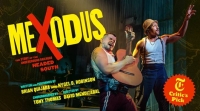
Acclaimed Mexodus musical makes Chicago premiere November 7-21 at Studebaker Theater
22 September 2026 in Upcoming TheatreStudebaker Theater, P3 Productions and Audible, in collaboration with Teatro Vista Productions, present the Chicago premiere of the groundbreaking, award-winning new hip-hop musical Mexodus, written and performed…

Arts in the Dark Parade moves to Columbus Drive due to dynamic growth, Oct. 24
21 September 2026 in Theatre BuzzLUMA8 and the City of Chicago return with the 12th Annual Arts in the Dark Halloween Parade, a family-friendly celebration…

American Blues Theater hosts its annual costumed fundraiser HALLOWEEN BOO BASH October 25th
21 September 2026 in Theatre BuzzAmerican Blues Theater, under the continued leadership of Executive Artistic Director Gwendolyn Whiteside, presents Halloween Boo Bash, its annual costumed fundraiser benefiting artists' wages…
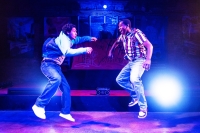
Definition's How We Got On: A Mixtape for the Stage
21 September 2026 in Theatre in ReviewWhat happens when three young people discover hip-hop and realize they might have something to say? Idris Goodwin’s How We…
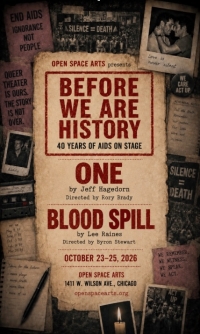
Open Space Arts Presents BEFORE WE ARE HISTORY October 23 – November 8
21 September 2026 in Upcoming TheatreOpen Space Arts presents BEFORE WE ARE HISTORY, a three-week theatrical exploration of LGBTQ+ theater created during and in response to…
Northlight Delivers a Headline-Making, Hilarious Front Page
20 September 2026 in Theatre in ReviewNorthlight Theatre opened its new venue with Jeffrey Hatcher’s smart, rejuvenated adaptation of The Front Page. Commissioned by Artistic Director…
Chicago Shakes' Play On!: With a Syncopated Harlem Beat
20 September 2026 in Theatre in ReviewThere are some productions you watch, and then there are productions that make your heart swoon and your toe tap.…

Overshadowed's Flame of Fire Finds Humanity, Strength, and Forgiveness in a Tragic Chapter of Missionary History
19 September 2026 in Theatre in ReviewOvershadowed Productions’ Flame of Fire revisits one of the most polarizing true stories in mid‑century missionary history, and the result…
The Attic at Goodman Theatre Redefines Memoir Through Breathtaking Physical Storytelling
19 September 2026 in Theatre in ReviewAt intermission, I sent Ken, Buzz Center Stage’s managing editor, a text: “So thankful I made it!! It’s intermission, and…



Latest Articles
-
 Operation Mincemeat: A Smart, Scrappy Musical That Shines When Its Cast Takes the Wheel
Written by Maddie BurroughsIn the 2019 film Yesterday, a struggling musician wakes up in a world where The Beatles never existed. A similar theatrical case study could be done with every musical that might not exist without Hamilton; Operation Mincemeat should be first…
Operation Mincemeat: A Smart, Scrappy Musical That Shines When Its Cast Takes the Wheel
Written by Maddie BurroughsIn the 2019 film Yesterday, a struggling musician wakes up in a world where The Beatles never existed. A similar theatrical case study could be done with every musical that might not exist without Hamilton; Operation Mincemeat should be first… -
 MAMMA MIA! and HADESTOWN Return to Chicago in Spring 2027
Written by Buzz Center StageBroadway In Chicago is excited to announce two fan-favorite shows are returning to our stages this year: MAMMA MIA! and HADESTOWN. Current subscribers can add these to their season package when renewing by clicking here or calling (312) 977-1717. Group…
MAMMA MIA! and HADESTOWN Return to Chicago in Spring 2027
Written by Buzz Center StageBroadway In Chicago is excited to announce two fan-favorite shows are returning to our stages this year: MAMMA MIA! and HADESTOWN. Current subscribers can add these to their season package when renewing by clicking here or calling (312) 977-1717. Group… -
SANCTUARY STORIES - A JOURNALISM THEATER PROJECT October 9-18 at the Athenaeum Center for Thought and Culture
Written by Buzz Center StageThrough music, documentary video, sound, photos and live actors, “SANCTUARY STORIES: A JOURNALISM THEATER PROJECT” captures in words and images the lives and communities deeply connected with — and affected by — immigration in Chicago. This “living documentary” is a…
-
Red Theater presents the world premiere of CHURCH HURT October 24 - November 21, 2026
Written by Buzz Center StageRed Theater is thrilled to announce the cast and production team of the world premiere of Church Hurt by Brynne Frauenhoffer and directed by Jessica Love, running October 24 - November 21, 2026 at The Edge Off Broadway in Chicago’s…


Does your theatre company want to connect with Buzz Center Stage or would you like to reach out and say "hello"? Message us through facebook or shoot us an email at This email address is being protected from spambots. You need JavaScript enabled to view it..
*This disclaimer informs readers that the views, thoughts, and opinions expressed in the text belong solely to the author, and not necessarily to Buzz Center Stage. Buzz Center Stage is a non-profit, volunteer-based platform that enables, and encourages, staff members to post their own honest thoughts on a particular production.