
Displaying items by tag: on stage
In El último sueño de Frida y Diego, Frida’s Beloved Genius Shines Through Her Pain

El último sueño de Frida y Diego is a love story that outlives the body, outlasts the grave, and keeps burning long after death has done its part.
Frida Kahlo famously said, ‘I’ve had two accidents that changed my life: one when I was hit by a trolley, and the other when I fell in love with Diego Rivera.”
And thus opens the first act of this beautiful dedication to the brilliant fiery artist, so far ahead of her time, the astonishing and disabled Frida Kahlo.
Composed by Gabriela Lena Frank with a libretto by Nilo Cruz, El último sueño de Frida y Diego arrives like a heat‑haze hallucination - lush, uncanny, and thrumming with a love that refuses to stay in the ground. It’s 1957, Día de los Muertos, and the opera drops us into a marigold‑drenched cemetery where the living coax their dead back for one brief visit. Diego Rivera, worn thin by grief and a stalled brush, isn’t there for tradition; he’s there to beg the universe for one more moment with Frida. His plea slices through the veil, catching the ear of an unassuming flower seller who promptly sheds her disguise to reveal Catrina, the regal, razor‑sharp Keeper of the Dead - and the only force powerful enough to answer him.
Deep in the shadowed sweep of Mictlán, Frida pushes back against the summons with the same fierce spark that once lit every brushstroke. Death has finally granted her the relief life never did - no shattered spine, no emotional whiplash, no Diego-shaped storm at her heels - and she has zero interest in reopening the wounds she fought so hard to leave behind.
“So much pain!” she cries again and again, swearing at the start of the production that she will never return to the world of the living - or to her love, Rivera - because of it.
But the underworld is anything but still - teeming with spirits who are playful, meddling, and aching for their own brief return. Among them is Leonardo, a young actor whose flair for drama and easy artistic kinship start to chip away at Frida’s resolve. As Catrina assembles the souls cleared for their 24‑hour crossing, Frida reluctantly lets herself be wrapped once more in the hues, textures, and contradictions of her earthly self. Bound by strict rules - no touching the living, no overstaying the day - she steps toward the world she swore off, setting the stage for a reunion as volatile as it is inevitable.
But she is urged by those on both sides of the afterlife to visit with Diego because spirits on both sides of the veil are ALSO missing her presence, her vibrant, dynamic and powerful personality and essence in a dark landscape of blacks and greys. Rivera and her family and friends on both sides of the veil would give anything to have her back with them to color and ignite their universe - even if only for a day.
And although Frida really does want to see Diego again, she is stopped by the memory of the torment she suffered emotionally in his arms and even more so the pain she suffered in her body from the horrific trolley accident that crippled her.

Ana Maria Martinez as Catrina, Alfredo Daza as Diego and Daniela Mack as Frida.
Many times in the show, Frida sings about her extreme unrelenting physical pain. Kahlo’s paintings - often filled with blood, surgical imagery, and unfiltered grief - also gave voice to the extreme physical agony she endured throughout her chronically ill life. Frida endured surgery after surgery, yet none brought the relief she so desperately needed.
In the end, she chooses to return for her art - to see the colors again, the radiant “colors” she sings of in her paintings and in her lovingly adorned home. Kahlo also descends back into her pain‑ridden earthly body to answer Rivera’s desperate daily pleas - his prayers to her and to God to return and save him from a life emptied of inspiration, a life made unbearably lonely without her.
Kahlo and Diego had a tumultuous relationship marked by marital affairs on both sides, though Diego’s affair with Frida’s own sister caused their divorce. But their love was eternal and they remarried, and we’re together until Frida’s death 10 years later.
This production makes clear that although Diego Rivera was the more famous artist in their lifetime - the towering figure whose reputation often eclipsed Frida Kahlo’s - he relied on her completely, both for artistic inspiration and for the very shape of his life. Rivera even said that his greatest wish was to have his ashes buried with hers.
Finally, a production that honors a female artist not only for her public achievements but for her full humanity - one that is unabashedly in love with Frida herself, not just her legacy.
One of the production’s loveliest moments is a tableau where Kahlo’s most famous paintings step off the canvas and onto the stage. I only found myself wishing for projections - of the actors in their vivid recreations or of the paintings themselves - because the costumes and scenic artistry were so intricate and stunning that not everyone in the house could fully take them in. By then, the audience was aching to see her art come alive.

The company of El último sueño de Frida y Diego.
El último sueño de Frida y Diego is currently running at Lyric Opera House, performed entirely in Spanish with the full vocal score intact. English captions are projected overhead throughout, making the story and its emotional undercurrents easy to follow even if you don’t speak the language.
Directed by Lorena Maza with Roberto Kalb conducting, Lyric’s production fields a powerhouse ensemble, led by mezzo‑soprano Daniela Mack, who returns to the house with a Frida that’s all fire, fragility, and fiercely guarded autonomy. Opposite her, baritone Alfredo Daza makes a striking Lyric debut as Diego - his voice carrying the weight of a man haunted by the art he can’t finish and the woman he can’t release. Countertenor Key’mon W. Murrah, in a radiant Lyric debut, infuses Leonardo with a buoyant theatrical spark that lifts the energy of every scene entered. Meanwhile, Ana María Martínez turns Catrina into a study in imperious grace - her soprano gliding through the score with the kind of effortless authority that makes the boundary between worlds feel like something she can open and close at will.
Musically, the evening’s standout moments come through sweeping duets and emotionally charged arias - Frida’s defiant refusals, Diego’s grief‑soaked pleas, and shimmering ensemble passages that blur the line between the living and the dead. Gabriela Lena Frank’s score leans into lush orchestral colors, letting voices ride waves of percussion, strings, and folkloric textures that feel both ancient and startlingly alive, while the live orchestra - under Roberto Kalb’s precise, fiery baton - does far more than accompany, animating the realm around the singers and giving Mictlán its pulse, the cemetery its glow, and the lovers’ reunion its aching gravity.

Visually, El último sueño de Frida y Diego is a sensory feast - an opera that doesn’t just tell a story but paints one stroke by stroke right in front of you. The stage erupts in the saturated hues of Mexican folklore: cascades of marigolds, candlelit altars, and sweeping bands of cobalt and crimson that echo Rivera’s murals and the raw intimacy of Frida’s self‑portraits. The opening cemetery glows like a living ofrenda, its petals and lanterns shimmering in a soft, uncanny haze that makes the border between worlds feel thin, permeable, almost eager to be crossed.
Once the action plunges into Mictlán, the production morphs into a surreal, shadow‑rich dreamscape - floating fabrics drifting like lost souls or the hem of a woman’s skirt lifted by the wind, skeletal silhouettes stalking the edges of the frame, and sculptural lighting carving the darkness into something at once playful and faintly menacing. Spirits flash in and out like animated brushstrokes, their movement and costuming turning the underworld into a kinetic mural of the afterlife. And when Frida finally steps back into her earthly colors, the entire stage snaps into focus as a living canvas - bold, mythic, and charged with the emotional current of two artists whose love refuses to stay still.
El último sueño de Frida y Diego is being performed at Lyric Opera House through April 4th. For tickets and/or more show information, click here.
Highly Recommended.
Upcoming Performances:
March
- Mar 21 • 7:30 p.m.
- Mar 24 • 7:00 p.m.
- Mar 26 • 7:00 p.m.
- Mar 29 • 2:00 p.m.
April
- Apr 1 • 2:00 p.m.
- Apr 4 • 2:00 p.m.
Running Time: Approx. 2h 15m (one intermission)
This review is proudly shared with our friends at www.TheatreInChicago.com.
A Farcical Feverdream that Works: Trapdoor Theatre's 'The Cuttlefish'

Trapdoor Theatre’s “The Cuttlefish” ought to be confounding, but somehow this 1920’s surrealist play from Poland is clear as a bell. Though ostensibly about the philosophical struggle between art and politics, the audience easily recognized echoes of the present-day overall fix in which society finds itself.
Before any dialog, even before house lights go down, “The Cuttlefish, or the Hyrcanian Worldview” (its full title) opens somewhat bewilderingly on a stage with four characters: a masked, gold-clad Statue of Alice D’Or (Keith Surney), whose postures beside a short classic stone column suggest a Greek sculpture. Further backstage is a high ranking church cleric in mitre and liturgical robes, gesturing spiritually—Pope Julius II (Emily Lotspeich), patron of Raphael and Michelangelo. Stage left, a figure in a suit slouches and periodically collapses against a wall, the artist Pavel Rockhoffer (Nicole Wiesner). And a woman wanders, hands outspread—the Mother (Venice Averyheart) of Rockhoffer, who settles into a seat and manages percussion.
What is going on? The audience puzzles through these characters, trying to make sense of the silent tableau, and the lights go down and dialog begins. Rockhoffer has become pessimistic about his creative works, which we learn have been condemned by a government council. “My art is a lie, a carefully planned hoax,” says Rockhoffer.
“Even prisoners serving a life sentence still want to live,” the Statue offers. Along the way Julius remarks, “A man without a worthy adversary is like God without Satan,” and leaving, offers “I wish you a short and unexpected death.” With very little naturalism or conventional exposition, these snippets reveal the conflict that is to be resolved by the end of “The Cuttlefish.”
But it is with the arrival of King Hyrcan IV (David Lovejoy) when the story comes alive. A villainous despot, he smooth-talks Rockhoffer, coaxing him to abandon his dedication to absolute artistic ideals, and come on over to pragmatic freedom of Hyrcania, the land he rules.
Lovejoy is an energetic force on stage, and brings the play to life. “I am a superman, or ‘an uber mensch’” King Hyrcan declares, convincingly. He offers to unchain the artist from historic patronage of entities like Julius, and to have full freedom.
“What do you believe in?” queries Rockhoffer.
“In myself,” King Hyrcan shoots back, and as inexorably as the manosphere today sucks in its lost, wandering adherents, Rockhoffer, after a bit of resistance, falls under his spell. He obeys when Hyrcan tells him to jettison his fiance Ella (Gus Thomas), as unfitting for the new Hyrcanian order. King Hyrcan works his wiles on a weakened Julius, who admits to doubt and crumbles too.
As the action unfolds and the plot thickens, it becomes clearer that the times prophesied by “The Cuttlefish,” which unfolded in the rise of fascist Germany, offer parallels to today —when cultural centers are being expropriated and renamed, arts funding cancelled, and freedom of expression curtailed.
The magic of Trap Door is its penchant for mining an obscure work of 1920s playwright Stanislaw Witkiewicz (translated by Daniel Gerould) to find a work that is regarded as a precursor to later absurdist and expressionist stage works in the 1930s. Under the direction of Nicole Wiesner, what might have been an inscrutable drama instead is intuitively understandable. As we laugh with relief at the line, “One can only hope” (the Mother’s interjection about the end of such terrible times), we may be reminded of Kurt Vonnegut’s advice: “The arts are not a way to make a living. They are a very human way of making life more bearable.”
“The Cuttlefish, or the Hyrcanian Worldview” runs through April 25 at Chicago’s Trap Door Theatre and comes recommended.
This review is proudly shared with our friends at www.TheatreInChicago.com.
Grelley Duvall Best Actress Delivers a Pop‑Culture Fever Dream at Chopin

The Oscars might be over, but this “Best Actress” is just getting started. Welcome to the weird world of the Grelley Duvall Show, or Alex Grelle. His unique approach to cabaret has amassed quite a fanbase over the years. Suffice it to say, there’s nothing else quite like it. In two acts, Grelle and his team blend his favorite female performances with highly choreographed musical numbers set to toe-tappin’ hits performed by a live band.
Directed by Kasey Foster, “Best Actress” tells the origin story of the Grelley Duvall Show and what inspired a young Alex Grelle and his creative partner Jesse Morgan Young. Their obsessive knowledge of pop culture as seen through the lens of queer millennials is unmatched. They throw anything from a given day on cable TV in the 1990s into the blender and it’s up to the audience to keep up. The irreverent humor, costumes, and slickly produced video segments add up to an evening of hilarious deep cuts and surprise cameos.
To be honest, not all experimental cabaret style theatre is good. Rest assured Best Actress is not that. Rather it’s a 2-hour musical extravaganza with solid gold choreography by Erin Kilmurray and Kasey Alfonso and a kick-ass band led by (and featuring the vocals of) Aunt Kelly. Alex Grelle is a certified triple threat: he can sing, he can dance and he can kick. The team he’s assembled for this production has made something really special for anyone really, but especially for the pop culture obsessed, vintage shopping community.
Joining Grelle onstage is a powerhouse ensemble - Kara Brody, Madigan Burke, Lolly Extract, Darling Shear, Patrick Stengle, and Mary Williamson - plus a handful of puppets that feel like characters in their own right. And make no mistake: Grelle isn’t the only one throwing kicks. This cast matches his energy beat for beat, putting on quite a show. Again, Killmurray and Alfonso’s choreography is killer.
Grelley Duvall Best Actress is one of those shows it’s almost best to not know much about going in. It’s also one of those shows that should just run open-ended for a while, because once you see it, you’ll be trying to explain to people for weeks what exactly it was.
Through April 12 at the Chopin Theatre. 1543 W Division St. 773-278-1500
This review is proudly shared with our friends at www.TheatreInChicago.com.
The Drowsy Chaperone Wakes Up the Room at Theo Ubique

“I just want to be entertained. Isn’t that the point?” asks the narrator of The Drowsy Chaperone. And if that indeed is the point, Theo Ubique’s rendition hit the bullseye.
This fun production follows a neurotic musical theatre fan (played by Steve McDonagh) who puts on his favorite record and talks about its fictional history. Thanks to Theo’s inventive seating – a front row made of sofas – the audience feels as if they’re actually in his living too, getting an intimate evening full of laughs as he and the rest of the cast break the fourth wall – even entering and exiting through closet.
The show-within-a-show follows a famous star, her fiancé, and the kooky cast of characters who try to help or hurt the impending nuptials for their own reasons. The result is a musical which never takes itself seriously, as it pokes fun at Broadway shows and troupes.
Everyone turns in a polished performance with each artist getting their moment to shine, whether it’s in a tap-dancing number (expertly accomplished by Trey Pluntnicki and Kevin Chlapecka), a silly vaudeville routine (Jenny Rudnick does enough spit takes to lose count), or a ballad about bunnies – yes, bunnies (sung by Kelsey MacDonald with all the heart and sincerity it needed).
As the “Man in the Chair,” McDonagh anchors the show in reality, but each performer holds the reigns of these larger-than-life characters with precision. Darian Goulding, embodies the Latin lover, Aldolpho, with inspired hilarity from his subtle gestures to that elevated accent. Jimmy Hogan and Chase Wheaton-Werle also stood out as gangsters posing as pastry chefs. Their playful banter and cohesion as a team elevated their numbers and helped sell the silly side plot. Colette Todd, who played the titular character, the Drowsy Chaperone herself, delivered a powerhouse tune with the perfect balance of comedy and chops.
From start to finish, it was clear that the actors were having fun, and their joy was certainly contagious. Directing this production is L. Walter Stearns, and his love of this show was clear in the care in which he handled the material, perhaps because directing The Drowsy Chaperone was a dream come true. In 2004, Stearns had the opportunity to attend an early reading of musical with Sutton Foster, who went on to star in the Broadway cast.
Written by Lisa Lambert and Greg Morrison (music and lyrics) with a book by Bob Martin and Don McKellar, The Drowsy Chaperone is not a deep musical, and it isn’t meant to be. Instead, it’s a reminder that comedy brings connection, and sometimes it’s okay to just want to be entertained.
The Drowsy Chaperone runs through April 19 at Theo Ubique Cabaret Theatre. For tickets and/or more information, click here.
This review is proudly shared with our friends at www.TheatreInChicago.com.
Reimagined Madama Butterfly at the Lyric a Masterpiece in its Own Right

Created in 1904, Giacomo Puccini’s Madama Butterfly has become one of the world’s greatest and most popular operas. New York’s Metropolitan Opera alone had performed it 902 times prior to the beginning of its 2023-24 season. Renowned for his gifts for melody, Puccini’s musical component is ravishingly beautiful. His manner of intermixing cultural references into his orchestration also makes it exquisitely complex. Enhanced with a gripping story about the power of trust and the fragility of love, Madama Butterfly qualifies as an irrefutable masterpiece. Throughout its existence though, the opera has also been an artistic triumph with issues.
An adaptation of a one-act play written in 1900, which itself was based on a short story by an American author, John Luther Long two years earlier, it’s been criticized as being a flawed fantasy. One created by white men about the essence of another culture. In this case, Japan. In Madama Butterfly, an American, Lt. B. F. Pinkerton, arrives in the island country and soon begins a quest for love. A love that he never plans to be lasting. Once he returns state side, he’ll re-enter the mainstream and marry traditionally.
Since its origin, issues of perception and portrayal have always haunted Puccini’s Madama Butterfly. He composed it in partnership with Giuseppe Giacosa and Luigi Illica who wrote the text or libretto. For most of the opera’s existence, the way Japanese culture and its people were projected robbed them of dimension and ultimately diminished their humanity. In both early productions of the opera and in virtually all that followed, Japanese men saw their virility erased while Japanese women watched their deference be reduced to an exaggerated docility. As intrinsically lovely Madama Butterfly is as a creative jewel, for the Japanese people and many others of color, it has also been deeply problematic.
For Matthew Ozawa, Director and Chief Artistic Officer of the Lyric Opera of Chicago, it was as well. As a Japanese-American director of operatic works, his relationship with Puccini’s masterpiece has been fraught. He knew intrinsically as a director he could never present it in a conventional way. If he were ever to take on the challenge of staging the piece, he would do it through more enlightened eyes. The current production of Madama Butterfly he directs at the Lyric, running through April 12th, shows how spectacular a 122-year-old classic can look and feel with a total makeover by a gifted artisan.
Ozawa’s Madama Butterfly, co-produced by the Cincinnati Opera, Pittsburg Opera, Detroit Opera and the Utah Opera, dismantles the old format and completely rebuilds it in a contemporary context. The overhaul was so comprehensive, keeping the original orchestration and libretto unaltered and intact was a condition for greenlighting his vision.

The Company of Madama Butterfly.
Like many men of his generation, Ozawa loved playing video games growing up. It wasn’t a leap for him to envision Madama Butterfly taking on the features of a machine generated video game offering a portal to an alternate reality. Pinkerton (tenor Evan LeRoy Johnson) would travel to Japan through his headset and begin a journey that would lead to the devastating consequences we all know will follow.
But first, like any talented leader, Ozawa needed to assemble a team to bring his concept to fruition. Based on opening night’s performance at the Lyric, a better dream team probably doesn’t exist. Recruiting all females as his key collaborators, who were either Japanese or Japanese-American, cultural accuracy and agency would no longer be a concern. Each of them a heavy hitter in her respective craft, the composite experience they created was so remarkable it could easily be considered revelatory. The superb impact of Kimie Nishikawa’s set designs and Yuki Nakase Link’s lighting talents made on the production’s visual potency and dynamism can’t be overstated.
A muted background would suddenly blaze in dramatic color and fill with subtly ornate splendor when Pinkerton donned the goggles that would transport him to Japan. There, Maiko Matsushima’s costume designs bowled you away with their texture, imagination, sophistication and beauty.
Even when we first finally meet Cio-Cio-San, Butterfly, played by Karah Son, we’re visited with the unexpected. She’s as small and delicate as butterflies are, but in her words and carriage you sense the steel in her spine. At 15, she may have become a geisha to support herself, but she’s clearly proud of the fact that she’s also “well-bred”. That inner dignity is an ever-present element of her character.
Son has played this crucial character in houses around the globe; in her native Korea, Warsaw, Berlin, Bologna, Los Angeles and San Francisco just to list a few. This production marks her Lyric debut. She knows this part. From the excellence of her soprano Saturday night, and the flawlessness of her acting abilities, she is this part.
Johnson, a wonderful tenor who’s also making his debut at the Lyric, makes a compelling Pinkerton. He doesn’t quite comprehend the import of his words when Sharpless (Zachary Nelson) tells him to “Be Careful, she trusts you”, until it’s too late. Finally realizing what that trust has cost releases his humanity. But it can’t stop the payment deception exacts.
In the final scene, where only pathos is expected, this presentation all but blinds you with the complex beauty of real life through the fiction of a story. Ozawa’s brilliant directing, Son’s gifts as a marvelous actress/vocalist and Puccini’s stunning score converge to cause the soul to quake.
Puccini’s Madama Butterfly now truly soars.
Madama Butterfly
Through April 12, 2026
Lyric Opera of Chicago
20 N. Wacker Drive
Chicago, IL 60606
For more information and tickets: https://www.lyricopera.org
Highly Recommended
This review is proudly shared with our friends at www.TheatreInChicago.com.
National Hellenic Museum's Trial of Odysseus: Hero or Criminal?

King Odysseus returns home to Ithaca after twenty years’ absence: ten years’ fighting the Trojan War (it takes time to build a big enough wooden horse), followed by a ten-year journey during which everything that could go wrong does go wrong: think rush-hour traffic on the Kennedy under construction. When he finally arrives, Odysseus finds yet another complication: in his absence a hundred men have undertaken to lay claim to his throne, actually taking up residence in Odysseus’ palace, scarfing down his harvests, seducing his servants, and harassing his wife.
Penelope has made every effort to discourage the putative suitors, her most recent gambit being a challenge to string Odysseus’ mighty bow, then use it to shoot an arrow through a line of a dozen axe handles. That’s pretty serious and, unsurprisingly, none of the opportunists manages. Everyone is amazed therefore when a stranger (Odysseus disguised as a beggar) nails it. The disappointed contenders aren’t happy about this, and are further aggrieved when the ‘beggar’ throws off his rags, identifies himself, and advises the intruders to hit the road.
Odysseus, legitimately vexed at the situation, answers their disgruntlement with violence and all hundred freeloaders are … well, the proper verb is in question, as it’s unclear whether Odysseus righteously executes or viciously murders them. This is the issue we explore in TRIAL OF ODYSSEUS: is Odysseus a champion, heroically defending his title, his home, and his family? Or is he a villain, goaded by jealous rage into a frenzy of unwonted slaughter?
TRIAL OF ODYSSEUS was … what to call it? to be honest it was not truly theater. TRIAL OF ODYSSEUS was presented as an actual trial, with Antonio M Romanucci and Daisy Ayllón of Romanucci & Blandin LLC prosecuting and Patrick M. Collins and Tinos Diamantatos of King & Spalding LLP arguing for the defense. A panel of four judges (Georgia M Alexakis, Sara L Ellis, Jeffrey G Chrones and Anthony C. Kyrikopoulos) and twelve jurors examined and cross-examined both the witness Phimeus (Leonardo Sfondouris) and Odysseus, played by Christos Vasilopoulos.
The final decision, however, was ours. Each audience member was provided with their choice of two tokens, blue for guilty and white for innocent. At the close of examination these tokens were collected and their count served as the verdict: Odysseus was found Not Guilty., I suspect that those voting Guilty did so from the viewpoint of twenty-first century law. I can’t believe anyone in the Bronze Age, roughly 1200 BCE, would not fully sympathize with Odysseus’ reaction, however grisly.
I’m totally ignorant of judicial matters, and someone better acquainted with legal procedure might have found problems with how the trial was portrayed, but I thought it was as credible as it was entertaining. For one, it certainly reflected the delay encountered in our modern magisterial system, as the event under arbitration occurred more than 3,000 years ago. A real trial for first-degree murder would probably incorporate less humor, but the Court had no difficulty drawing parallels across the three-millennium time difference; many of these comments were quite amusing and were certainly appreciated by the audience.
TRIAL OF ODYSSEUS was instructive, engaging, and just plain fun! The bad news is that it was a single production; there will be no further performances. But keep your eye on the National Hellenic Museum, as they offer regular events and exhibitions.
This review is proudly shared with our friends at www.TheatreInChicago.com.
Reservation Mayhem, One Man, Forty Voices: Mike Newquist Ignites 'Fully Committed' at The Den

Get ready - those phones are about to explode, and Sam is already spinning like a top trying to catch every single one. It’s a full‑blown ring‑storm, and he’s diving into it with the hectic energy of someone who knows the chaos is coming and still can’t outrun it.
A brisk, razor‑funny powder keg of a play, Fully Committed tracks a single frantic day in the life of Sam, the lone reservationist at one of Manhattan’s most elite - and most impossible - restaurant. Becky Mode’s script is a full‑tilt high‑wire act, and Mike Newquist tears across nearly forty characters with the kind of breakneck precision that makes your head spin. As Sam, he’s already a live wire - but then he’s also snapping into entitled celebrities, neurotic assistants, tyrannical chefs, and every flavor of fine‑dining madness that dares to ring his desk. It’s dazzling, anxious, and wildly fun to watch him juggle it all without ever dropping the thread. The comedy snaps because each character is so sharply etched, and Newquist seamlessly shifts among them with the kind of finesse that turns mayhem into art.
At its heart, the nearly 90-minute play gleefully skewers the rituals of status and the agitated, almost feral hunger for exclusivity, exposing just how ridiculous people become when a reservation turns into a badge of power. Sam becomes the unseen fulcrum of that world, and his day unravels from merely hectic to outright surreal as he absorbs tantrums, negotiates impossible demands, and fights to keep a grip on his own sense of worth. Watching Newquist as Sam behind that reservation desk in a constant tinderbox had me instantly aware that I wouldn’t survive two hours in his shoes. His frantic charm and barely contained panic sells the chaos and sparks a whole new respect for the people who actually thrive in that kind of daily combustion.
Fully Committed lands as hard as it does because it’s rooted in real industry absurdity. Mode shaped these characters straight out of real restaurant‑world encounters, giving the show a mix of satirical whirlwind and a bite of truth that feels both sharply recognizable and wickedly real.
Throughout the play, I loved how Sam’s dad kept slipping into the heavy commotion with that gentle, grounding voice - just long enough to let the whole room exhale. Each time he called, Sam’s entire demeanor flipped in an instant; you could watch him go from frazzled to peaceful like someone had hit a reset switch. Those brief check-ins made it clear how a few steady words from a gentle, supportive father (or friend/family member) can cut straight through the noise, offering a tiny pocket of calm even when everything else is burning down around him.
Mike Newquist is pure kinetic joy onstage, delivering a commanding turn in Fully Committed. The Chicago‑based actor and improviser thrives in the city’s storefront trenches, bouncing between sharp‑edged comedy, character chameleon work, and the kind of ensemble disorder where anything can - and usually does - happen. He’s popped up with PrideArts, AstonRep, and The Comrades, tackling everything from contemporary drama to high-velocity comic mayhem. In Fully Committed, it’s his quick‑switch agility that makes him a blast to watch.
Directed by Derek Bertelsen, this Chicago staging arrives with a jolt of fresh energy and real immediacy. Newquist’s performance becomes the engine that drives the whole night, while Bertelsen keeps the momentum razor‑sharp, the pacing tight, and every character shift snapping cleanly into place.
The Den Theatre hosts the run March 13–28, 2026, with performances on Friday and Saturday nights at 7:30 p.m. Tickets for Fully Committed at The Den Theatre are just $26. For tickets and/or any more show information, click here.
Recommended.
This review is proudly shared with our friends at www.TheatreInChicago.com.
Static, Signals, and Surprises: City Lit’s Changing Channels Tunes In

The year is 1952. Television is rapidly gaining popularity over radio, to the delight of some and the disgust of others. Senator Joseph McCarthy has just been re-elected and is accusing hundreds of people of having connections to the Communist Party, provoking a nationwide climate of paranoid hysteria. Thousands of people, particularly in the mass media, are being blacklisted and expelled from their jobs. One would think (hope!) the lessons of this Red Scare might relieve us of government overreach and of accusations due to differing ideologies … sadly, not so much, as attested to by Stephen Colbert.
CHANGING CHANNELS opens in a backstage dressing room at the DuMont Television Network, a dressing room tenanted by Maggie Carlin (Kat Evans) for her popular comedy show. Kat Evans as Maggie Carlin and Orion Lay-Sleeper as her comedic partner Eddie Gilroy are both absolutely terrific. I don’t generally like comedy; a television laugh track is like fingernails on a blackboard to me, but as CHANGING CHANNELS takes place on the set of a comedy TV show, some jokes are inevitable. Happily, they are truly good jokes. We all know the sound of an audience trying to laugh cos they know it’s expected, as opposed to honestly breaking up over a droll line delivered skillfully, and in CHANGING CHANNELS even I was LOL! And later when the script turned serious, Evans and Lay-Sleeper both demonstrated superior range.
Skyler Tipton played Maggie’s husband Peter Bell, a truly stellar spouse, unswerving in his devotion and succor (I love using the word ‘succor’ – it’s like getting away with talking dirty). Andrew Pappas plays the handyman Kenny, a role that might have been a bit part but turns out to be pivotal. It’s not easy to flesh out a character from only a handful of appearances and lines, but Pappas succeeds in making Kenny real, a person whom one might like to have around.
Eddie’s lawyer, misfortunately (albeit appropriately) named Bullets, is played by Johnny Moran. The lawyer arrives bearing tidings of great joy – a breakthrough advance for Maggie and Eddie’s show! Next, however, he has to deliver the caveat: in order to accept the promotion they must sign a document that amounts to a loyalty pledge. Here is the crux around which the story turns: refusal to sign is not so much what anyone wants to do; it’s being expected to sign that rankles.
The set, designed by Joe Larkin, was inspired. The entire show takes place in Maggie’s backstage dressing room, giving the performance a pleasing sense of intimacy – Maggie can make all her many costume changes right onstage behind the big dress/costume rack – it is, after all, her dressing room! The wall is hung with posters showing some of Maggie and Eddie’s performances, and I was delighted to see on the coffee table a vintage copy of True Confessions – brilliant prop, Meg X McGrath! Emily McConnell’s costumes were spot on, totally in sync with the characters and the period, as well as a shining testament to Chicago’s resale shops! Lighting by Liz Cooper and Sound by Petter Wahlbeck combined to form an effective vintage milieu. And the overall smooth production is a testament to Stage Manager Tseela Sokolin-Maimon’s skill.
Why did I like CHANGING CHANNELS so much, given my dislike of comedy theatre? Well, CHANGING CHANNELS isn’t truly a comedy show – the comic repartee is because the characters are comediennes. The play itself, while very funny at times, is actually political commentary, and the raillery serves to lighten and brighten what might otherwise have been a heavy-handed delivery of the message. To my mind this serves to make the message more powerful as well as more accessible.
Edmund Burke said:” The only thing necessary for the triumph of evil is for good men [sic] to do nothing.” Hear hear!
CHANGING CHANNELS plays at City Lit Theatre, 1020 W Bryn Mawr Ave, through April 12
HIGHLY RECOMMENDED!
This review is proudly shared with our friends at www.TheatreInChicago.com.
A Night in Jellicle Heaven: Music Theater Works Delivers a Stunning 'Cats'

Andrew Lloyd Webber’s Cats remains one of musical theatre’s most distinctive creations - a sung‑through, dance‑driven spectacle that swaps traditional plot for atmosphere, character portraits, and pure theatrical immersion. Drawn from T. S. Eliot’s Old Possum’s Book of Practical Cats, the musical unfolds as a moonlit gathering of the Jellicle tribe, each feline stepping forward to claim the spotlight before the climactic “Jellicle Choice,” when one is chosen for rebirth into the Heaviside Layer – a new life. Its unconventional structure, eclectic score, and iconic choreography helped define the mega-musical era, earning Cats major awards and record‑breaking runs in both London and New York. And now it’s here!
To kick off their 2026 season, Music Theater Works brings Cats to the North Theatre in the North Shore Center for the Performing Arts, offering Chicago audiences a fresh trip into the Jellicle universe. It’s the perfect time to pounce on this legendary musical - whether you’re drawn by its nostalgia, its high‑energy movement, or the simple delight of watching a community of cats chase belonging and second chances.
Cats has always been one of my very favorite Andrew Lloyd Webber musicals, and revisiting it reminds me why. Its blend of atmosphere, movement, and character‑driven storytelling creates a world that feels both whimsical and strangely profound – a world that is so easy to get lost in.
What continues to give Cats its staying power is the blend of spectacle and emotional resonance. While much of the evening plays as a parade of emotionally grounded ensemble-anchored numbers - playful, mischievous, or grand - the heart of the piece rests with Grizabella (magnificently played in this production by Ava Lane Stovall), the faded glamour cat whose ballad “Memory” became a global standard. The production’s emphasis on movement, atmosphere, and immersive world‑building over traditional linear storytelling makes Cats both polarizing and unforgettable, and its decades‑long staying power proves just how deeply that approach resonates across generations. Music Theater Works captures that essence beautifully, channeling the show’s dreamlike logic and ritualistic energy in a way that feels both faithful and freshly imagined.
Astutely directed and choreographed by Mandy Modic, Music Theater Works makes inventive use of the North Shore Center’s intimate space, transforming nearly every nook and cranny into part of the Jellicle playground. The result is a production where activity seems to spark from every direction, creating a sense of constant motion that borders on ingenious. From the moment the show begins - after a playful prelude of cat videos on a large TV - the cast emerges in the dark, parading down the aisles with glowing cat‑eye glasses that immediately pull the audience into their world. Throughout the performance, strategically placed perches and platforms scattered around the theater keep the action mere inches away, giving some audience members the rare thrill of being fully surrounded by the Jellicle tribe. Though I’ve seen Cats countless times in both the Chicagoland area and New York, this production may well be the one that connected with me the most.

(Center) Ethan Lupp as “Rum Tum Tugger” and members of the cast of CATS in CATS from Music Theater Works, now playing through March 29 at the North Shore Center for the Performing Arts in Skokie.
Sam Nachison brings a commanding warmth to Old Deuteronomy, balancing authority with compassion and grounding the production with a rich, resonant baritone in his self‑titled number. Stovall, meanwhile, delivers a vocally commanding, show‑stopping “Memory” in Act II - an emotional high point that pierced my heart and gave me chills. But what truly elevates this production is how deep the talent runs throughout the ensemble. Whether it’s the big, full‑company showstoppers, the sly, feline physicality woven into every corner of the stage, or the sheer joy of numbers like “Magical Mister Mistoffelees,” the cast proves endlessly engaging. Group sequences such as “Jellicle Songs for Jellicle Cats” and “Journey to the Heaviside Layer” showcase a company working in complete synchronicity, creating moment after moment that dazzles. The memorable beats are as abundant as the cats roaming the theater, each one adding to a production overflowing with energy, precision, and charm.
Throughout the performance, I found myself drawn to different performers at different moments, captivated by their vocals, their movement, and the sheer feline energy they brought to the stage. The ensemble’s commitment was so complete that no matter where I looked, someone was doing something compelling, clever, or beautifully in character. That sense of constant discovery carried straight into the show’s physical feats - from aerial acrobatics to Morgan Schoenecker’s crisp tap breaks as Jennyanydots and even the unexpected skating sequences led by Danny Spagnuolo as Skimbleshanks - making the production a steady stream of surprises. Add in the constant, playful eye contact from cats prancing through the aisles, and every moment feels enchanting - alive with movement, mischief, and immersive detail.
Nick Johnson’s Munkustrap grounds the entire production with a steady, commanding presence, guiding the ensemble and shaping the rhythm of the evening. He moves through the show with an effortless authority - part narrator, part guardian - setting both the emotional and musical pace while keeping the Jellicle world anchored. In doing so, he opens the door for the production’s standout moments to land with even greater impact - and never far from that spotlight is Emma Jean Eastlund’s Bombalurina, slipping in with charisma and precision alongside the rest of the talented ensemble.

Ava Lane Stovall as “Grizabella” in CATS from Music Theater Works. Phots by Brett Beiner.
Another moment that stayed with me was John Cardone’s moving rendition of “Gus: The Theatre Cat.” As Asparagus, he delivers this bittersweet, nostalgic reflection of an aging performer looking back on the glory days of his career. The ache of the number comes from the gap between who Gus once was and who he has become - an actor with a shabby coat, trembling paws, and memories of a time when he was the “terror to mice.” Cardone leans into that fragility with such sincerity that the song lands as both a tribute and a quiet heartbreak.
And from that intimate moment, the production expands back into the vibrant world of the Jellicles. The cats themselves are incredible - brought to life with remarkable clarity thanks to the production’s outstanding creative team. Much of that magic stems from the meticulous work of hair, wig, and makeup designers Megan E. Pirtle and Melanie Saso, whose transformations give each performer a distinct feline identity, and from the richly textured costumes crafted by kClare McKellaston and wardrobe head Kristen Brinati, which add depth, personality, and visual cohesion to the entire tribe. Together, their contributions shape a world so vivid and fully realized that the characters feel as if they’ve stepped straight out of Eliot’s imagination and into the audience’s laps. Credit belongs to every corner of the creative team, from scenic design to sound to lighting, all working together to shape an atmosphere that feels nothing short of Jellicle heaven. Their combined artistry turns the space into a fully realized world - mystical, inviting, and alive with detail - so the audience is immersed from the moment the first cat appears. Every technical element works in harmony to envelop the audience in this moonlit world - sets that invite exploration, sound that wraps around the room, and lighting that shifts the space from mystical to electric in an instant. The result is a production that manages to be both haunting and joyfully alive, lingering in the imagination long after the final note.
What I appreciated most about this rich and colorful production is how it reflects the moment we’re living in. At a time when the world feels unsteady, we’re each our own special kind of “cat,” carrying unique talents and flaws, and offering up our personal histories - our triumphs and our losses to each other our fellow "cats" - as the curtain of world seems to be falling around us. Yet, in that shared vulnerability, we find the strength to realize that as long as we keep supporting one another, the light never truly goes out.
Purr‑fect, meow‑velous, pawsitively delightful, downright meow‑gical - take your pick! Every one of them fits this production like a cat in a sunbeam.
Music Theatre Works’ Cats is being performed at the North Theatre in the North Shore Center for the Performing Arts through March 29th. For tickets and/or more show information visit https://www.musictheaterworks.com/2026-season/cats/.
Highly Recommended.
This review is proudly shared with our friends at www.TheatreInChicago.com.
TimeLine Theatre Company announces inaugural season at new Uptown home

|
|
|
|
|
IT’S TIME: ABOUT TIMELINE’S NEW HOME
|
|
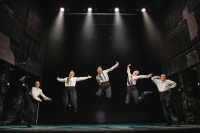
Operation Mincemeat: A Smart, Scrappy Musical That Shines When Its Cast Takes the Wheel
01 October 2026 in Theatre in ReviewIn the 2019 film Yesterday, a struggling musician wakes up in a world where The Beatles never existed. A similar…
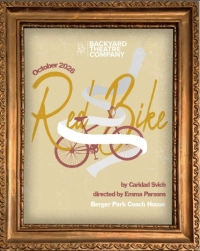
Backyard Theatre Company’s Red Bike - Berger Park Coach House Theatre - Through October 24th
30 September 2026 in Now PlayingRed Bike is an intimate, movement‑driven play that follows a young person navigating a town transforming faster than they can…

SANCTUARY STORIES - A JOURNALISM THEATER PROJECT October 9-18 at the Athenaeum Center for Thought and Culture
30 September 2026 in Upcoming TheatreThrough music, documentary video, sound, photos and live actors, “SANCTUARY STORIES: A JOURNALISM THEATER PROJECT” captures in words and images…

Red Theater presents the world premiere of CHURCH HURT October 24 - November 21, 2026
30 September 2026 in Upcoming TheatreRed Theater is thrilled to announce the cast and production team of the world premiere of Church Hurt by Brynne…
Ballets Jazz Montréal Makes Chicago debut at THE AUDITORIUM Saturday, November 7th
30 September 2026 in Upcoming DanceThe Auditorium (Chicago's landmark stage at 50 E. Ida B. Wells Drive) continues its 2026-27 Dance Season titled North American…

A Red Orchid Theatre Opens 34th Season with Chicago Premiere of HEROES OF THE FOURTH TURNING October 29 – December 6, 2026
29 September 2026 in Upcoming TheatreA Red Orchid Theatre is pleased open its 34th Season, exploring the theme of "world on fire," with the Chicago…

Lookingglass announces new leadership team
29 September 2026 in Theatre BuzzLookingglass Theatre Company today announced a new leadership structure that brings together four longtime members of its acclaimed ensemble and…
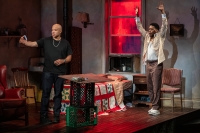
Steppenwolf’s Topdog/Underdog: When History Deals the Cards
28 September 2026 in Theatre in ReviewSusan-Lori Parks’ Topdog/Underdog, the Pulitzer Prize-winning masterpiece, is the kind of play that changes depending on when—and how many times—you…

MAMMA MIA! and HADESTOWN Return to Chicago in Spring 2027
28 September 2026 in Upcoming TheatreBroadway In Chicago is excited to announce two fan-favorite shows are returning to our stages this year: MAMMA MIA! and…
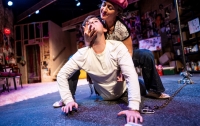
'I’m Going to Marry You Tobey Maguire,' Full of Laughs, Ends With a Fizzle
25 September 2026 in Theatre in ReviewHere’s a play that should be really good, based on its reputation alone. Written by Chicago comedy writer Samantha Hurley,…

ALL THINGS EQUAL: THE LIFE AND TRIALS OF RUTH BADER GINSBURG 2027 NATIONAL TOUR - tickets now on sale
25 September 2026 in Upcoming TheatreInnovation Arts & Entertainment, along with Broadway In Chicago, are thrilled to announce single tickets for ALL THINGS EQUAL: THE…

League of Chicago Theatres announces "It's Theatre Season" and celebrates the industry's impact
24 September 2026 in Theatre BuzzThe League of Chicago Theatres announces the return of It's Theatre Season, a campaign inviting Chicagoans and visitors to discover…

Steppenwolf Theatre Continues 51st Season with World Premiere of ADIRONDACK CHAIR CIRCLE October 22 — December 6
24 September 2026 in Upcoming TheatreSteppenwolf Theatre Company, the nation's premier ensemble theater company, is pleased to launch its 51st Season with the world premiere of…
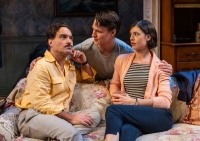
Lookingglass’ Kowalski Ignites a Battle of Wits Between Two Icons
24 September 2026 in Theatre in ReviewLookingglass Theatre’s production of Kowalski offers a gripping, fictionalized glimpse into the first meeting between two theater greats: Tennessee Williams…

Writers Theatre continues its 35th Anniversary Season with explosive, high-stakes boxing drama The Royale October 22 – November 29
23 September 2026 in Theatre in ReviewWriters Theatre, under the leadership of Executive Director Kathryn M. Lipuma and Alexandra C. and John D. Nichols Artistic Director Braden Abraham, continues…
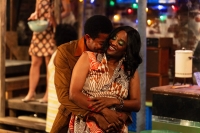
Detroit ’67: A Basement Becomes a City on the Brink
23 September 2026 in Theatre in ReviewDetroit was burning in the summer of 1967, inside one basement, life was still going on. That contrast is at…
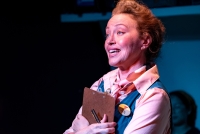
Now Boarding: Bonnie’s Last Flight, a Sky‑High Comedy with Real Heart
23 September 2026 in Theatre in ReviewRivendell Theatre Ensemble closes its milestone 30th season with Bonnie’s Last Flight, a sly, sky‑high comedy set during a flight…

Teatro Vista Productions announces season
22 September 2026 in Upcoming TheatreTeatro Vista Productions, the Midwest's only Latine-led Equity theatre company, led by Executive Director Lorena Diaz and Artistic Director Wendy…
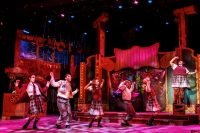
Step Right Up and Ride the Cyclone (The Musical) at Metropolis Arlington Heights
22 September 2026 in Theatre in ReviewIf anyone has ever told you to buckle up and enjoy the ride, they were talking about life—and even if…
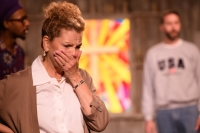
Funny ‘Prayer Circle’ Is Loaded With Laughs
22 September 2026 in Theatre in ReviewErik Gernand is resident playwright at Redtwist Theatre, and his Prayer Circle is absolutely laugh-out-loud funny. The strength of this…

Steppenwolf Presents GRACEFUL WARRIOR: AN EVENING WITH GARY SINISE - Tuesday, November 24, 2026
22 September 2026 in Upcoming TheatreSteppenwolf Theatre Company, the nation's premier ensemble theater company, is pleased to present Graceful Warrior: An Evening with Gary Sinise on Tuesday, November…

Acclaimed Mexodus musical makes Chicago premiere November 7-21 at Studebaker Theater
22 September 2026 in Upcoming TheatreStudebaker Theater, P3 Productions and Audible, in collaboration with Teatro Vista Productions, present the Chicago premiere of the groundbreaking, award-winning new hip-hop musical Mexodus, written and performed…

Arts in the Dark Parade moves to Columbus Drive due to dynamic growth, Oct. 24
21 September 2026 in Theatre BuzzLUMA8 and the City of Chicago return with the 12th Annual Arts in the Dark Halloween Parade, a family-friendly celebration…

American Blues Theater hosts its annual costumed fundraiser HALLOWEEN BOO BASH October 25th
21 September 2026 in Theatre BuzzAmerican Blues Theater, under the continued leadership of Executive Artistic Director Gwendolyn Whiteside, presents Halloween Boo Bash, its annual costumed fundraiser benefiting artists' wages…
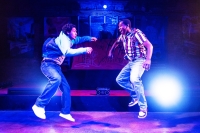
Definition's How We Got On: A Mixtape for the Stage
21 September 2026 in Theatre in ReviewWhat happens when three young people discover hip-hop and realize they might have something to say? Idris Goodwin’s How We…

Open Space Arts Presents BEFORE WE ARE HISTORY October 23 – November 8
21 September 2026 in Upcoming TheatreOpen Space Arts presents BEFORE WE ARE HISTORY, a three-week theatrical exploration of LGBTQ+ theater created during and in response to…
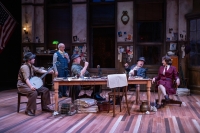
Northlight Delivers a Headline-Making, Hilarious Front Page
20 September 2026 in Theatre in ReviewNorthlight Theatre opened its new venue with Jeffrey Hatcher’s smart, rejuvenated adaptation of The Front Page. Commissioned by Artistic Director…
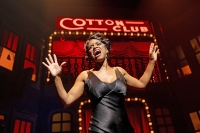
Chicago Shakes' Play On!: With a Syncopated Harlem Beat
20 September 2026 in Theatre in ReviewThere are some productions you watch, and then there are productions that make your heart swoon and your toe tap.…

Overshadowed's Flame of Fire Finds Humanity, Strength, and Forgiveness in a Tragic Chapter of Missionary History
19 September 2026 in Theatre in ReviewOvershadowed Productions’ Flame of Fire revisits one of the most polarizing true stories in mid‑century missionary history, and the result…
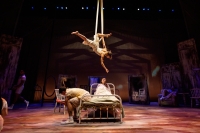
The Attic at Goodman Theatre Redefines Memoir Through Breathtaking Physical Storytelling
19 September 2026 in Theatre in ReviewAt intermission, I sent Ken, Buzz Center Stage’s managing editor, a text: “So thankful I made it!! It’s intermission, and…




Latest Articles
-
 Operation Mincemeat: A Smart, Scrappy Musical That Shines When Its Cast Takes the Wheel
Written by Maddie BurroughsIn the 2019 film Yesterday, a struggling musician wakes up in a world where The Beatles never existed. A similar theatrical case study could be done with every musical that might not exist without Hamilton; Operation Mincemeat should be first…
Operation Mincemeat: A Smart, Scrappy Musical That Shines When Its Cast Takes the Wheel
Written by Maddie BurroughsIn the 2019 film Yesterday, a struggling musician wakes up in a world where The Beatles never existed. A similar theatrical case study could be done with every musical that might not exist without Hamilton; Operation Mincemeat should be first… -
 MAMMA MIA! and HADESTOWN Return to Chicago in Spring 2027
Written by Buzz Center StageBroadway In Chicago is excited to announce two fan-favorite shows are returning to our stages this year: MAMMA MIA! and HADESTOWN. Current subscribers can add these to their season package when renewing by clicking here or calling (312) 977-1717. Group…
MAMMA MIA! and HADESTOWN Return to Chicago in Spring 2027
Written by Buzz Center StageBroadway In Chicago is excited to announce two fan-favorite shows are returning to our stages this year: MAMMA MIA! and HADESTOWN. Current subscribers can add these to their season package when renewing by clicking here or calling (312) 977-1717. Group… -
SANCTUARY STORIES - A JOURNALISM THEATER PROJECT October 9-18 at the Athenaeum Center for Thought and Culture
Written by Buzz Center StageThrough music, documentary video, sound, photos and live actors, “SANCTUARY STORIES: A JOURNALISM THEATER PROJECT” captures in words and images the lives and communities deeply connected with — and affected by — immigration in Chicago. This “living documentary” is a…
-
Red Theater presents the world premiere of CHURCH HURT October 24 - November 21, 2026
Written by Buzz Center StageRed Theater is thrilled to announce the cast and production team of the world premiere of Church Hurt by Brynne Frauenhoffer and directed by Jessica Love, running October 24 - November 21, 2026 at The Edge Off Broadway in Chicago’s…


Does your theatre company want to connect with Buzz Center Stage or would you like to reach out and say "hello"? Message us through facebook or shoot us an email at This email address is being protected from spambots. You need JavaScript enabled to view it..
*This disclaimer informs readers that the views, thoughts, and opinions expressed in the text belong solely to the author, and not necessarily to Buzz Center Stage. Buzz Center Stage is a non-profit, volunteer-based platform that enables, and encourages, staff members to post their own honest thoughts on a particular production.